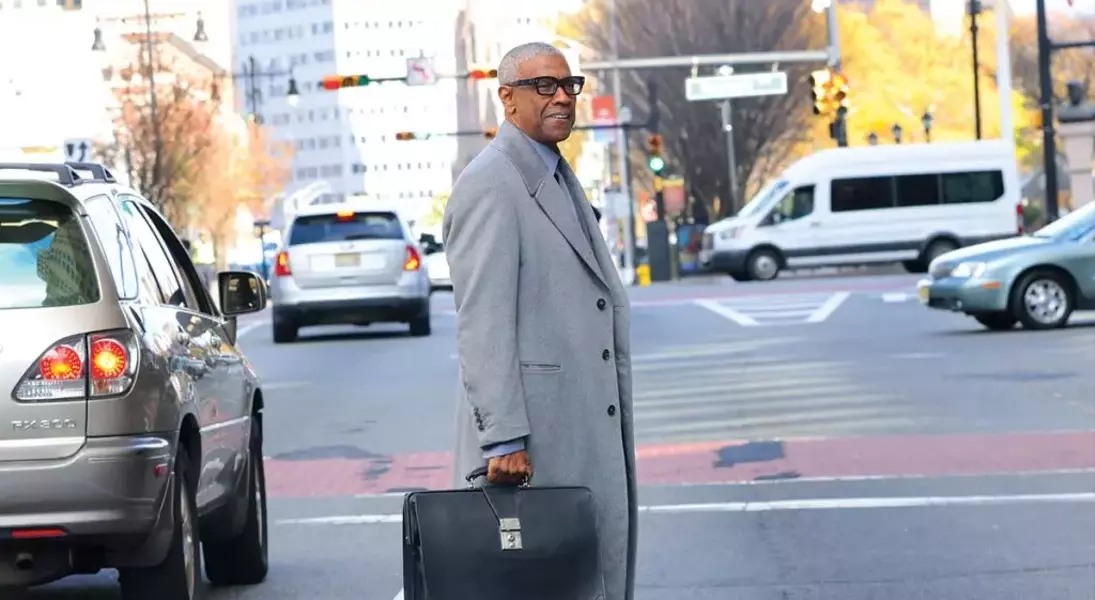
New Jersey is experiencing a remarkable transformation, evolving into a major center for film and television production. Once perceived primarily through popular culture stereotypes, the Garden State is now drawing significant investment from Hollywood, thanks to a robust tax incentive program that has revitalized its entertainment sector. This strategic shift has not only reshaped the state's economic landscape but also its public image, showcasing its diverse locales and professional talent to a global audience.
New Jersey: From Stereotype to Silver Screen Sensation!
Filming 'I Play Rocky': A Testament to New Jersey's Appeal
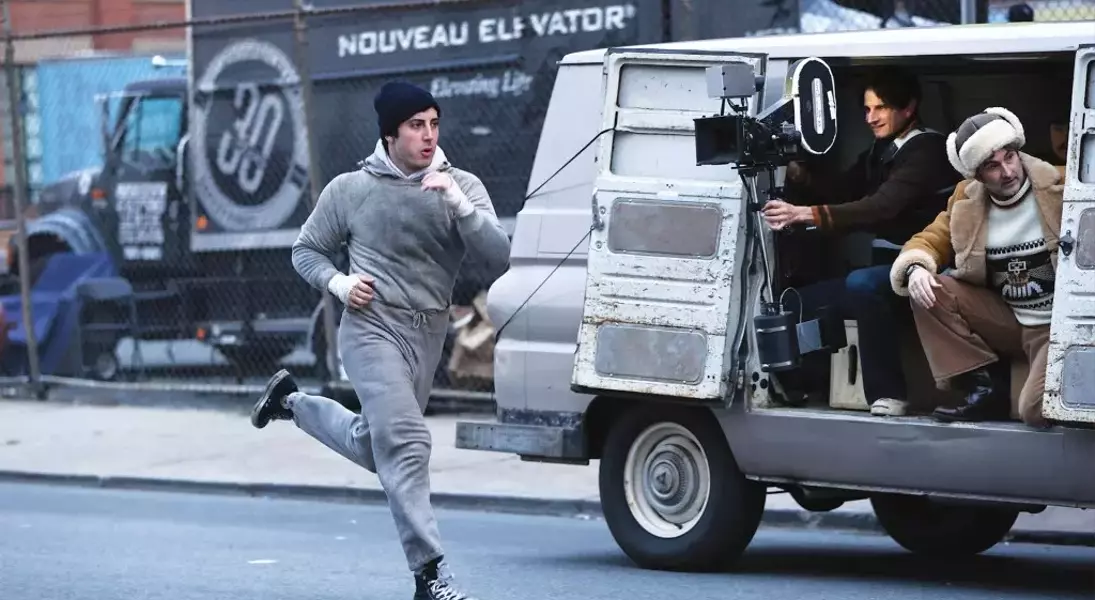
When director Peter Farrelly sought a location for "I Play Rocky," a biographical film about the creation of the iconic 1976 movie "Rocky," financial considerations initially pointed him away from Philadelphia, the setting of the original story. The lack of substantial production incentives in Pennsylvania made other regions, such as Atlanta or Sydney, more appealing alternatives. However, Farrelly's team discovered that New Jersey offered a compelling package of tax credits that rivaled these far-flung locations, along with an urban aesthetic that perfectly mimicked "Rocky's" gritty backdrop. This led to the construction of a boxing arena in a Jersey City studio, the transformation of a Kenilworth warehouse into Rocky's gym and apartment, and even beach scenes filmed in Asbury Park, substituting for Los Angeles.
New Jersey's Unforeseen Versatility: A Filmmaker's Paradise
Farrelly was particularly struck by the geographical variety New Jersey provides. He noted that the state's diverse terrain, encompassing vibrant cities, tranquil rural areas, and even desert-like landscapes, makes it suitable for a wide array of cinematic genres, including westerns. This revelation highlights New Jersey's untapped potential as a versatile filming location, capable of standing in for many different environments and settings.
Hollywood's New Favorite Locale: A String of High-Profile Productions
Farrelly is not alone in his admiration for New Jersey. The state has recently hosted a number of high-profile productions, including Steven Spielberg's "Disclosure Day," James Mangold's "No Direction Home," and Adam Sandler's "Happy Gilmore 2." These projects have brought significant financial investment, with "Happy Gilmore 2" spending $152 million over 64 days of filming, Spielberg's film $34 million, and Mangold's $81 million. "I Play Rocky" itself benefited from $10 million in incentives, allowing it to complete production under budget. These productions have also generated thousands of local jobs, further boosting the state's economy.
The Garden State's Production Surge: Defying National Trends
At a time when film production across the United States has seen a 20% decline due to industry belt-tightening, New Jersey stands out as the only state to achieve substantial growth. In 2025, 73 projects utilized New Jersey's incentive program, a significant increase from 46 in 2024. The total spending from these film and television projects is projected to exceed $1 billion in 2025, up from $833 million in the previous year. This surge in activity is fundamentally altering public perception of the state, shifting it from its previous associations with characters like Tony Soprano and Snooki to a sophisticated hub for creative endeavors, now attracting acclaimed directors like Spielberg and actors such as Timothée Chalamet.
The Genesis of New Jersey's Film Renaissance: Strategic Tax Credits
The remarkable resurgence of New Jersey's creative sector can be traced back to former Governor Phil Murphy's decision in 2018 to reinstate the film and digital tax credit, which had been suspended in 2010 by his predecessor, Chris Christie. Governor Murphy, in collaboration with the legislature, further solidified this commitment by extending the program's benefits, securing an annual allocation of $439 million through 2049. This long-term financial pledge is a rare and powerful signal of New Jersey's ambition to compete with established industry giants like New York, California, and Georgia. The current governor, Mikie Sherrill, has vowed to continue this investment, emphasizing the state's determination to remain a top destination for the film industry.
Streamlined Support: How New Jersey Facilitates Filmmaking
Filmmakers and production crews consistently praise New Jersey's proactive and efficient support system. The state's film office is lauded for its seamless processing of tax credits and its invaluable assistance in navigating logistical challenges. From locating 15 miles of train tracks for a chase scene in "Disclosure Day" to expertly handling permitting issues that allowed the "Joker" team to transform downtown Newark into an '80s New York setting, the commission's dedication is evident. Katherine Delaney, a seasoned location manager, highlights the state's collaborative approach, noting that the film commission readily offers guidance on choosing appropriate neighborhoods and avoiding areas that may be overused, demonstrating a deep understanding of production needs.
Strategic Advantages: Beyond Financial Incentives
Beyond its diverse geographical offerings, New Jersey possesses inherent advantages that bolster its appeal as a production hub. Its strategic proximity to New York City makes it an ideal base for actors and directors who wish to stay close to their families during filming. Furthermore, a significant portion of New York-based crew members reside in New Jersey, creating a readily available and highly skilled local workforce. Jon Crowley, Executive Director of the New Jersey Motion Picture & Television Commission, points out that while many states offer tax incentives, New Jersey's success is amplified by its established talent pool. He notes that 70% of Teamsters, a key component of film crews, live in New Jersey, preferring a short commute on the Parkway to traversing bridges and tunnels into New York.
The Evolving Landscape of Film Production: Incentives as a Necessity
The reliance on tax breaks to attract Hollywood productions is a relatively recent phenomenon. In the mid-22nd century, filmmaking was largely centralized in Los Angeles backlots. The shift towards on-location shooting began in the 1960s and 70s. However, a more significant change occurred in the 1990s when Canada began offering generous incentives, drawing U.S. productions to cities like Toronto, which often doubled for New York. This sparked a global trend, with various states and countries competing to attract film projects through increasingly attractive credits and subsidies, aiming to stimulate their economies and create jobs. Michael E. Uslan, producer of "The Dark Knight" and a New Jersey resident, emphasizes this shift, stating that creative decisions about filming locations have been largely superseded by financial ones. He asserts that in today's environment, making a film without leveraging state tax incentives is practically impossible.
Successful Models and Long-Term Vision: New Jersey's Blueprint for Growth
While some state film incentive programs, like those in Iowa and Arizona, have faltered due to insufficient economic returns, others, such as Georgia's, have been highly successful, generating an estimated $8.5 billion in economic activity. New Jersey's program is designed for long-term sustainability, with incentives secured for over two decades. This extended commitment provides entertainment companies with the confidence to establish permanent roots in the state. Evan Weiss, CEO of the New Jersey Economic Development Authority, highlights the program's thoughtful design and industry feedback as key to its success. He notes that companies are not merely filming individual projects but are investing in substantial infrastructure. Netflix is building 13 soundstages in Fort Monmouth with a $1 billion investment, while Paramount is developing a $1.2 billion studio with 23 soundstages in Bayonne. Lionsgate is also establishing itself as a key tenant in a Newark studio, signifying a robust and enduring commitment to New Jersey's film industry.
The Broader Economic Impact of Film Incentives: A Ripple Effect
While the optics of large corporations receiving financial assistance may raise questions, many supporters argue that such incentives are a necessary tool for economic development. Carol Cuddy, a unit production manager and member of the New Jersey Film & Television Commission, acknowledges mixed feelings but posits that if other industries receive financial support, the film sector, which also generates significant employment, is equally deserving. Jon Crowley elaborates on the widespread economic benefits, explaining that film productions create demand for hotel rooms, groceries for catering, fuel, paint, and various materials for set construction. This extensive demand directly supports local businesses and injects substantial capital into the New Jersey economy, benefiting a wide range of industries beyond filmmaking itself.
A Return to Roots: New Jersey's Enduring Legacy in Entertainment
New Jersey's current prominence in film production marks a fascinating full circle in entertainment history. The state was once the birthplace of the motion picture camera, invented by Thomas Edison, who also established America's first studio there. However, Edison's aggressive business tactics, including patent alliances that forced aspiring filmmakers to pay for production rights, ultimately led to a westward exodus, culminating in the birth of Hollywood. Jon Crowley succinctly summarizes this historical irony: "Taxes drove them away from New Jersey, and tax incentives are bringing them back again." This reflects a modern understanding of economic incentives as vital tools for attracting and retaining creative industries, bringing the state back to its pioneering role in cinematic innovation.
