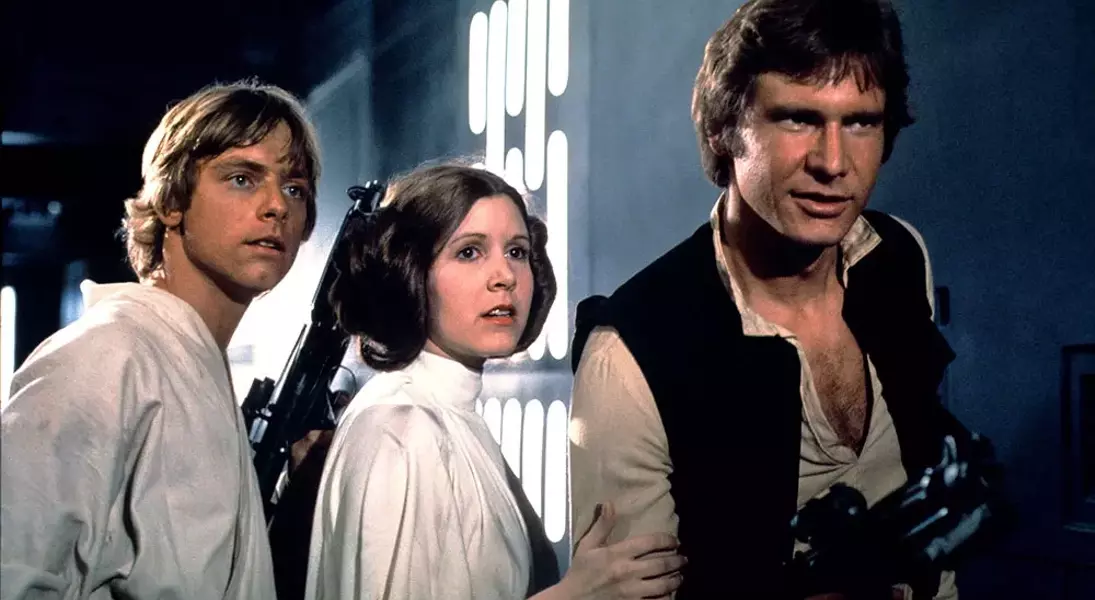
The groundbreaking cinematic achievement, 'Star Wars: Episode IV – A New Hope', is poised for an extraordinary return to theaters in 2027. This much-anticipated revival will commemorate the film's illustrious 50th anniversary, offering audiences a unique opportunity to revisit the saga's origins on the big screen. Originally captivating viewers in 1977, this pivotal installment introduced an unforgettable pantheon of characters and established a universe that has since become a global cultural phenomenon. The re-release promises a nostalgic voyage for long-time enthusiasts and a fresh discovery for new generations, reinforcing the enduring legacy and monumental impact of this iconic space opera.
Celebration of a Sci-Fi Legend: 'A New Hope' Returns to the Big Screen
In a momentous announcement from Lucasfilm, under the esteemed banner of Disney, the beloved classic 'Star Wars: Episode IV – A New Hope' is slated for a grand theatrical re-release on April 30, 2027. This special event is meticulously timed to honor the film's golden jubilee, fifty years after its original premiere. The movie, which first enchanted audiences on May 25, 1977, famously launched the monumental 'Star Wars' trilogy and its expansive universe. It introduced a constellation of now-legendary figures, including Mark Hamill's portrayal of the determined Luke Skywalker, Harrison Ford as the charismatic rogue Han Solo, and the late Carrie Fisher in her iconic role as the resilient Princess Leia. Furthermore, the film unleashed upon the world one of cinema's most fearsome antagonists, Darth Vader, brought to life physically by David Prowse and vocally by the resonant James Earl Jones.
The visionary behind this sprawling epic, George Lucas, meticulously crafted the universe that has since expanded through subsequent prequel trilogies in the early 2000s, featuring talents such as Natalie Portman, Hayden Christensen, and Ewan McGregor. The narrative continued to evolve with the sequel trilogy, commencing with 'Star Wars: The Force Awakens' in 2015, which introduced new heroes like Daisy Ridley, John Boyega, and Oscar Isaac, alongside Adam Driver, and numerous other spin-offs and television series. Reflecting on the evolution of his creation, Lucas shared insights at Cannes last year, noting that some of his foundational concepts for 'Star Wars' underwent significant transformations following the 2012 acquisition by Disney. He specifically referenced the commercial challenges faced by 'Solo: A Star Wars Story' in 2018. Lucas articulated a profound connection to the essence of 'Star Wars', particularly his understanding of 'The Force', lamenting that some of the core philosophical underpinnings were diluted in subsequent productions after his relinquishment of control, a natural consequence, he acknowledged, of handing over the reins.
Looking ahead, the franchise continues its journey with eagerly anticipated projects, including Shawn Levy's 'Star Wars: Starfighter', starring the acclaimed Ryan Gosling. This new cinematic endeavor is also scheduled for release in 2027, arriving on May 28, promising a thrilling new chapter in the ever-expanding 'Star Wars' saga.
From a journalist's perspective, the decision to bring 'A New Hope' back to theaters for its 50th anniversary transcends mere nostalgia; it's a strategic embrace of cinematic heritage. In an era where streaming often dominates, the collective experience of watching a foundational film like 'Star Wars' in a darkened cinema, surrounded by fellow fans, is invaluable. It’s a testament to the film's timeless appeal and its ability to continually captivate new audiences while reinforcing the magic of communal storytelling. This re-release is not just about celebrating the past; it's about re-energizing the fandom and reminding us why certain stories, like 'Star Wars', become ingrained in our cultural consciousness. It highlights the potent synergy between classic narratives and contemporary viewership, demonstrating that some legacies are truly everlasting.
