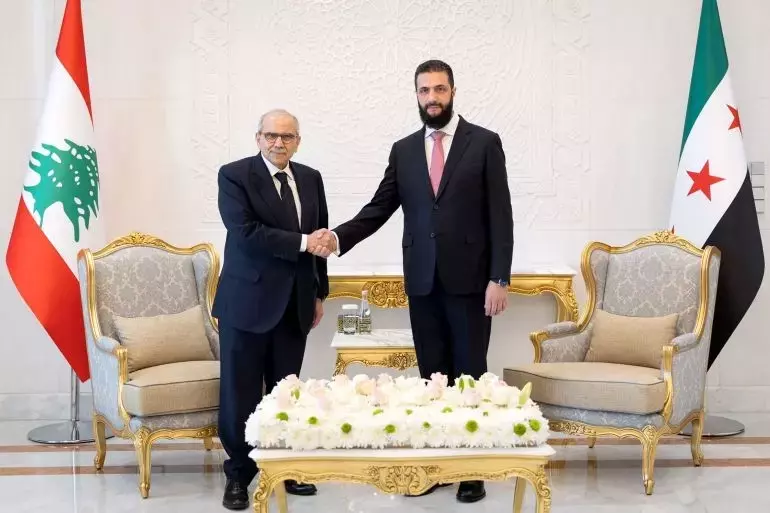
In a significant development, Lebanon's Prime Minister, Nawaf Salam, journeyed to Damascus for a second official engagement on May 9, marking a pivotal moment in the relationship between the two nations. This visit underscores a new operational framework for bilateral ties, moving beyond a history of Syrian dominance over its smaller neighbor. The shift comes as both countries grapple with persistent Israeli military actions and territorial claims.
This evolving dynamic follows the collapse of the al-Assad government in 2024, an event that reshaped the political landscape of the region. Experts suggest that the new Syrian leadership is intent on establishing a relationship based on mutual respect and sovereignty, distancing itself from the previous era's paternalistic approach. Key institutional changes, such as the suspension of the Lebanese-Syrian Higher Council and the functional operation of embassies, symbolize this newfound equality. For Syria, domestic stability, post-conflict reconstruction, and managing its borders with Lebanon, including addressing the transfer of Syrian detainees from Lebanese prisons and the return of refugees, are paramount.
Despite the positive trajectory in their diplomatic engagement, certain complex issues, particularly the influence of Hezbollah and concerted responses to Israeli aggressions, remain largely outside the official dialogue. While both Beirut and Damascus face common threats from Israeli expansion, their approaches to these challenges currently lack structured coordination, with each nation pursuing its strategies under international mediation. Nevertheless, the ongoing dialogue between Lebanon and Syria signals a commitment to re-evaluate and redefine their long-standing relationship, emphasizing a future built on cooperation and shared interests rather than historical subjugation.
This evolving relationship between Lebanon and Syria, though still in its nascent stages, represents a vital opportunity for regional stability and mutual prosperity. By prioritizing diplomatic solutions, addressing complex historical grievances, and fostering an environment of sovereign equality, these nations can contribute to a more peaceful and cooperative Middle East. The path forward demands sustained commitment to dialogue and a shared vision for a future free from conflict and external interference, ultimately paving the way for progress and resilience in the face of ongoing challenges.
