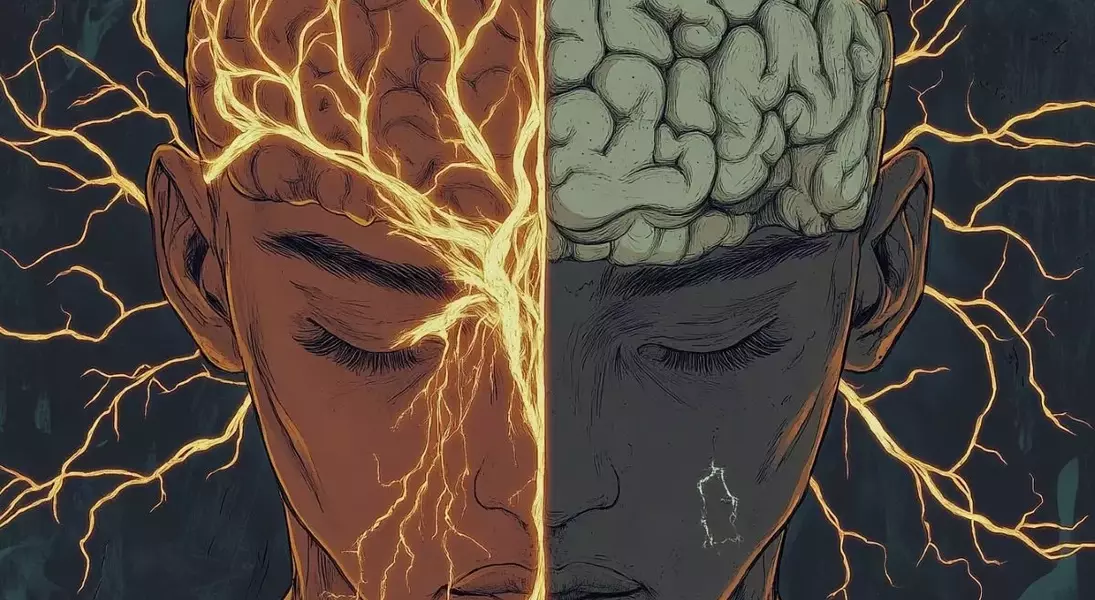
Scientists have made significant strides in understanding how the brain processes pain and itch, revealing that these sensations are handled by distinct neural circuits. Researchers from the Institute for Basic Science and Kyung Hee University College of Dentistry have discovered two types of neurons within the anterior cingulate cortex (ACC) that respond uniquely to either pain or itch. This finding challenges the previous belief that both sensations share the same neural pathways.
The study utilized advanced synaptic analysis and chemogenetic techniques to explore how neurons in the ACC react to different stimuli. Through this research, it was found that one group of neurons responds indiscriminately to both pain and itch, while another set is activated specifically by one sensation but not the other. The mediodorsal thalamus sends separate inputs to these neurons, further emphasizing the distinct nature of their processing mechanisms. By selectively deactivating specific neurons using chemogenetic methods, the researchers demonstrated that inhibiting pain-specific neurons reduced pain perception without affecting itch sensitivity, and vice versa.
This groundbreaking discovery highlights the importance of understanding the brain's complex sensory processing mechanisms. The identification of independent neural circuits for pain and itch opens new avenues for developing targeted treatments for chronic conditions related to these sensations. Moreover, it underscores the brain's ability to differentiate between various stimuli, enhancing our comprehension of emotional memory and higher-order cognition. As research progresses, scientists aim to delve deeper into how these neural circuits interact under pathological conditions, potentially leading to more effective therapeutic approaches.
