NetHack, a celebrated roguelike game that first emerged in 1987, defies typical software lifecycles by persistently receiving updates, remarkably maintaining compatibility with MS-DOS—an operating system whose official support from Microsoft concluded two decades ago. This longevity is a testament to its dedicated community and intricate design, standing in stark contrast to many modern games that vanish shortly after release. The recent 5.0 update, nearly forty years after its inception, underscores its enduring relevance and unique position in gaming history. Furthermore, the game continues to support platforms like the Amiga, which faded from the mainstream computing landscape in 1994, highlighting its unparalleled commitment to preserving accessibility across historical computing environments.
Microsoft formally ended its support for MS-DOS, an foundational element of its early Windows versions, in 2006, marking the end of a 25-year era. However, NetHack, a game that predates Windows by two years, continues to evolve, with its latest update still offering support for this archaic system. This commitment to legacy technology is virtually unheard of in the fast-paced world of software development, where products are often rendered obsolete within a few years. The dedication of the NetHack development team and its community to preserve these historical computing ties is a remarkable aspect of the game's identity.
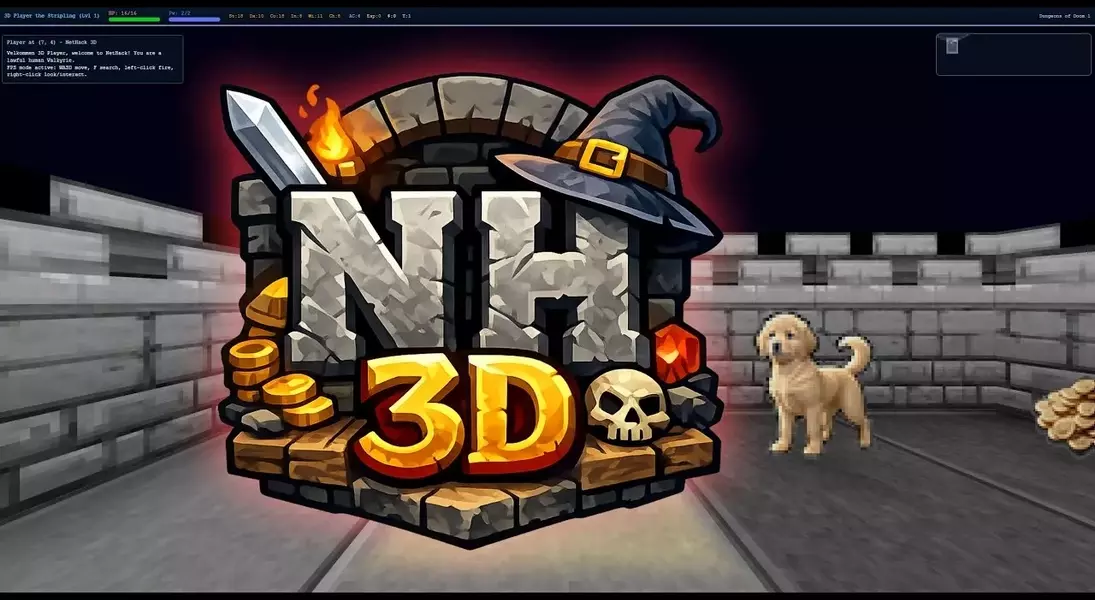
Beyond its surprising retro-compatibility, NetHack has also embraced modernization through community-driven projects. One notable example is NetHack 3D, a contemporary interface that dramatically improves the game's visual presentation and user experience. While NetHack traditionally relies on ASCII characters, NetHack 3D offers sophisticated 2D tilesets and even an experimental first-person mode, transforming the classic dungeon crawler into a more visually engaging adventure. This client skillfully reinterprets NetHack's famously complex controls into intuitive context menus with mouse and touch support, making the game far more approachable for new players without sacrificing its depth.
NetHack's profound influence on the roguelike genre and beyond is undeniable. It is often lauded as one of the best roguelikes ever created, pioneering many mechanics and systems that would later be adopted by other seminal titles, including Dwarf Fortress. Its cultural significance is further cemented by its inclusion in the Museum of Modern Art, a recognition of its innovative design and lasting impact. For those new to the genre, the modern NetHack 3D client offers an inviting entry point into its rich, challenging world. Even for purists, the option to switch back to the original ASCII mode is always available, promising a unique visual experience that, with practice, allows players to "see the Matrix" of its intricate game world.
NetHack's journey from a niche ASCII game to a recognized cultural artifact, continuously updated and adapted, illustrates its extraordinary durability and the fervent passion of its community. Its ongoing development, decades after its initial release and long after the demise of its native platforms, positions it as a unique phenomenon in gaming. The game's ability to seamlessly blend its historical roots with contemporary enhancements ensures its appeal to both veteran players and newcomers, cementing its legacy as a timeless classic in the world of video games.
