This article explores the growing anticipation surrounding a potential stock split for Netflix, especially as its share price has surpassed the $1,000 mark. It delves into the historical context of stock splits, their perceived benefits, and why Netflix might be inclined to undertake such a move. The discussion also touches upon the company's recent impressive growth, new revenue streams like advertising, and the possibility of its inclusion in the Dow Jones Industrial Average, all of which contribute to the compelling case for a stock split. Furthermore, the article considers the broader market trends and investor sentiment towards stock splits, highlighting how these events often draw significant attention and can influence a company's market perception.
Netflix's Soaring Stock Fuels Split Speculation Amidst Earnings Anticipation
As of October 9, 2025, at 3:58 p.m. ET, Netflix's share price stood at an impressive $1,230.25, reflecting a daily change of +1.32% or an increase of $16.00. This remarkable valuation, coupled with a market capitalization of $516 billion, has ignited fervent discussions among investors and market analysts regarding a potential stock split for the streaming titan. Historically, stock splits are viewed favorably by the investment community, often interpreted as a strong vote of confidence from management in the company's sustained growth trajectory. They are strategic corporate actions that reduce the nominal price of a company's shares without altering its overall market capitalization, making individual shares more accessible to a broader base of investors, particularly retail investors.
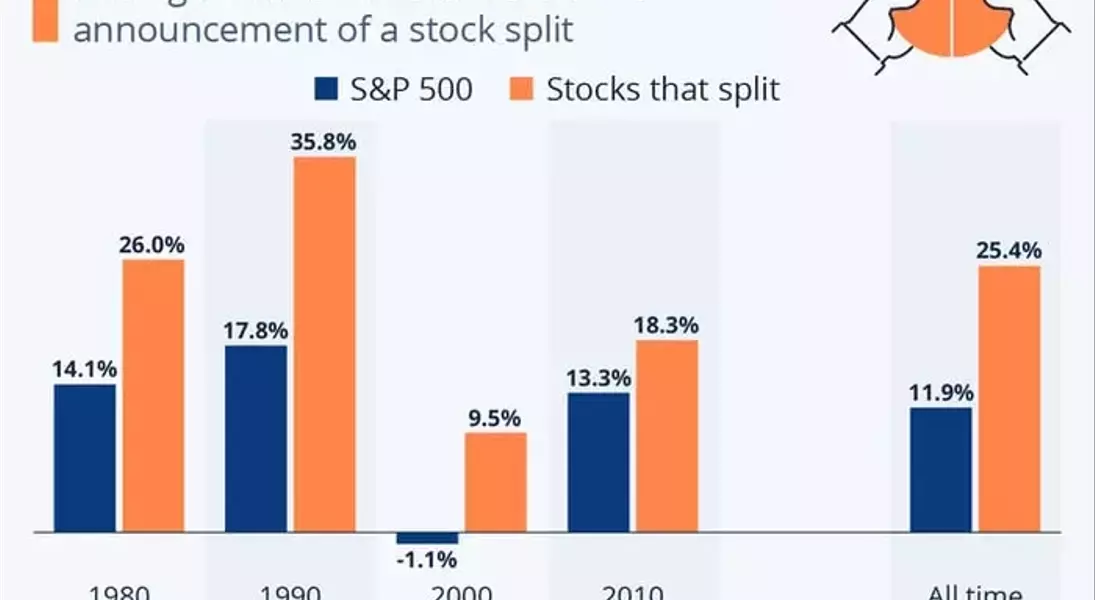
Research conducted over the past four decades, including a notable study by Bank of America, indicates a pattern of stock outperformance following a split. These studies suggest that companies undergoing a stock split have, on average, seen their shares rise by 25.4%, significantly outpacing the S&P 500's return of 11.9% during similar periods. While this correlation is often attributed to companies initiating splits during periods of robust performance and bullish market conditions, rather than the split itself causing the outperformance, the positive investor sentiment remains a powerful factor. The upcoming fourth-quarter earnings report, scheduled for October 21, presents a timely opportunity for Netflix to announce such a corporate action, aligning with the common practice of timing splits with earnings disclosures.
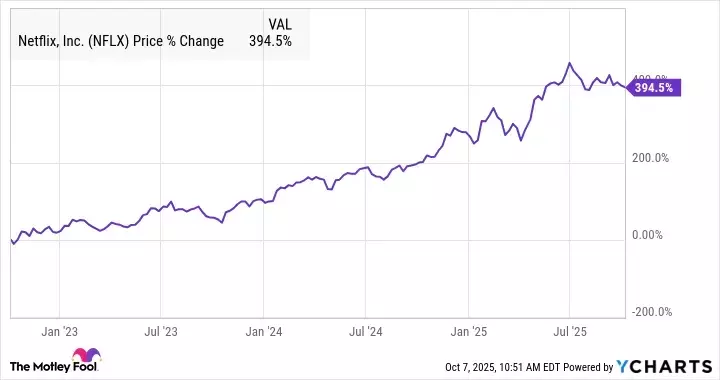
Netflix's journey to its current market standing has been marked by substantial growth, with its stock price surging by an astounding 400% over the last three years. This growth is underpinned by successful strategic initiatives, including the introduction of advertising-supported tiers, expanded paid sharing, and engaging live events. These endeavors have not only diversified its revenue streams but also reinforced its dominance in the global video entertainment landscape. Notably, Netflix has a history of executing stock splits, having previously implemented a 7-for-1 split in 2015 and a 2-for-1 split in 2004, both times at significantly lower individual share prices than today's. This precedent further strengthens the argument for another split in the near future.
Beyond making shares more affordable, a stock split could also position Netflix for inclusion in the prestigious Dow Jones Industrial Average. With a market cap of over $500 billion, Netflix is already larger than many existing Dow components. Its significant presence in the entertainment industry, which is currently underrepresented in the index (with Disney being a notable exception), makes it a strong candidate. A lower share price, resulting from a split, would enhance its eligibility for the price-weighted Dow, thereby elevating its market prestige and potentially attracting a new cohort of institutional investors. As the company continues to demonstrate strong financial performance, analysts anticipate a 17% year-over-year revenue growth to $11.5 billion and an increase in earnings per share from $5.40 to $6.94 for the third quarter. Despite a current price-to-earnings ratio of 50, its strategic advancements in advertising and local content initiatives are expected to sustain its growth trajectory, making a stock split a potentially catalytic event for its next phase of market appreciation.
The current market buzz surrounding Netflix and a potential stock split offers several insightful takeaways. Firstly, it underscores the psychological impact of stock splits on investor behavior. While the fundamental value of a company remains unchanged, a lower share price can make a stock appear more 'affordable' and accessible, thereby broadening its appeal to individual investors. This can lead to increased trading volume and potentially a higher demand for shares, creating a positive feedback loop for the stock's price. Secondly, Netflix's consistent innovation in its business model, such as the successful integration of advertising and expansion into diverse content strategies, demonstrates how adapting to market dynamics can drive exceptional growth and shareholder value. This highlights the importance for companies to not rest on their laurels but continuously seek new avenues for expansion and engagement. Finally, the discussion about Netflix's potential entry into the Dow Jones Industrial Average illustrates how strategic corporate actions, like stock splits, can serve broader objectives beyond immediate share price adjustments. They can enhance a company's market standing, diversify its investor base, and signal its long-term stability and leadership within its industry. For investors, this situation reiterates the value of looking beyond immediate headlines and understanding the strategic implications of corporate decisions on a company's future growth and market position.
