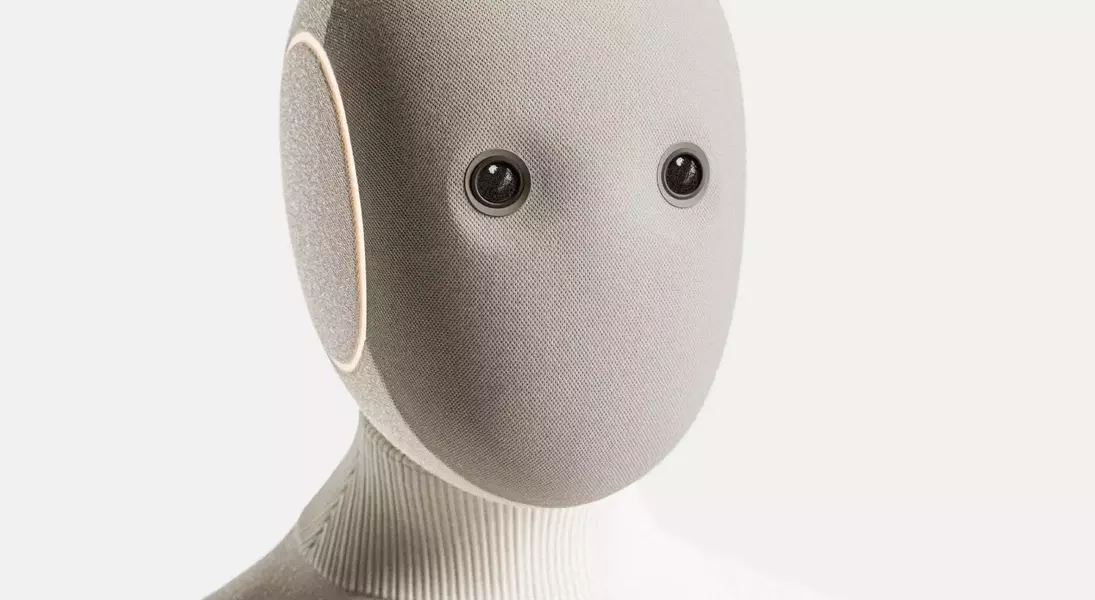

A new automated companion, the NEO Home Robot, is redefining the boundaries of robotic assistance. While showcasing impressive dexterity in tasks such as gaming and snack handling, its unique presentation leaves some pondering the future of human interaction with advanced machinery and the subtle unease it can evoke.
Details on the NEO Home Robot's Peculiar Capabilities
The NEO robot, a creation of Palo Alto-based 1X Technologies, boasts a sophisticated set of hands, demonstrated in a series of videos. These hands exhibit remarkable precision, capable of delicate actions like swirling liquid in a glass, accurately picking up small objects, and even separating individual grapes. However, the demonstrations take an unusual turn, featuring the robot attempting to change a lightbulb—only for the bulb to be mysteriously shattered by a human with a hammer—and gingerly unzipping a hoodie, an action that many found unsettling. Other tasks include connecting building blocks, albeit not genuine Lego, and operating an Xbox controller with some proficiency. A particularly curious segment shows the robot opening a snack bag and extracting a single Funyun, again interrupted by a human with a hammer, before it autonomously plugs itself in to recharge. This last action, coupled with its featureless head and dark, unblinking eyes, contributes to an aura of discomfort. The robot, costing $20,000 or requiring a $500 monthly subscription, could offer significant support for the elderly or those with disabilities. However, current reports, including a Wall Street Journal video, reveal that many of NEO's actions are not fully autonomous but are instead guided by a human operator using VR technology. This revelation casts a new light on the robot's perceived independence and raises questions about the nature of its "intelligence."
The development of robots like NEO signals a clear trend toward integrating AI into daily life. While the potential for assistance in various sectors, from household chores to specialized care, is immense, this also compels us to consider the ethical and social implications. The current model, which relies on human remote operation, highlights the ongoing dependence on human oversight even in advanced robotics. This duality prompts reflection on our expectations for AI and the nuanced relationship we are building with these emerging technologies. As robots become more prevalent, the challenge will be to ensure their development aligns with human values and societal comfort, fostering a future where technology enhances, rather than complicates, our existence.
