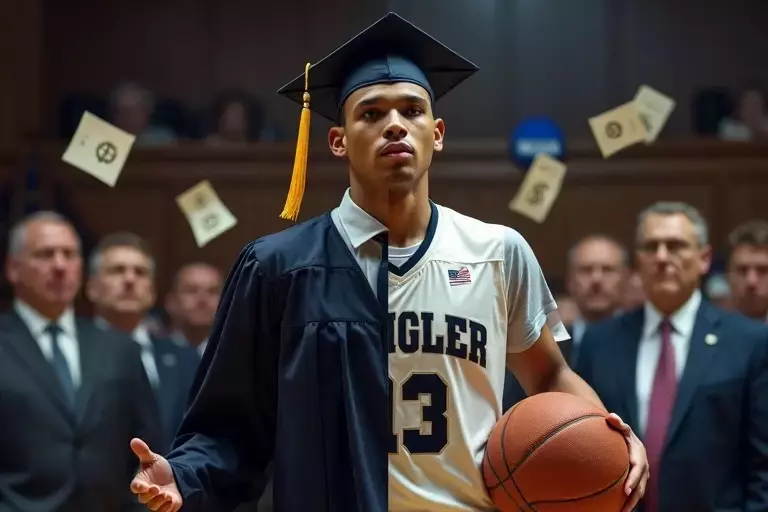

The ongoing debate over collegiate athlete eligibility has taken a new turn as Zakai Zeigler's legal battle with the NCAA continues. A recent motion by the NCAA to deny Zeigler’s request for an injunction highlights the complexities surrounding antitrust laws and athletic regulations. The organization warns that allowing Zeigler to play a fifth year could lead to a precedent where numerous players extend their college careers, potentially harming incoming freshmen opportunities. This issue brings into focus the balance between academic progression and competitive fairness in college sports.
At the heart of the dispute lies Zeigler’s argument against the NCAA's four-season rule within a five-year window. His legal team contends that this restriction constitutes an unlawful restraint of trade under federal and state antitrust laws. They propose a less restrictive alternative: permitting athletes who complete their undergraduate degrees in four years without redshirting to compete in an additional season. According to analyses provided by Spyre Sports Group, such an opportunity could be financially significant, valued between $2 million and $4 million for Zeigler alone. However, the NCAA counters that granting this exception would create unlimited possibilities for other players seeking extended eligibility, disrupting the current roster dynamics across universities.
Beyond the courtroom drama, Zakai Zeigler's case reflects broader questions about student-athlete rights and educational goals. As a standout player who set multiple records during his senior year at Tennessee, including becoming the all-time assists leader, Zeigler exemplifies excellence both on and off the court. His pursuit of graduate studies while continuing to compete aligns with the NCAA's stated mission of promoting academics. While Judge Katherine A. Crytzer prepares to hear arguments later this week, this case underscores the importance of revisiting outdated rules to better support athletes' aspirations. It invites us to consider how fostering education and competition can coexist harmoniously in modern collegiate athletics.
