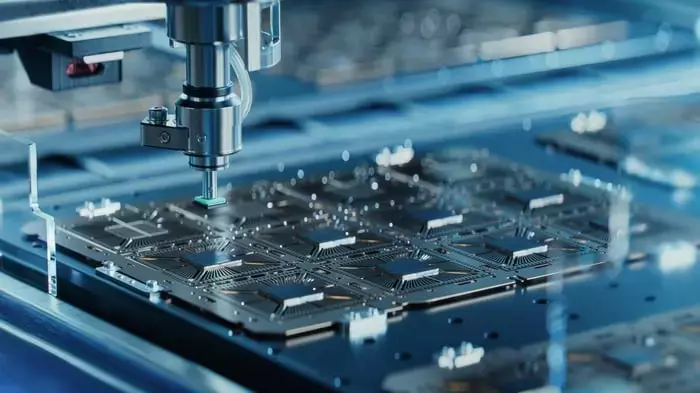
Navitas Semiconductor experienced a significant stock surge, climbing over 27% following its announcement of substantial advancements in developing cutting-edge power technology for NVIDIA. The company's innovative approach utilizes advanced materials like gallium nitride (GaN) and silicon carbide (SiC) in its semiconductors, moving beyond traditional silicon. This strategic development is aimed at creating highly efficient power solutions crucial for the demanding requirements of next-generation artificial intelligence data centers, thereby enhancing scalability and reliability in AI infrastructure.
This positive market reaction underscores investor confidence in Navitas's potential to become a pivotal supplier in the AI sector. The ongoing collaboration with NVIDIA, a leader in AI computing, highlights the importance of energy-efficient chip technology. While Navitas is at the forefront of this innovation, the company operates in a competitive landscape where other developers are also striving to meet the power efficiency needs of AI data centers. The future growth of Navitas is largely tied to its ability to outperform competitors and consistently deliver on its technological promises in this dynamic market.
Breakthroughs in AI Power Solutions Drive Navitas's Market Performance
Navitas Semiconductor's stock experienced a significant uplift, jumping by over 27% after the company provided an encouraging update on its joint efforts with NVIDIA to develop advanced power management solutions. This collaboration centers on utilizing gallium nitride (GaN) and silicon carbide (SiC) in their semiconductor designs, offering a more efficient alternative to conventional silicon. These innovative materials are essential for addressing the escalating power demands of advanced AI data centers, which require robust, scalable, and reliable power infrastructures to function optimally. The market's enthusiastic response reflects a strong belief in Navitas's technological trajectory and its capacity to meet critical industry needs.
The company’s CEO, Chris Allexandre, emphasized the profound impact of these next-generation power solutions, highlighting their role in supporting the evolution of AI infrastructure. By moving beyond silicon, Navitas aims to deliver semiconductors that provide superior efficiency, thereby contributing to the sustainability and performance of AI systems. This strategic direction positions Navitas as a crucial enabler for the future of artificial intelligence. However, the rapidly expanding field of AI power solutions is highly competitive, with multiple entities vying to develop similar technologies. Navitas's continued success will depend on its ability to maintain its innovative edge and deliver its products effectively to market.
Navitas's Competitive Landscape and Future Prospects in Advanced Semiconductor Technology
Despite the current market optimism surrounding Navitas Semiconductor's advancements, the company faces a highly competitive environment. The urgent need for more power-efficient chips in AI data centers has spurred numerous companies to innovate in this sector. While Navitas's use of gallium nitride (GaN) and silicon carbide (SiC) offers a promising path to higher efficiency, several other firms are also engaged in similar research and development, some of which are also collaborating with industry giants like NVIDIA. The race to develop and deploy these next-generation power solutions is intense, making market penetration and sustained leadership challenging.
Investors have already factored in a substantial amount of anticipated future growth into Navitas’s current stock valuation, which implies high expectations for its technological breakthroughs and market execution. This valuation suggests that the company must consistently deliver on its promises and overcome potential hurdles from competitors. Should rival technologies prove more effective or arrive at market faster, Navitas’s position could be jeopardized, potentially leading to a significant reassessment of its stock. Therefore, while the current outlook is positive, Navitas's long-term success hinges on its ability to innovate continuously, scale production efficiently, and effectively fend off competition in this critical technological domain.
