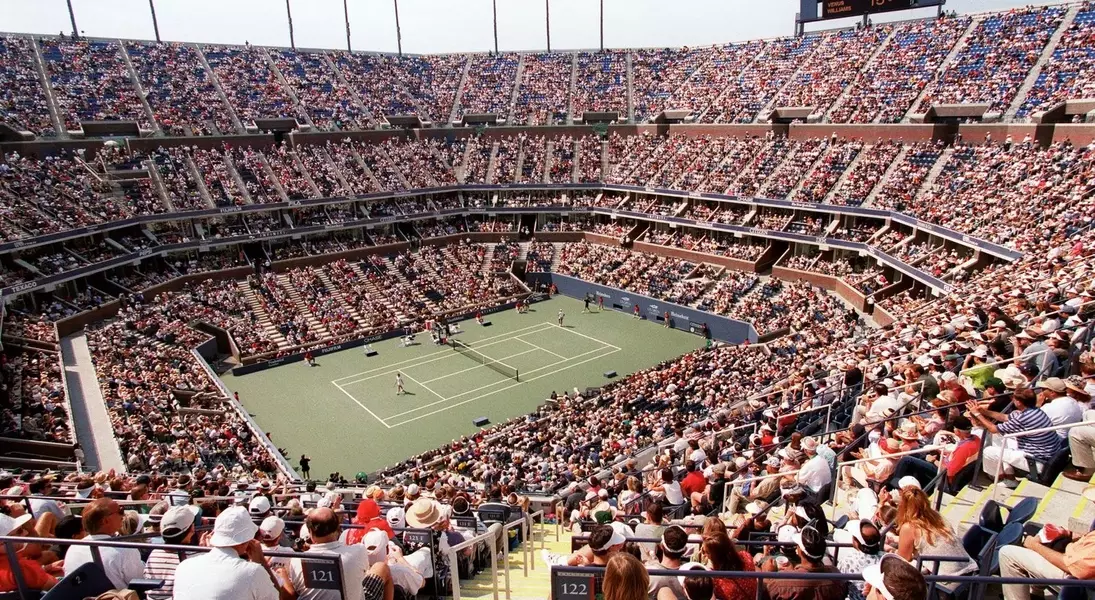
Attending the US Open has become a complex affair, far beyond just watching tennis. Whether one secures tickets through hefty payments or receives an exclusive brand invitation, the event promises a rich sensory experience. From gourmet chicken nuggets with caviar to the famous Honey Deuce cocktail, the Arthur Ashe Stadium pulsates with a glamorous, celebrity-studded atmosphere. High-profile personalities like Travis Scott and Queen Latifah have already graced the early days of this year's tournament, all against the backdrop of world-class tennis.
However, this heightened visibility brings its own set of issues. Recent viral videos depicting influencers disrupting matches have ignited public debate, drawing the ire of 1.5 million viewers. While the US Open has issued around 100 credentials to content creators this year, incidents such as a group with ring lights loudly filming during Naomi Osaka's match have prompted chair umpires to intervene. Osaka herself has emphasized the importance of respecting the sport's etiquette, suggesting that while influencers can boost tennis's popularity, their activities need better management to prevent disturbances. This raises questions about whether the blame should solely fall on influencers, especially given the increasingly boisterous atmosphere at Arthur Ashe Stadium, which many find significantly louder than venues like Wimbledon's Centre Court.
The root of the problem extends beyond influencers to the soaring ticket prices, which have led to a disconnect between attendees and the on-court action. Many spectators, having paid exorbitant sums, seem more interested in personal anecdotes or social interactions than the game itself. The article highlights instances of disruptive conversations from fellow attendees, including a USTA employee, suggesting that the issue of noise and distraction is widespread. Blaming influencers alone is an oversimplification; it masks deeper changes in the sport's accessibility and fan engagement. Tennis, particularly the US Open, has transformed from its past, with prize money significantly increasing and the overall event becoming a massive economic driver for New York City, drawing a massive audience comparable to major NFL franchises. This rock-n'-rollification of tennis, while boosting its popularity, necessitates a clear set of behavioral guidelines.
To foster a more respectful environment, adherence to specific rules is crucial. Spectators should never move around or stand up while players are actively engaged in points, as this can severely distract athletes. Conversations should be kept subdued during play, with loud expressions reserved for between points, acknowledging that Arthur Ashe Stadium, despite its vibrant energy, is not a personal living room. Selfies and social media posts are welcome, but not at the expense of ignoring the actual tennis match; flash photography and disruptive lighting are prohibited. Fashion choices should reflect a sporty chic aesthetic, avoiding overly aggressive or try-hard looks. Furthermore, understanding the basic rules of tennis can significantly enhance the viewing experience. Exploring matches on smaller courts beyond the main stadiums also offers a more intimate appreciation of the game. The US Open, in its essence, is a grand celebration of tennis, not merely a social gathering, and all attendees should strive to uphold its spirit.
