
In the first quarter, the Pernas Portfolio experienced a 6.4% reduction in value, a contrast to the S&P 500's 4.3% decline. This period was marked by initial market strength followed by a sharp downturn at the onset of the US/Iran conflict, which propelled commodity prices and ignited inflation concerns. The market is also grappling with the rapid advancement of artificial intelligence and its potential disruption to the Software-as-a-Service (SaaS) industry, a phenomenon referred to as the 'SaaSpocolypse.' Despite these challenges, adaptive SaaS companies are actively integrating AI into their operations, and certain smaller, strategically positioned firms present attractive investment prospects for those willing to engage during periods of market weakness.
Quarterly Market Overview and Investment Strategy
The initial quarter presented a turbulent landscape for investors. The Pernas Portfolio saw a notable decline, underperforming the broader S&P 500. This downturn was significantly influenced by geopolitical tensions between the US and Iran, which caused a surge in commodity prices and heightened inflation fears. Unlike traditional safe-haven assets, gold and long-dated Treasuries also recorded losses, challenging conventional investor assumptions during periods of stress. The investment approach during this uncertain time favored caution over immediate 'buy the dip' strategies, awaiting clearer signals of de-escalation. A subsequent rebound on April 7th, following a US-Iran ceasefire agreement, underscored the volatility and rapid shifts characterizing contemporary markets.
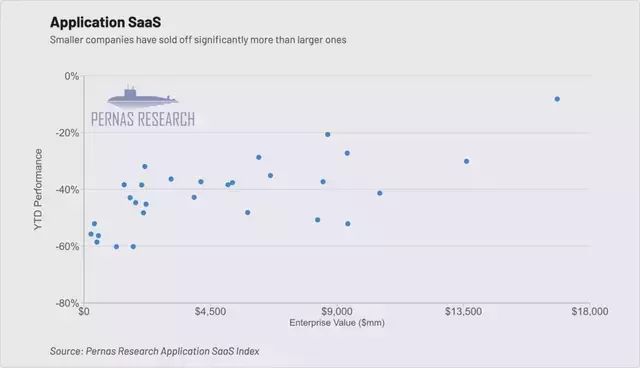
A more profound structural development impacting the quarter was the 'SaaSpocolypse.' Previously, concerns revolved around the potential for an AI bubble; now, the narrative has shifted to fears that AI's rapid progress could fundamentally erode the economic foundations of the SaaS sector. This sentiment gained traction in January with the proliferation of agentic coding tools, suggesting a future where software production costs approach zero, potentially commoditizing application-layer software. This led to an initial sell-off in SaaS stocks, which continued into February as agentic capabilities advanced further. Key application SaaS companies, including Adobe, Salesforce, and ServiceNow, have seen significant year-to-date declines, rendering parts of the sector appear undervalued.
However, SaaS companies are dynamic entities, adept at navigating technological paradigm shifts, as evidenced by their transitions from on-premise to cloud, desktop to mobile, and monolithic to API-driven architectures. They are not passively awaiting disruption but are actively integrating agentic AI layers into their products. Salesforce's announcement of Headless 360, allowing agents to access data and execute tasks directly from Slack, exemplifies this adaptive spirit. The market has disproportionately penalized smaller SaaS firms, assuming greater vulnerability to disruption. Yet, this creates opportunities for astute investors. Companies like Sprout Social, which possesses structural advantages such as system-of-record positioning, embedded workflows, and privileged data access, are trading at a fraction of their larger counterparts' valuations despite actively adapting to the technological shifts. The Pernas Portfolio has aggressively increased its stake in Sprout Social, believing its current valuation at approximately 0.5x EV/Sales offers a compelling re-rating potential.
Reflections on Prudent Portfolio Management
Effective portfolio management demands a willingness to invest in assets that are currently out of favor or even derided by the broader market. This counter-cyclical approach contrasts sharply with waiting for widespread consensus before taking a position, a strategy that often leads to missed opportunities. For long-term investors, market sentiment and ephemeral flows are less critical than the underlying business fundamentals. The ability to increase investment during downturns is paramount, provided one exercises discipline and self-awareness to distinguish genuine opportunities from value traps. Historical analysis within the Pernas Portfolio indicates that a significant portion of its alpha generation stems from this strategic decision to lean into weakness, a crucial tenet for concentrated managers aiming for superior returns.
