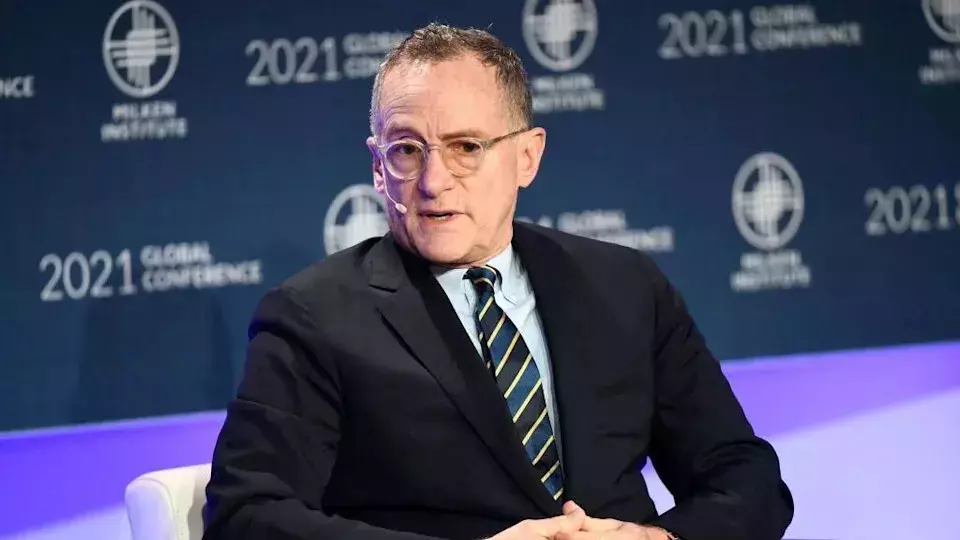
This article delves into the insights of prominent investor Howard Marks regarding maintaining a rational investment approach amidst global uncertainties. It highlights the pitfalls of emotional decision-making during market volatility, offering strategies to foster resilience and long-term financial stability.
Stay Calm, Invest Smart: Mastering Market Uncertainty
The Peril of Emotional Investing Amidst Global Turmoil
Current geopolitical events are creating significant instability, causing global markets to react with apprehension. This environment, marked by escalating tensions, impacts energy markets and fuels debates on inflation and economic growth. However, veteran investor Howard Marks, co-founder of Oaktree Capital Management, cautions against allowing these developments to sway investment decisions based on emotion.
Embracing the Unknown: A Core Investment Principle
Marks points out that the biggest challenge lies in the sheer volume of unknowns surrounding ongoing global conflicts, including their duration, scale, and ultimate consequences. He stresses that an inability to predict these outcomes makes it difficult to make informed, proactive investment moves, suggesting that a cautious stance might be the most prudent approach.
The Trap of Uncertainty: Avoiding Common Investor Mistakes
Uncertainty frequently prompts investors to make errors. Marks warns that emotional responses to market volatility can lead to ill-timed decisions, such as liquidating assets at a loss or over-allocating capital to a single asset class. Historical data from institutions like Vanguard indicates that investors who maintain a consistent, diversified portfolio generally outperform those who react impulsively to market downturns.
Strategic Preparedness: Professional Guidance and Diversification
In volatile periods, many investors feel compelled to act, though inaction might often be preferable. Mistakes commonly include panic selling, excessive concentration in certain assets, or holding too much cash. Behavioral finance studies from DALBAR reveal that average investors often underperform due to poor timing driven by fear or overconfidence. Seeking professional financial advice can help formulate a resilient plan, ideally with fiduciaries who are legally bound to act in clients' best interests.
Leveraging Safe Havens: Gold's Role in Turbulent Markets
Geopolitical tensions not only affect equity markets but also influence commodity prices. For instance, Middle Eastern conflicts have previously led to oil price surges. During such times, diversifying into assets that traditionally retain value can be beneficial. Gold, known for its inverse relationship with stocks and bonds, serves as an effective hedge against inflation and currency devaluation, providing stability to a portfolio.
Maintaining Liquidity: Smart Cash Management Strategies
Marks observes that attempting to predict market movements during conflicts is often futile. While a "do nothing" approach might seem passive, it doesn't mean letting capital sit idly in low-interest accounts. High-yield savings accounts or automated investment platforms can offer better returns while preserving liquidity, ensuring funds are accessible for future opportunities or needs.
Buffett's Wisdom: Counter-Cyclical Investing and Long-Term Vision
Warren Buffett's famous advice — "Be fearful when others are greedy, and greedy when others are fearful" — underscores the importance of a contrarian investment philosophy. He advocates for buying when markets are low and avoiding impulsive purchases during booms. For most long-term investors, Buffett suggests simple, diversified index funds, as history shows markets typically recover from geopolitical shocks relatively quickly.
Automated Investing: Discipline Through Diversification
Automated investment platforms like Acorns encourage consistent investment through dollar-cost averaging, helping investors steadily build diversified portfolios. By investing small, regular amounts, individuals can mitigate the impact of market fluctuations and avoid emotional trading, fostering long-term wealth accumulation irrespective of immediate market headlines.
