
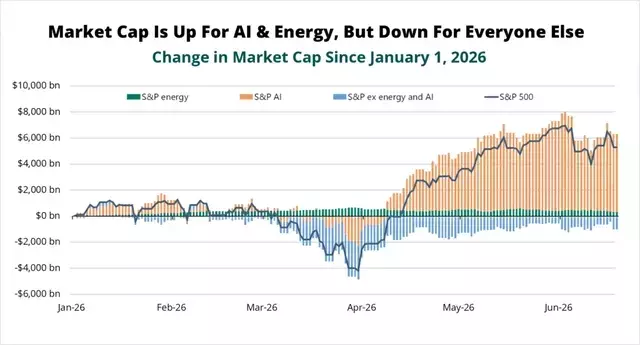
In the second quarter of 2026, global stock markets witnessed a significant upswing, propelled by investors' growing optimism about a resolution to the geopolitical tensions in Iran and a renewed interest in the potential of artificial intelligence (AI) and projected corporate earnings in the United States. This period saw crude oil prices revert to pre-conflict levels, aligning with historical patterns observed after similar regional oil-related disputes, where prices typically declined in the months following the onset of conflict. However, the underlying fragility of this stability, especially with low global oil inventories, suggests a potential for future market shocks that current equity prices may not fully account for. The S&P 500, in particular, experienced its most robust quarter since the COVID-19 recovery in Q2 2020, with a substantial portion of this growth attributed to AI-related technology companies.
The market's upward trajectory has been intricately linked to the AI narrative. A significant portion of the S&P 500's expected earnings growth is directly tied to the expansion of AI infrastructure, as massive capital expenditures by hyperscalers translate into substantial revenue and earnings for microchip and equipment providers. The semiconductor sector, for instance, is projected to see a dramatic increase in earnings, alongside companies like Caterpillar, which supplies generators for AI data centers. Furthermore, major public offerings from AI-focused companies underscore the market's strong belief in the sector's future growth. This intense focus on AI has led to a concentration of market gains, with a small number of AI-related stocks driving the majority of the S&P 500's performance.
The current enthusiasm for AI is underpinned by several factors that suggest its longevity, including anticipated increases in data center capital expenditure, exponential advancements in frontier models, and the nascent stage of AI adoption in enterprise applications. However, the history of rapidly evolving industries, as highlighted by Warren Buffett, suggests that revolutionary technologies do not always translate into sustained shareholder value due to intense competition. This raises critical questions about the long-term competitive advantages of individual companies within the AI space. Investors are now grappling with uncertainties such as the eventual winners among AI labs, the impact of open-source models on pricing power, the sustainability of hyperscaler capital expenditure, and whether the current semiconductor supply bottleneck represents a fundamental shift or a temporary imbalance in a cyclical industry.
Despite the undeniable growth trajectory of AI, the long-term value it will create for shareholders remains uncertain, especially when valuations are already high. This situation contrasts with earlier opportunities in 2025, where "picks and shovels" providers in the data center buildout could be acquired at more reasonable prices. Now, companies like Caterpillar and those in the semiconductor index trade at significantly higher multiples compared to their historical averages, indicating that investors are already pricing in substantial future growth and profitability. The challenge for investors is to ensure a margin of safety in an environment where the answers to these critical questions are far from clear.
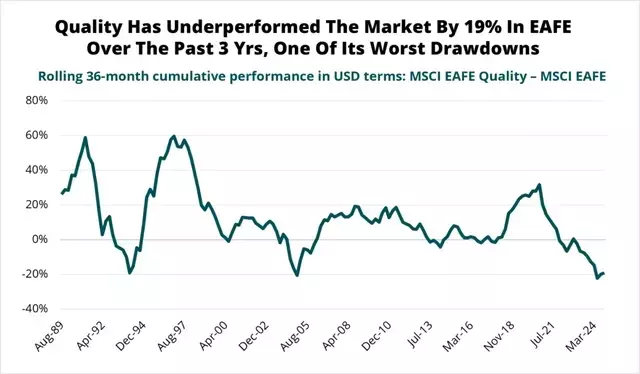
As capital has flowed into the AI sector, other segments of the market have experienced outflows, leading to lower valuations and new investment opportunities. Notably, high-quality stocks characterized by stable returns, robust balance sheets, and consistent earnings growth are now trading at rare discounts. This phenomenon, observed across European, Asian, and U.S. markets, presents an attractive entry point for value-conscious investors. Furthermore, a shift in market sentiment towards the software sector, driven by concerns about AI disruption, has led to significant declines in stock prices, creating potential opportunities for select companies with strong incumbency, deep integration into enterprise workflows, and adaptability to an AI-driven future. Examples include Constellation Software and Microsoft, where AI-related concerns may be overblown given their strategic positions and ability to leverage AI for future growth.
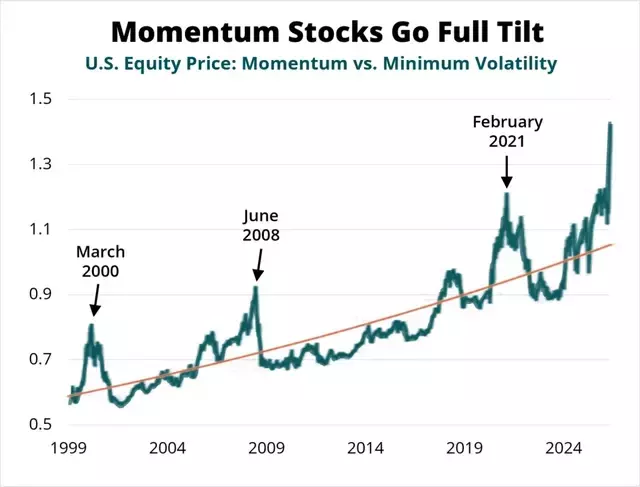
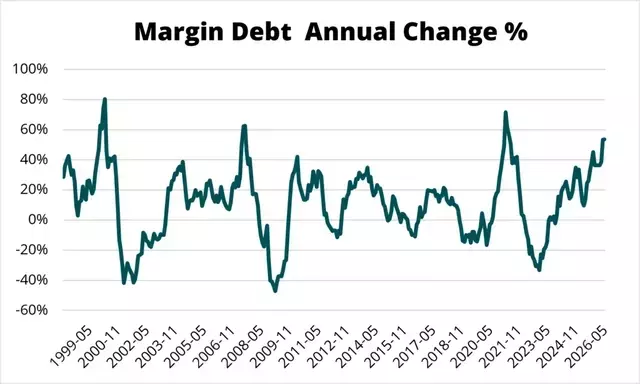
The current market environment is characterized by a significant degree of investor exuberance, as evidenced by the substantial increase in margin debt and the outperformance of momentum stocks. This suggests a "gambling mood" among investors, as described by Warren Buffett, where investment decisions may be driven more by short-term trends and less by fundamental analysis or long-term competitive advantages. While strong earnings growth could continue to propel markets upward, a prudent approach for investors involves prioritizing businesses with durable competitive advantages and reasonable valuations, rather than chasing the excitement of prevailing market narratives. The focus should be on quality companies that offer more predictable and stable returns in the long run.
