As investor confidence wavers amidst concerns of an impending economic downturn, understanding how to protect investments becomes paramount. While the prospect of a recession can be unsettling, historical trends offer a reassuring perspective. The key lies in adopting a resilient investment strategy that can withstand market fluctuations and emerge stronger on the other side.
A critical principle in volatile markets is that actual losses only materialize upon selling assets. Holding onto investments through periods of decline allows for potential recovery and growth, leveraging the market's historical tendency to rebound. Diversification across various industries and companies further insulates a portfolio, ensuring that even if some investments underperform, the overall financial health remains robust. This long-term view, combined with strategic asset allocation, empowers investors to navigate challenging economic landscapes effectively.
The Imperative of Holding Through Volatility
In periods of market instability, it is common for investors to experience a decline in the value of their holdings. While this can be alarming, it is vital to remember that these are often unrealized losses. The true financial impact only occurs if an investor decides to sell their assets during these low points. By resisting the urge to sell and maintaining their positions, investors can avoid crystallizing these temporary reductions in value, giving their investments the opportunity to recover as the market eventually rebounds. This steadfast approach is a cornerstone of effective long-term investment strategy, transforming potential short-term setbacks into mere paper losses.
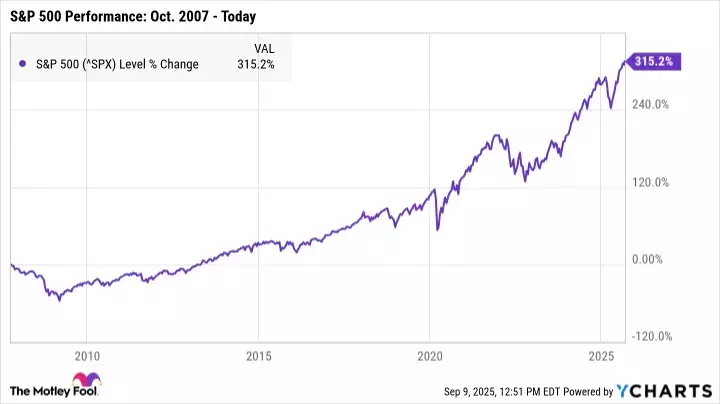
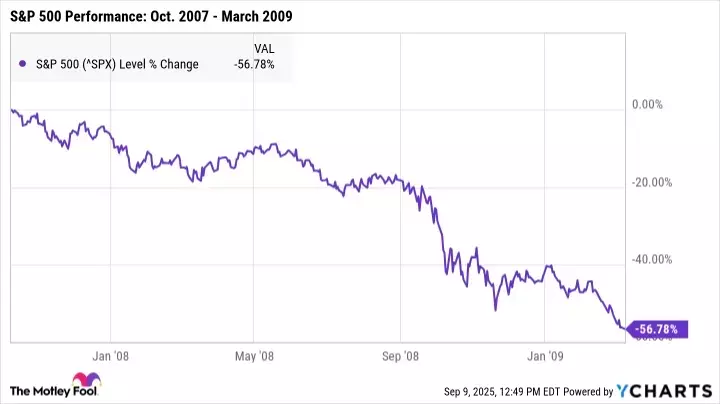
Consider a scenario where an investment initially purchased for a certain amount sees its value decrease significantly. If the investor panic-sells at this reduced price, the loss becomes permanent. However, by holding the investment, even as its value fluctuates, the investor retains the potential to recoup losses and even achieve gains when the market recovers. History consistently demonstrates that major market downturns, such as the Great Recession, are invariably followed by periods of strong recovery. Those who remained invested through these challenging times often saw substantial wealth creation over the subsequent years. This underscores the power of patience and a long-term outlook in mitigating the impact of market volatility.
Historical Resilience and Strategic Diversification
Examining past economic cycles reveals a consistent pattern: markets, despite significant downturns, have always recovered and reached new highs over time. This historical precedent provides a powerful psychological buffer against the fear and uncertainty that often accompany recessions. While the duration and intensity of each downturn vary, the overarching trend of recovery remains unbroken. This insight should encourage investors to maintain a long-term perspective, trusting in the market's inherent capacity for growth, even after severe corrections. Understanding this historical resilience can transform anxiety into a strategic advantage, enabling clearer decision-making during turbulent times.
Furthermore, building a well-diversified portfolio is crucial for navigating economic turbulence. By spreading investments across a range of healthy companies in different sectors, investors can significantly reduce their exposure to the poor performance of any single asset or industry. A diversified portfolio acts as a shock absorber, cushioning the impact of localized downturns and ensuring that overall returns remain stable. This approach means that even if a few investments falter, the strength of others can compensate, preventing a devastating impact on the total portfolio. This strategic diversification, combined with the knowledge of historical market recovery, equips investors with robust protection against unforeseen market challenges.
