
This article delves into the investment potential of Energy Transfer, a significant player in the midstream energy sector, highlighting its attractive dividend yield while cautioning investors about its past operational decisions and the inherent complexities of Master Limited Partnerships (MLPs).
Unlocking Value: Balancing High Returns with Historical Volatility
Understanding Energy Transfer's Operational Framework
Energy Transfer operates as a prominent master limited partnership (MLP) within the midstream segment of the energy industry. MLPs are structured to provide unitholders with tax-advantaged income distributions, often categorized as a return of capital, which can defer tax obligations until the investment is divested. This structure can lead to a lower capital gains tax rate when taxes are eventually paid, as it reduces the cost basis of the investment. However, investors should be aware that MLPs are not ideal for tax-advantaged retirement accounts and necessitate dealing with a specific tax document known as a K-1 form.
Stability in the Energy Infrastructure Business
From an operational standpoint, Energy Transfer is engaged in one of the most resilient areas of the energy sector. The company possesses vital infrastructure assets that bridge energy production (upstream) with processing and distribution (downstream) to global markets. These assets encompass pipelines, storage facilities, transportation networks, and processing plants. A key characteristic of its business model is its reliance on fee-based charges for asset utilization, which largely insulates its financial performance from fluctuations in commodity prices. Approximately 90% of its adjusted earnings before interest, taxes, depreciation, and amortization (EBITDA) are generated from these stable fees. As one of North America's largest midstream operators with a substantial market capitalization, Energy Transfer's diverse operations span natural gas, oil, and refined products. Although it acts as a general partner for two other public MLPs, these relationships contribute only about 15% to its adjusted EBITDA, indicating a broad and robust operational base.
Strategic Growth and Expansion Initiatives
Beyond its stable core business, Energy Transfer is actively pursuing growth. The company has several expansion projects underway, supported by a significant capital investment program in 2025. These initiatives are designed to enhance its operational footprint and increase its capacity, reinforcing its position in the energy infrastructure landscape. This forward-looking approach to development suggests a commitment to expanding its revenue streams and strengthening its market presence.
Navigating Past Challenges and Investor Confidence
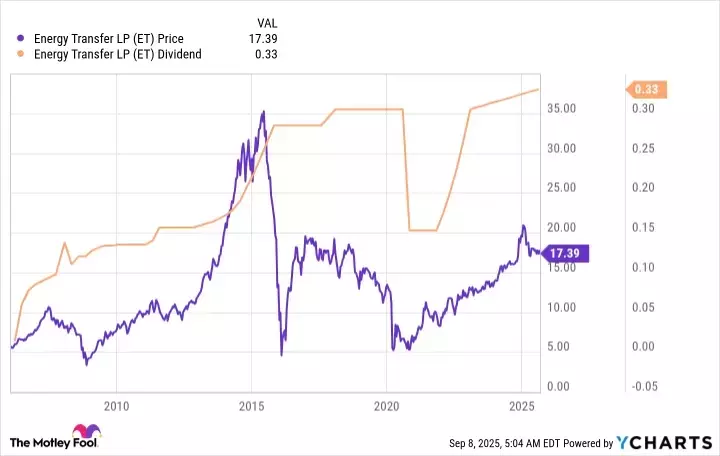
While Energy Transfer currently boasts a substantial 7.5% distribution yield, which appears well-supported by its distributable cash flow, a closer look at its history reveals instances that might cause conservative investors to pause. In 2020, amidst an energy downturn coinciding with the global pandemic, the company reduced its distribution by 50%. Prior to that, during the 2016 energy sector decline, a proposed merger was abandoned, and the company issued convertible securities, raising concerns about management's priorities regarding unitholder interests. These past events underscore the importance for investors to scrutinize the company's management philosophy and its approach to financial stability, particularly in times of market stress. While the current outlook seems favorable, this historical context suggests that the investment journey might not always be smooth.
Considering Alternatives and Future Outlook
Despite its attractive yield, Energy Transfer's past actions might prompt some investors to seek alternatives with a more consistent history of unitholder returns. For instance, Enterprise Products Partners offers a slightly lower yield but has a long track record of increasing distributions over many years and lacks the historical baggage associated with Energy Transfer's troubled mergers. While Energy Transfer is likely to continue providing income to its unitholders, investors prioritizing a smoother and more predictable income stream might find other options more suitable. Those who choose to invest in Energy Transfer should remain vigilant and closely monitor the company's performance and management decisions, given its history of unexpected challenges.
