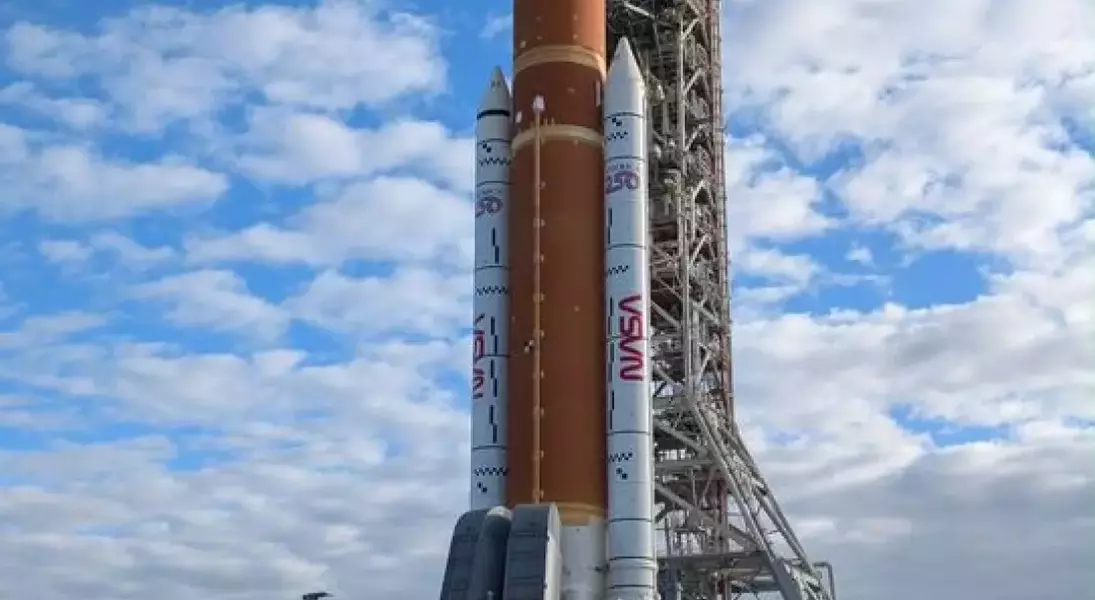
NASA recently showcased the Artemis II spacecraft, marking a significant milestone in its ambitious program to send humans back to the Moon. This mission is poised to carry American astronauts on a journey orbiting our celestial neighbor, a crucial precursor to establishing a sustained human presence on the lunar surface and venturing further into the solar system.
The colossal Space Launch System (SLS) rocket, along with the Orion capsule, which will house the four-person crew, commenced its gradual transfer from the Vehicle Assembly Building to Launch Pad 39B. This intricate process, involving the movement of an 11 million-pound stack over four miles, was expected to span up to twelve hours, highlighting the immense scale and complexity of such undertakings.
Jared Isaacman, a director at NASA, emphasized that this monumental endeavor with the SLS and Orion architecture is merely the initial phase of a grander vision. He articulated that through repeated, cost-effective missions to the Moon, valuable lessons will be learned, continuously refining the vehicle's design and operational capabilities.
The Artemis II mission is provisionally slated for an early February launch, contingent on the readiness of both the team and the rocket systems. The four chosen astronauts—Christina Koch, Victor Glover, Reid Wiseman, and Canadian Space Agency's Jeremy Hansen—will embark on a ten-day voyage that includes orbiting Earth before proceeding with their lunar circumnavigation.
The overarching objective of the Artemis initiative extends beyond this crewed lunar orbit. It aims to re-establish human presence on the Moon for the first time in over half a century, laying the groundwork for subsequent human landings and ultimately, future expeditions to Mars. This upcoming mission follows the successful uncrewed Artemis I launch in 2022, building upon its achievements.
Isaacman underscored the profound educational impact of the lunar orbit, stating that the scientific insights gained will pave the way for future missions, such as 'Artemis 100' and beyond. He also expressed hope that this mission would serve as a powerful source of inspiration for aspiring astronauts and scientists worldwide. NASA remains committed to fulfilling its pledge to the American populace: to return humanity to the Moon.
