
MTY Food Group, a dominant player in the dining and snacking franchise sector, presents a unique investment narrative. Despite its stock trading at a considerable discount from its historical highs, the company's financial health, particularly its free cash flow, is at an unprecedented level. This market anomaly, coupled with aggressive share buybacks, positions MTY as an attractive prospect for astute investors seeking long-term value and consistent returns.
Detailed Report: Unveiling MTY Food Group's Strategic Prowess
In a compelling turn of events, MTY Food Group, a distinguished franchisor encompassing a vast network of over 7,000 dining and snacking establishments, is currently witnessing an intriguing market valuation. As of September 5, 2025, the company's stock trades approximately 50% below its historical zenith, creating a significant point of interest for market observers.
MTY's operational model, predominantly centered on franchising, has allowed it to cultivate a robust and diversified portfolio of more than 90 distinct brands. These brands span a wide spectrum of culinary experiences, from refreshing frozen treats offered by Cold Stone Creamery and sweetFrog to a rich variety of American, Asian, and Indian cuisines, including popular names like Famous Dave's and Manchu Wok. This strategic diversification ensures stable revenue streams across various seasons and consumer preferences, mitigating the risks typically associated with single-segment food businesses.
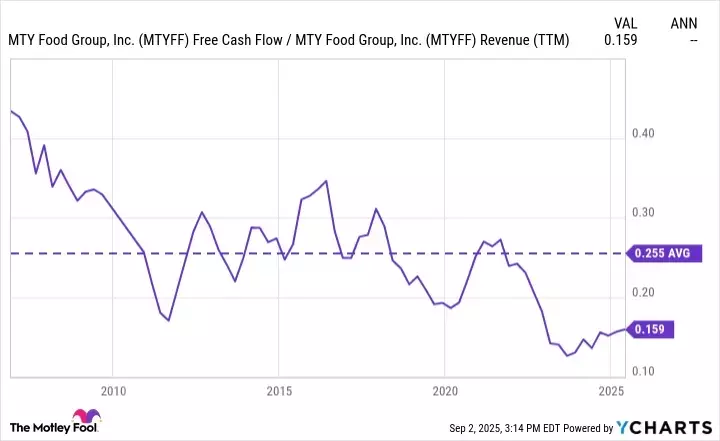
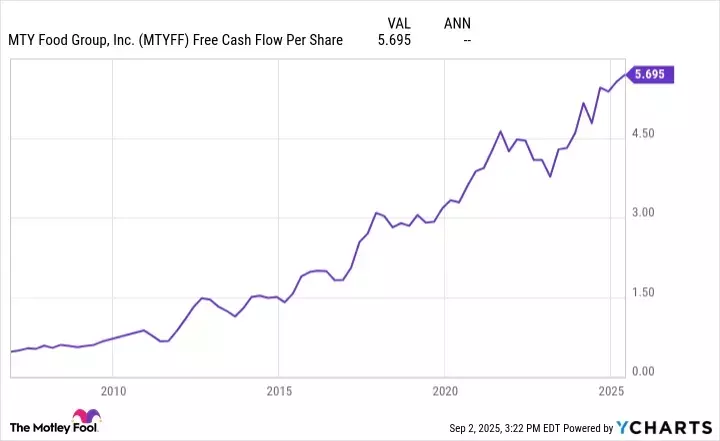
A critical aspect of MTY's financial resilience is its impressive generation of free cash flow (FCF). Despite a noted decline in its FCF margin from a long-term average of 26% to a current 16%—attributed to recent acquisitions that included a small number of corporate-owned stores—the company’s FCF per share has, remarkably, surged to an all-time high. This surge underscores MTY's efficient capital management and its capacity to generate substantial liquidity, even as it navigates temporary shifts in its operational structure. The company's intention to refranchise these corporate-owned locations, once financially optimal, further highlights a strategic pathway to margin recovery and enhanced profitability.
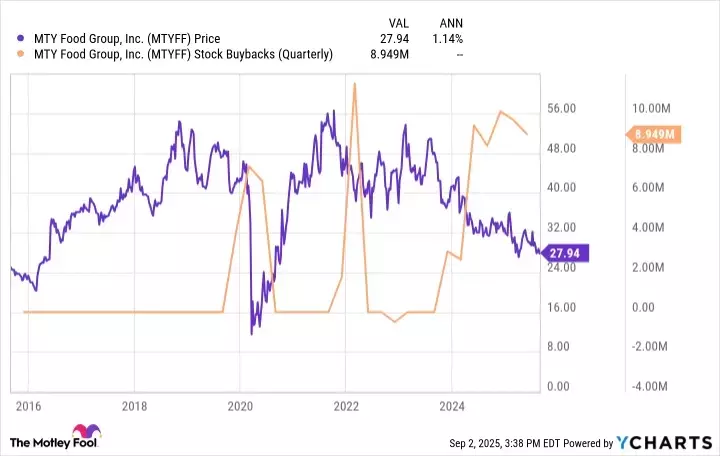
In response to what CEO Eric Lefebvre describes as an inflated mergers and acquisitions market, MTY's leadership has astutely pivoted towards an aggressive share repurchase program. This move, leveraging the company's robust FCF, reflects a profound confidence in MTY's intrinsic value and a commitment to delivering shareholder value. The consistent reduction in shares outstanding, combined with a healthy 3.3% dividend yield—which utilizes only 15% of the company's FCF—paints a picture of a financially disciplined entity poised for sustained dividend growth. Over the past decade, MTY has impressively grown its dividend payments by an average of 29% annually.
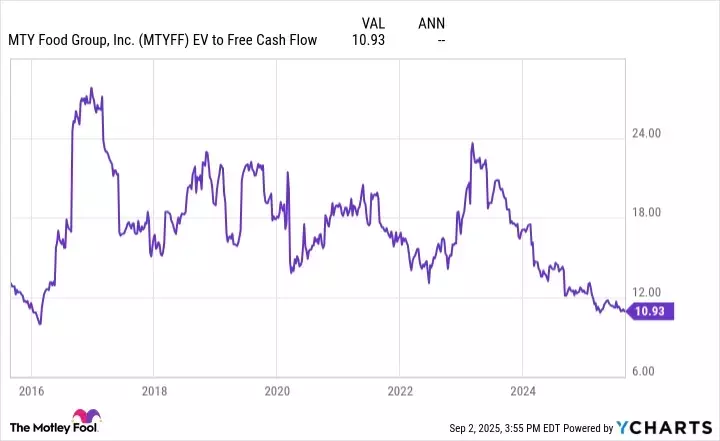
From a valuation perspective, MTY Food Group stands at an compelling juncture. Its enterprise value-to-FCF ratio of 11 represents its lowest in nearly a decade. This metric suggests that the market may be undervaluing the company's future growth potential, essentially pricing it as if its free cash flow will not expand further. However, MTY's historical performance, marked by a near tripling of FCF per share over the last ten years, starkly contrasts with this pessimistic market sentiment. This disparity creates a compelling argument for a re-evaluation of MTY's market standing.
The strategic actions undertaken by MTY's management, including the prudent allocation of capital towards share buybacks in an expensive M&A landscape and the commitment to a growing dividend, exemplify a company dedicated to maximizing shareholder returns. The current valuation, while presenting a puzzle to some, offers a profound opportunity for investors to acquire a stake in a resilient and cash-generative enterprise at what appears to be a significant discount.
Reflections on Value and Strategic Foresight
As a financial reporter observing MTY Food Group's current market dynamics, one cannot help but be intrigued by the stark contrast between its fundamental strength and its prevailing market valuation. It’s a classic case where the market seems to be overlooking a company’s operational excellence and robust cash generation. This scenario serves as a powerful reminder that true investment opportunities often lie in identifying businesses where short-term market perceptions diverge significantly from long-term intrinsic value. MTY's strategic decision to prioritize share buybacks over overpriced acquisitions demonstrates a leadership team acutely aware of its value and committed to shareholder wealth, setting a commendable example for other companies navigating competitive landscapes.
