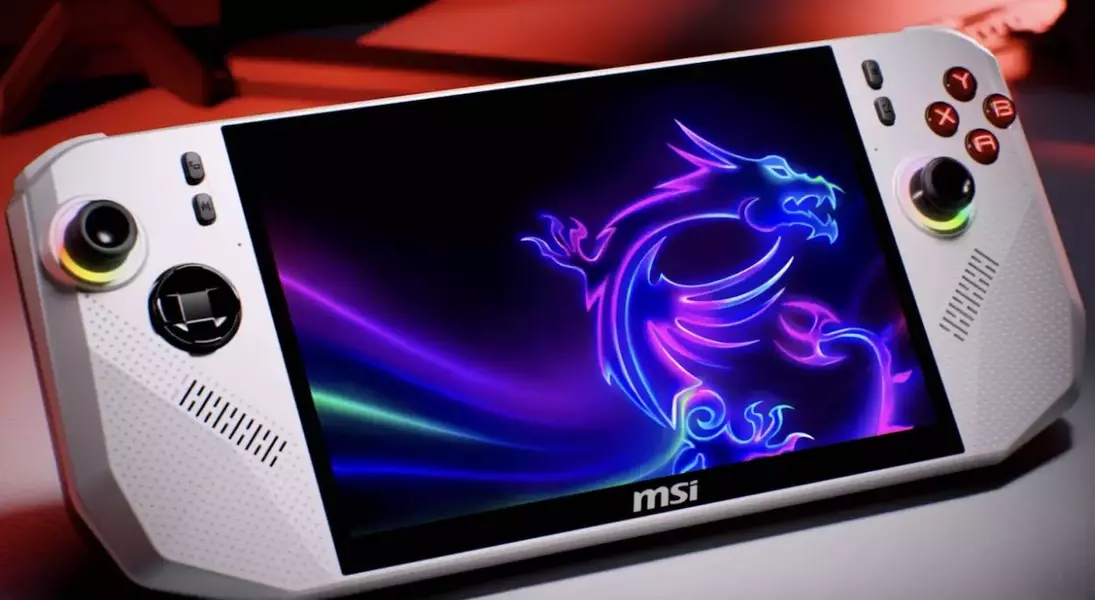
The landscape of portable gaming is undergoing a notable transformation, with recent revelations indicating a substantial escalation in device pricing. While early handheld PC gaming options like the Steam Deck offered more accessible entry points, new models such as the MSI Claw A8 are poised to command a premium. This shift reflects a broader trend across the industry, where cutting-edge technology and external economic factors are contributing to higher consumer costs.
Initial reports from European retail outlets, specifically Alza and SmartSK, have unveiled preliminary pricing for the forthcoming MSI Claw A8. These listings suggest a retail cost of approximately €975.90 for the white variant and €978.90 for the green one. Converting these figures, the projected price in US dollars stands at around $1,141 and $1,145 respectively. This represents a significant deviation from the more budget-friendly prices that characterized the introduction of handheld PC gaming devices. Although these prices are not yet officially confirmed, their consistency across multiple retailers lends credence to their accuracy. It's also worth noting that the recently launched MSI Claw 8 AI+ is priced at €1,099 at these same outlets, suggesting that an upgraded Ryzen processor in the A8 model could indeed justify a near-$1,200 price point.
This upward trend in pricing extends beyond MSI's offerings. Future releases, such as Microsoft's anticipated collaboration with Asus on the ROG Xbox Ally and Ally X, are also expected to carry a hefty price tag, potentially around $899.99, aligning with the 2024 ROG Ally X. Given the incorporation of an enhanced Ryzen Z2 AI Extreme APU in the Xbox handheld, its final cost might even exceed this estimate. Similarly, Lenovo's new Legion Go S is entering the market at a starting price of $759.99, reinforcing the perception that higher prices are becoming the new norm for advanced portable gaming solutions.
While the precise reasons behind this pricing evolution remain under wraps, external economic pressures, particularly tariffs, are likely playing a role. According to an expert from the Consumer Technology Association, video game systems and their accessories have already experienced price hikes due to tariffs. Any further tariffs on semiconductor components would only exacerbate this situation, driving costs up even further. This suggests that consumers considering a purchase in this category may find it advantageous to act sooner rather than later, as the purchasing power of their money for these devices could diminish in the coming months.
The current trajectory of pricing for handheld gaming consoles reflects a complex interplay of technological advancements and broader economic influences. As manufacturers integrate more powerful components and innovative features, the production costs inevitably rise. Concurrently, global trade policies and tariff structures are exerting additional pressure on the final retail prices. This combination of factors means that the days of inexpensive, yet powerful, handheld gaming devices may be gradually receding into the past, ushering in an era where consumers should anticipate a more substantial investment for these cutting-edge portable gaming experiences.
