Morgan Stanley's recent upgrade of Rocket Lab's price target has ignited a notable surge in the company's stock, drawing parallels to the early stages of aerospace giant SpaceX. While the endorsement highlights Rocket Lab's burgeoning potential in the commercial space sector, investors are prompted to consider its current market valuation relative to its developmental trajectory and historical precedents.
Morgan Stanley Boosts Rocket Lab Target, Igniting Stock Surge Amidst SpaceX Comparisons
On October 13, 2025, Morgan Stanley, a prominent financial institution, substantially raised its price target for Rocket Lab (RKLB) to $68 per share, a quadrupling of its previous estimate. This optimistic revision led to an impressive 4.4% increase in Rocket Lab's stock value by 12:35 p.m. ET. The upward adjustment follows a productive period for Rocket Lab, which recently secured five new rocket launch contracts with Japanese clients, specifically three missions for iQPS and two for the Japan Aerospace Exploration Agency. Analysts from Morgan Stanley characterized Rocket Lab as an \"earlier-stage alternative to SpaceX,\" underscoring its potential in the burgeoning commercial space industry.
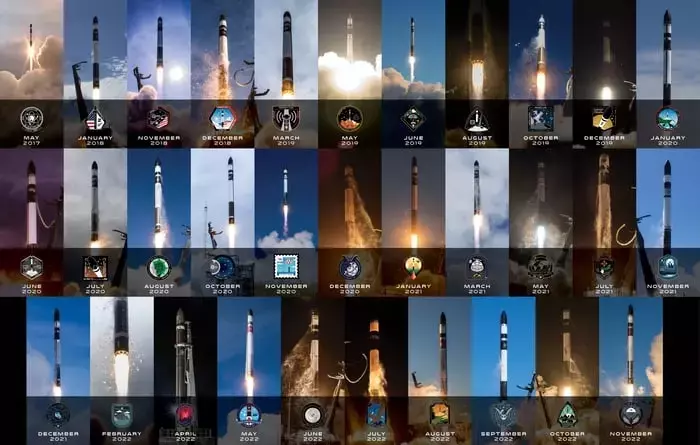
Rocket Lab's existing Electron rocket, a smaller launch vehicle, has successfully completed 70 missions, establishing itself as a reliable workhorse. The company is also developing the Neutron rocket, a larger, reusable vehicle anticipated to debut later this year, mirroring the reusable technology pioneered by SpaceX's Falcon 9, which achieved its first successful landing in 2015. This developmental timeline suggests Rocket Lab is currently positioned where SpaceX was approximately 10 to 17 years ago.
However, a key point of divergence lies in their respective valuations at comparable stages. In 2015, SpaceX, largely propelled by the potential of its Starlink satellite internet program, was valued at roughly $10 billion. In stark contrast, Rocket Lab, which has yet to launch its Neutron rocket or establish a satellite constellation, currently commands a market capitalization exceeding $30 billion. This implies Rocket Lab's stock is trading at a valuation three times higher than SpaceX's during a similar phase of its development, raising questions about its current pricing.
From a journalist's perspective, this news presents a fascinating dichotomy. On one hand, Morgan Stanley's strong endorsement and the comparison to SpaceX provide a significant boost to Rocket Lab's credibility and investor confidence, signaling strong future growth potential. The successful Electron missions and the development of Neutron clearly position Rocket Lab as a serious contender in the commercial space sector. On the other hand, the substantial valuation difference between Rocket Lab today and SpaceX at a comparable stage warrants careful consideration. While innovation often comes at a premium, a valuation three times higher without a proven large-scale reusable rocket or a disruptive venture like Starlink suggests that a significant portion of future success might already be priced into the stock. This situation encourages investors to thoroughly evaluate the intrinsic value and future prospects of Rocket Lab, balancing optimism with a healthy dose of financial prudence. It highlights the speculative nature of investing in emerging high-growth industries, where potential can often outpace tangible achievements in market perception.
