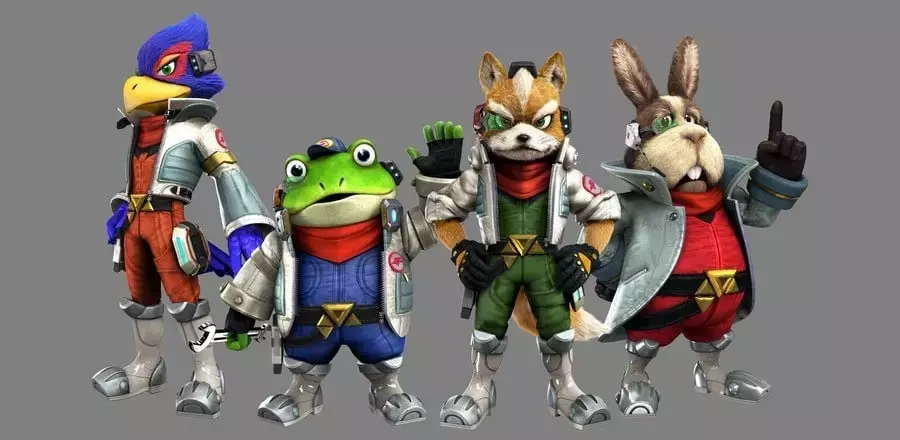


A curious fan theory concerning the Star Fox crew's supposed robotic leg replacements recently elicited a surprised response from Nintendo's legendary creator, Shigeru Miyamoto. This intriguing speculation, which has circulated among the gaming community for some time, suggests that the anthropomorphic animal pilots underwent limb amputation, replacing their biological lower legs with mechanical prosthetics. The premise behind this theory posits that such modifications would mitigate the adverse effects of high G-forces during intense aerial maneuvers, thereby enhancing pilot performance and preventing loss of consciousness. The initial appearance of characters like Fox McCloud, Falco Lombardi, Peppy Hare, and Slippy Toad in early game art, showcasing distinctive metallic boots, fueled these discussions among enthusiasts. However, Miyamoto's reaction indicates that this widely debated concept was entirely new, and quite perplexing, to him.
The Revelation of a Robotic Leg Theory
In a recent disclosure by Kit Ellis, a former Public Relations Manager for Nintendo of America and co-host of "The Kit & Krysta Podcast," it was revealed that Shigeru Miyamoto, the revered figure behind numerous iconic Nintendo franchises, including Star Fox, expressed profound astonishment upon learning of a peculiar fan theory. This theory, which has gained traction within certain fan circles, proposes that the characters in the Star Fox universe, specifically the flight team, have undergone the surgical removal of their lower legs, replaced by advanced robotic prosthetics. Ellis recounted that Miyamoto's immediate reaction was a discernible blend of bewilderment, incredulity, and a hint of disbelief, encapsulating sentiments akin to "wait, what?" and "are you insane?".
The genesis of this elaborate fan theory can be traced back to the original key artwork and promotional materials for the inaugural Star Fox game, launched on the Super Nintendo Entertainment System. Observers noted that the characters were depicted wearing what appeared to be robust, metallic leg coverings or boots, which sparked interpretations of them being more than just ordinary footwear. A prominent example cited is the cover art for an April 1993 edition of Nintendo Power magazine, as well as the North American box art, both featuring these distinctive leg designs. Proponents of the theory argued that these metallic appendages were not merely cosmetic but served a functional purpose: to prevent blood from pooling in the lower extremities during the extreme G-forces experienced in space combat, thus averting pilot blackouts and enhancing operational efficiency.
This speculative notion resurfaced in a recent discussion on social media platform X, prompted by a tweet from Andre Segers, which scrutinized Fox McCloud's leg attire in a newly unveiled poster for the "Super Mario Galaxy Movie." Ellis, in his reply, affirmed Miyamoto's unawareness and pronounced surprise regarding the amputation theory, dispelling it as an unintended fan interpretation rather than a deliberate design element. While the metallic boots in the original Star Fox puppets might have appeared somewhat restrictive, especially for characters like Falco with his slender bird legs, newer representations, such as Fox's footwear in the aforementioned movie poster, exhibit a more practical and comfortable design, complete with protective knee and toe caps. This evolution in character design further underscores the likely stylistic origin of the initial metallic leg appearance, rather than a narrative implication of amputation. The most recent installment in the series, Star Fox Zero, also presents the characters with more conventional, albeit armored, legwear, moving away from the ambiguous designs that fueled the fan theory.
This anecdote illuminates the creative chasm that can sometimes exist between a creator's intent and a fanbase's interpretations. While fan theories often enrich the lore and engagement surrounding beloved franchises, Miyamoto's reaction serves as a charming reminder that sometimes, the simplest explanation for a visual design is indeed the correct one. It also highlights the intricate and sometimes unexpected ways in which audiences engage with and extrapolate meaning from fictional universes, even in the absence of explicit canonical support.
