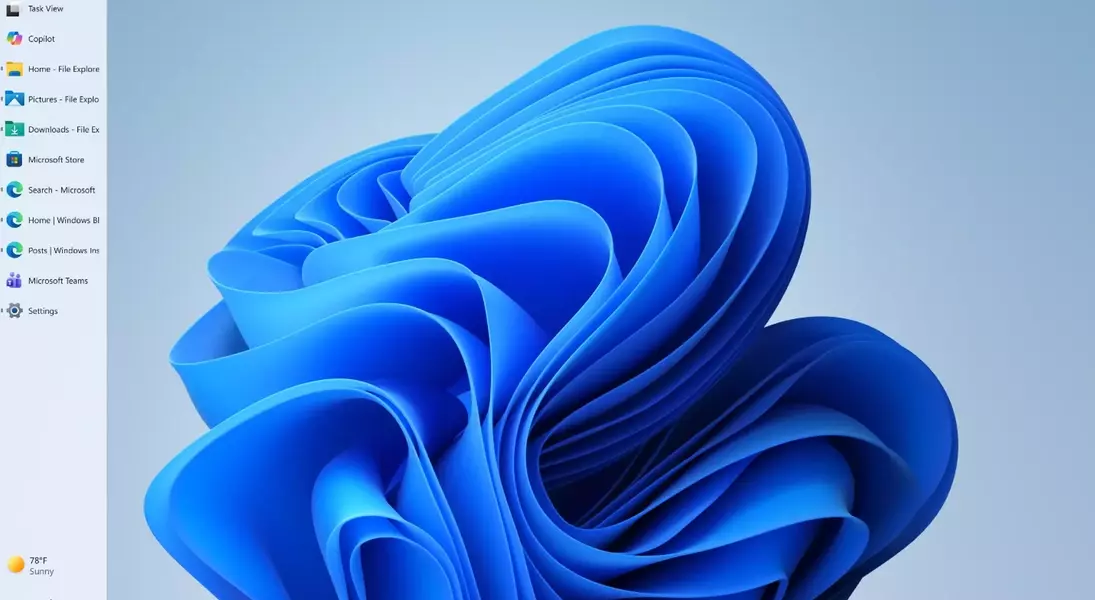
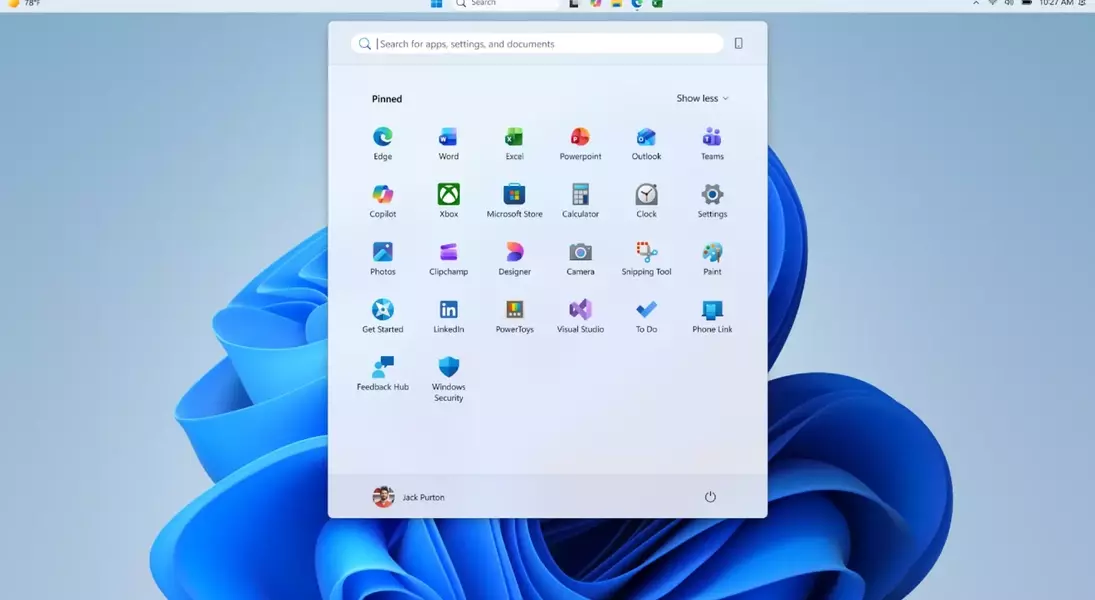
Microsoft is advancing its focus on fundamental Windows functionality, moving beyond novel AI integrations to refine core user interactions. The company recently unveiled substantial updates for the Windows 11 taskbar and Start menu, designed to give users more personalized control over their desktop environment.
A notable improvement allows users to position the taskbar along any screen edge—top, bottom, left, or right—a feature previously present in older Windows versions but absent in Windows 11. This enhanced flexibility extends to Start button and icon alignment, accommodating various arrangements with options for top, bottom, left, or center positioning. Furthermore, vertical taskbars can now be configured as either a slim bar, similar to the default horizontal layout, or a wider version that displays full application labels. For devices with smaller screens, an even more compact taskbar option will be available, optimizing screen real estate.
Beyond the taskbar, the Start menu also receives significant attention, with new customization and quality-of-life improvements. Users will gain individual toggles to show or hide Pinned, Recommended, and All sections, alongside options to adjust the menu's size and conceal their name and profile picture for increased privacy. Microsoft is also enhancing the 'Recommended' section, which will be rebranded as 'Recent' to more accurately reflect its content, primarily displaying recently installed applications and accessed files. These adjustments aim to reduce irrelevant suggestions and provide a more pertinent overview of user activity. These upcoming features will initially roll out to Windows Insiders in the Experimental channel, with a broader public release anticipated in the coming months.
These updates underscore Microsoft's dedication to evolving the user experience by prioritizing practical, impactful changes that empower individuals to tailor their operating system to their specific needs, fostering a more efficient and enjoyable computing environment.
