In the fiercely competitive realm of artificial intelligence, tech giant Microsoft is intensifying its efforts to position its Copilot AI as the premier choice for users. Recent observations suggest that the company is leveraging its Bing search engine to strategically promote Copilot, particularly targeting individuals who initiate searches for rival AI platforms. This move highlights the growing trend of major technology players employing various methods to establish dominance within the burgeoning AI landscape.
Microsoft's Proactive AI Promotion on Bing
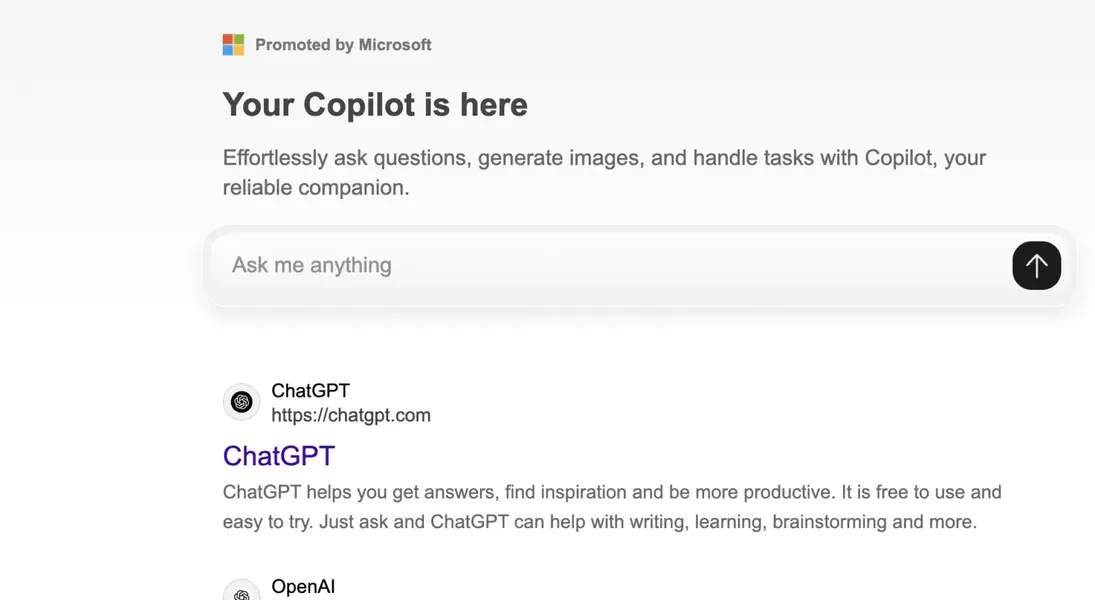
In a strategic maneuver observed across the digital landscape, Microsoft has initiated a vigorous campaign to champion its Copilot artificial intelligence assistant directly within the Bing search engine. This proactive push specifically targets users who seek out competing AI chatbots, such as OpenAI's ChatGPT, Google's Gemini, or Anthropic's Claude. According to recent reports, these users are greeted with highly visible Copilot banners, conspicuously placed at the very top of search results. These compelling banners serve as direct invitations, urging users to submit their inquiries to Microsoft's own AI service. Upon interaction, the system seamlessly transitions users to the Copilot website, where their queries are processed and results are presented. Phrases such as "Your Copilot is here," prominently displayed on these banners, leave little doubt about Microsoft's intent. While this aggressive promotion is subtly marked as an advertisement with fine print indicating "promoted by Microsoft," its strategic placement ensures maximum visibility and user engagement. This approach is not unique to Microsoft; other tech titans, including Google, similarly promote their AI offerings, such as Gemini, through integrated pop-ups and prominent placements on their respective platforms, underscoring a widespread industry trend of direct AI ecosystem promotion.
This strategic push by Microsoft in the AI domain prompts reflections on the evolving dynamics of technological innovation and market competition. From a critical perspective, while the promotion of one's own products is a fundamental aspect of business, the subtle integration of advertisements directly within search results for competitors raises questions about fairness and user choice in the digital marketplace. It underscores the immense power held by platform owners to influence user behavior and shape consumption patterns within their ecosystems. For users, this means navigating an increasingly curated digital environment, where direct access to a diverse range of AI tools might be subtly, yet effectively, funneled towards proprietary solutions. This scenario could potentially stifle innovation from smaller players and limit the breadth of options available to the public. As the AI arms race intensifies, transparency in promotional tactics and a continued focus on user autonomy will be paramount to ensuring a healthy and competitive technological future.
