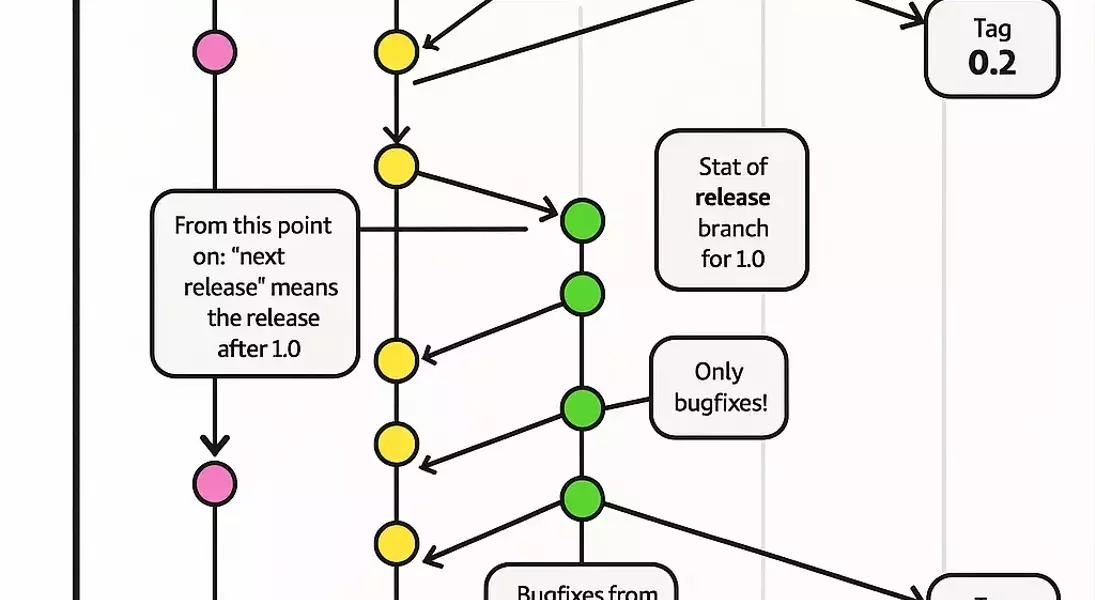
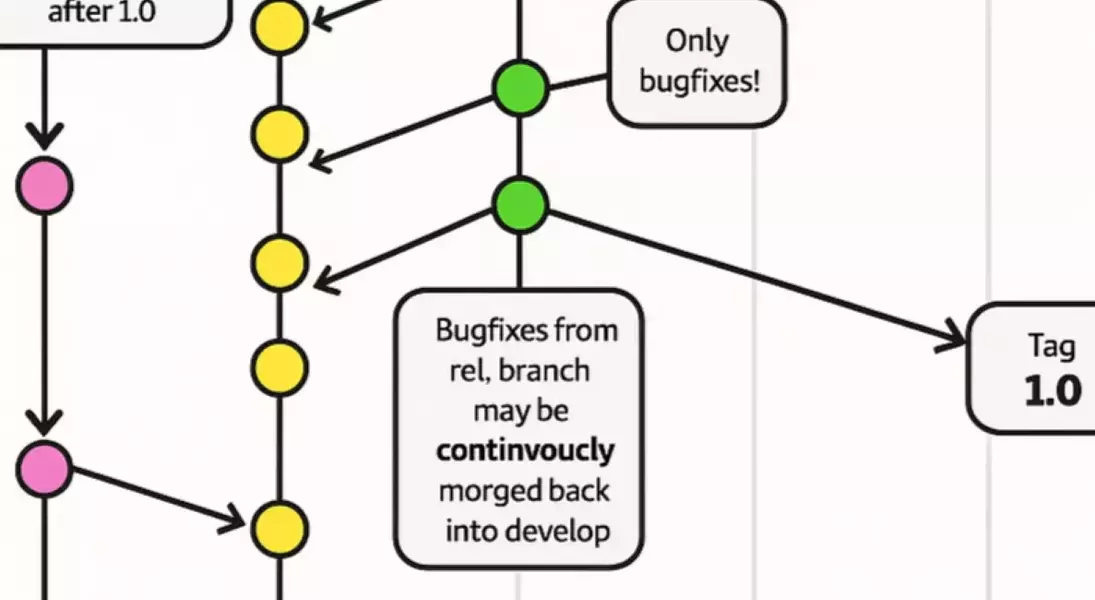
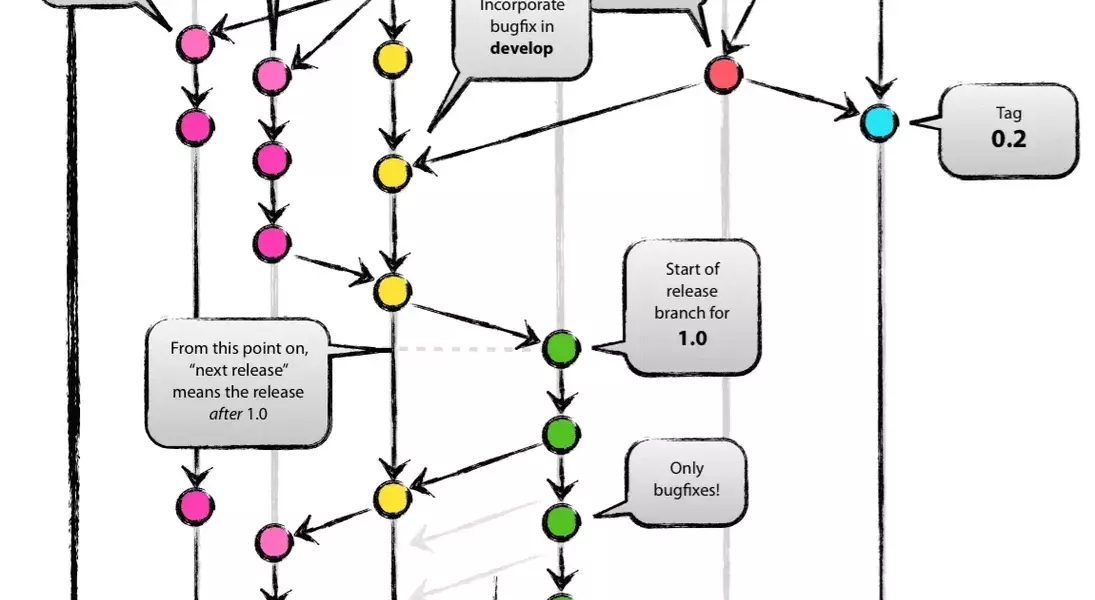
A recent incident involving Microsoft's official GitHub tutorial has sparked a debate about the ethical use of artificial intelligence in content creation. Engineer Vincent Driessen discovered that a diagram explaining Git concepts on Microsoft's Learn platform appeared to be an AI-generated, flawed rendition of his original work, created over a decade ago. Driessen's initial diagram, meticulously designed in Apple Keynote in 2010, aimed to clearly illustrate Git branching models and was shared freely for educational purposes, gaining widespread adoption in technical presentations and documentation.
The AI-generated version, which Microsoft subsequently removed, was replete with inaccuracies and distortions. Key terms like "continuously merged" were rendered as "continvuocly morged," and the time-axis label became "Tim." Driessen expressed his profound disappointment, describing the AI's output as "careless, blatantly amateuristic, and lacking any ambition." He emphasized that while he encouraged the free use and modification of his original diagram, its appropriation by a multi-billion dollar company through AI, without attribution or proper quality control, was disheartening. This event highlights the growing concern over AI's potential to facilitate plagiarism and degrade content quality, especially when unchecked.
This case serves as a stark reminder of the responsibilities that come with leveraging AI technologies. While AI offers immense potential for innovation and efficiency, it must be governed by ethical principles that prioritize originality, accuracy, and proper attribution. The uncritical adoption of AI-generated content can undermine the efforts of human creators and lead to a decline in overall quality and trustworthiness. Moving forward, it is crucial for organizations to implement robust review processes and maintain transparency regarding their use of AI to ensure that creativity and intellectual property are respected, and that technological advancements truly serve to enhance, rather than diminish, human endeavor.
