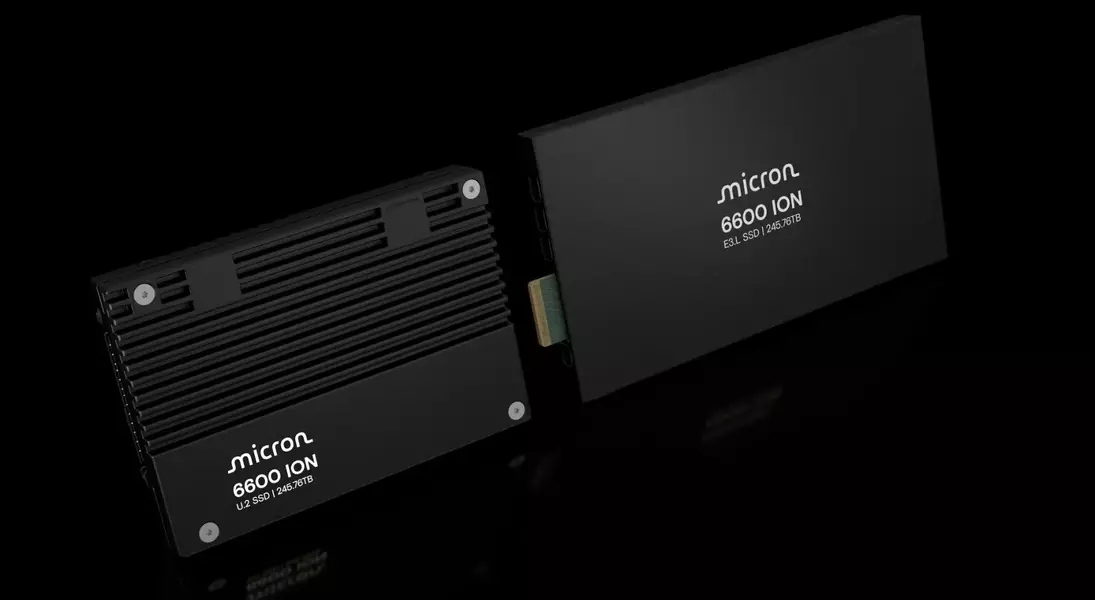
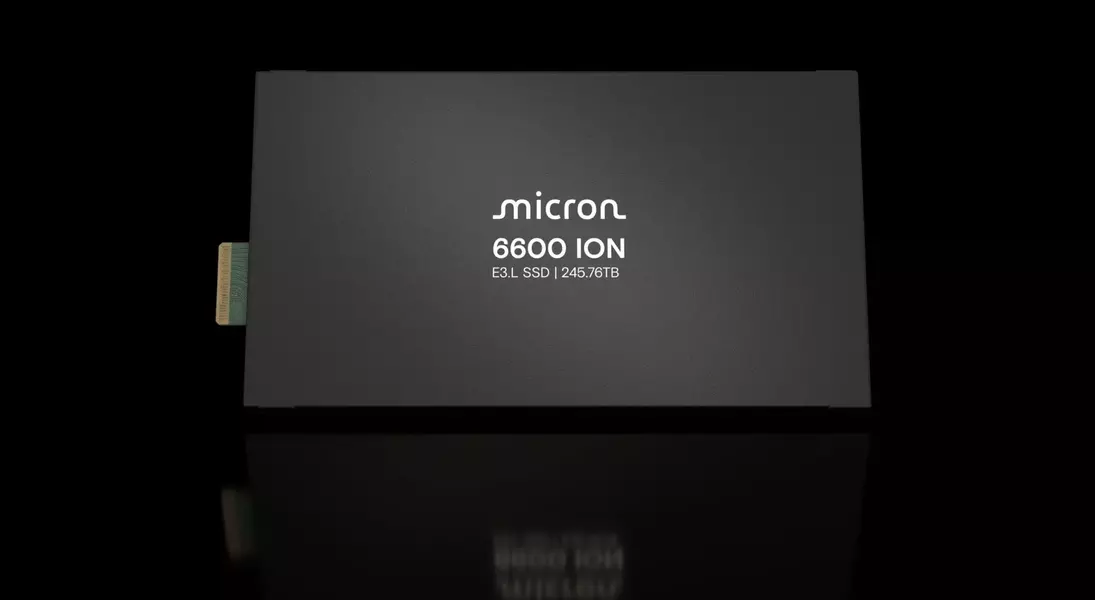
Micron, a prominent player in the memory sector, has introduced a monumental 245 TB SSD, the 6600 ION, tailored for data center applications. This state-of-the-art solid-state drive is proclaimed to be the largest commercially accessible SSD globally, addressing the expanding storage requirements for artificial intelligence, cloud computing, enterprise operations, and hyperscale environments. The advent of these colossal storage solutions marks a pivotal transformation in data center architecture, emphasizing heightened storage density and optimized power consumption.
Micron's 245TB SSD: A Game-Changer for Data Centers
Micron has unveiled its 245TB 6600 ION SSD, hailed as the world's highest-capacity commercially available solid-state drive, specifically engineered to cater to the demanding storage needs of AI, cloud, enterprise, and hyperscale environments. This new QLC NAND technology-driven SSD offers significant advantages over traditional HDDs, most notably its superior power efficiency. With a maximum power rating of 30 watts, the 6600 ION consumes roughly half the energy of a comparable high-capacity hard disk drive. This reduction in power consumption, coupled with its compact design, translates into substantial operational benefits for data centers. Travis Virgil, senior vice president of ISG product management at Dell, highlighted that the ability to fit significantly more storage into each rack dramatically alters the economics of data centers, leading to reduced power usage, less physical space required, and lower overall operational overhead. The 245 TB model boasts impressive sequential read speeds of 13,700 MB/s and sequential write speeds of 3,000 MB/s, showcasing its high performance capabilities. While pricing information is yet to be disclosed, it is anticipated that this cutting-edge technology will primarily target major AI companies and large-scale data operations.
The introduction of Micron's 245TB SSD represents a pivotal advancement in data storage technology, particularly for sectors heavily reliant on vast amounts of data processing and storage, such as AI development. The drive’s immense capacity and optimized power usage make it an ideal solution for data centers grappling with the exponential growth of data generated by advanced AI models. Beyond its capacity, the 6600 ION's QLC NAND technology is positioned a generation ahead of competitors, ensuring both performance and longevity. The inherent power efficiency of SSDs, further enhanced in Micron's new offering, means data centers can achieve higher storage densities per rack while simultaneously lowering their energy footprint. This not only contributes to cost savings but also aligns with increasing demands for more sustainable IT infrastructure. The potential for reducing rack space by 82% compared to HDD deployments is a critical factor for data centers looking to maximize their physical infrastructure. The undisclosed pricing suggests that this high-end solution is intended for enterprises with substantial budgets, underscoring its role in facilitating the next wave of technological innovation driven by AI and big data.
AI-Driven Memory Market Dynamics and Future Outlook
The burgeoning demand for memory and storage, largely fueled by the rapid expansion of artificial intelligence, is creating a significant challenge for the broader market. The high cost of storage solutions is directly attributed to AI data centers aggressively acquiring memory modules to train complex models. This situation is exacerbated by the competitive landscape among numerous AI companies, all vying for contracts with leading manufacturers such as SK hynix, Samsung, and Micron. These manufacturers are finding themselves in a delicate position, as securing long-term contracts could potentially lock them into lower selling prices for memory, despite the unprecedented demand. This scarcity and high demand have led to a 'memory crisis,' impacting the availability and affordability of storage for other consumers and industries. The market dynamics indicate that prices for storage components are unlikely to decrease anytime soon, as the insatiable appetite for memory in AI applications continues to dominate the supply chain. The focus remains on providing specialized, high-capacity solutions for AI, leaving the general consumer market facing elevated costs and limited options.
The current memory market is characterized by intense competition and inflated prices, primarily due to the overwhelming requirements of AI data centers. Companies engaged in AI development are consuming vast quantities of memory chips, driving up demand and consequently, costs. Manufacturers like SK hynix are reportedly struggling to meet this 'unprecedented' demand, often receiving offers that they are hesitant to accept due to concerns about future pricing structures. The reluctance to commit to long-term contracts at potentially lower rates highlights the uncertainty and speculative nature of the current market. This trend suggests a prolonged period of high prices for memory and storage, affecting not only individual consumers but also other industries that rely on these components. The memory crisis underscores a broader shift in technology prioritization, where the critical needs of AI innovation take precedence over general market accessibility. As AI continues to evolve and its data processing demands grow, the strain on memory supply is expected to persist, making advanced storage solutions both essential and costly for the foreseeable future.
