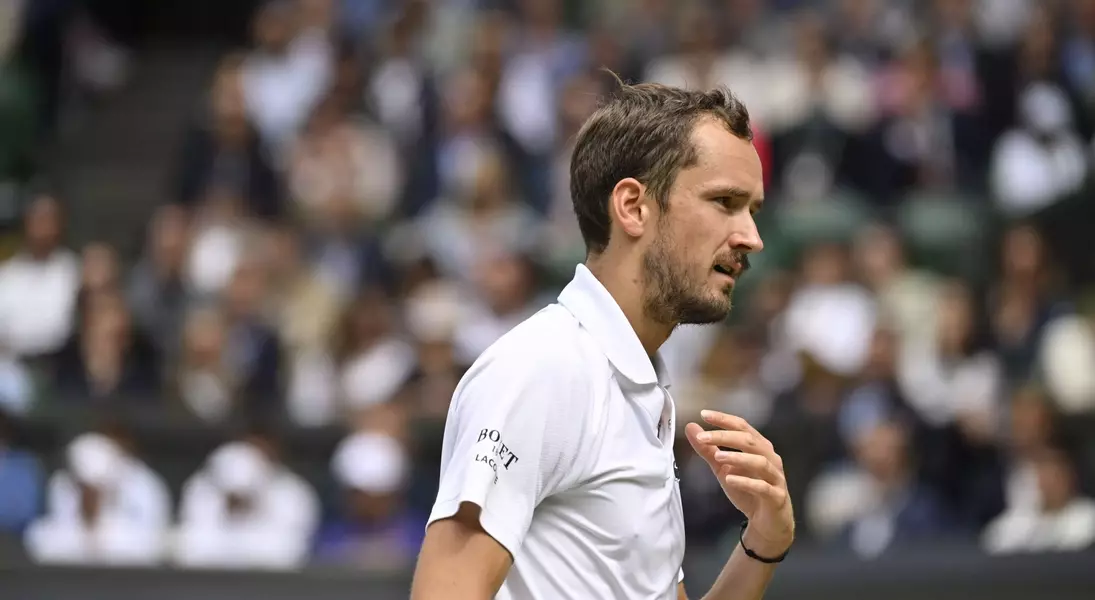
Daniil Medvedev's journey at Wimbledon was abruptly cut short in a surprising first-round defeat, marking a significant upset in the tournament's initial stages. The former World No. 1, known for his formidable play, fell to Benjamin Bonzi, an unseeded player who delivered a career-defining performance. This unexpected loss sent ripples through the tennis community, highlighting the unpredictable nature of Grand Slam events. Medvedev's candid and somewhat acerbic comments during the match, expressing his bewilderment at his opponent's sudden surge in form, quickly became a focal point of discussion, underscoring his palpable frustration.
This early elimination is particularly notable for Medvedev, representing his second consecutive first-round exit from a major tournament, a rare occurrence for a player of his caliber. The defeat carries substantial implications for his standing in the global rankings, as he will lose valuable points and experience a noticeable decline. Despite entering Wimbledon following a strong showing at the Halle Open, where he reached the final, his grass-court campaign concluded prematurely, raising questions about his current form and adaptability on different surfaces.
Unexpected Defeat on the Grass Courts
In a stunning turn of events at Wimbledon, Daniil Medvedev, ranked among the top ten players globally, experienced a premature departure from the tournament after a hard-fought first-round match. His opponent, the French player Benjamin Bonzi, currently ranked 64th worldwide, secured his inaugural main draw triumph at Wimbledon against the formidable Russian. Bonzi's exceptional performance, defying expectations given his career-best ranking outside the top 40, was instrumental in clinching a decisive victory with set scores of 7-6(2), 3-6, 7-6(3), 6-2, propelling him into the second round for the first time in his career. This outcome sent shockwaves through the tennis world, as it marked the first instance of a top-10 player being eliminated in the opening round of this prestigious Grand Slam.
The encounter between Medvedev and Bonzi was characterized by its intensity and numerous closely contested moments, yet it was Bonzi who consistently demonstrated superior execution during pivotal points. Statistical analysis of the match reveals Medvedev's struggle with consistency, as he served 14 aces but also committed 12 double faults. He managed to hit 42 winners but was plagued by 47 unforced errors, indicating a wavering performance. Despite winning the second set, Medvedev's inability to capitalize on crucial tie-breaks ultimately led to his downfall. This early exit from a Grand Slam marks the second consecutive occasion for the Russian, a rare occurrence not seen since his initial appearances in major draws at the Australian Open and Roland Garros in 2017. His frustration was evident early in the match, particularly during the first set, as he grappled with Bonzi's unyielding play. Television broadcasts captured Medvedev's exasperated remarks in French to his support team, sarcastically questioning Bonzi's inconsistent brilliance: \"Why not play like this every day, win millions, be rich? But no, he [Bonzi] decides to do it once a year,\" he quipped, encapsulating his astonishment at his opponent's unexpected peak form.
Medvedev's Ranking Impact and Future Outlook
Medvedev's recent performance at Wimbledon represents a significant setback in what has been a tumultuous year for the 2021 US Open champion, diverging from his usual consistent presence at the sport's forefront. Just a week prior to Wimbledon, he showcased promising form by reaching the final of the Halle Open, albeit losing to Alexander Bublik. This result had suggested a potential resurgence and optimal preparation for the grass-court major. However, his swift elimination at Wimbledon means he fails to defend the semifinal points from the previous year, which will inevitably lead to a notable drop in his ATP ranking. This outcome will see him fall five places to World No. 14, underscoring the challenges he faces in maintaining his elite status amidst heightened competition and the inherent pressures of Grand Slam tennis.
The ramifications of this unexpected defeat extend beyond just ranking points; it prompts a reevaluation of Medvedev's current trajectory and mental fortitude. The sarcastic outburst during the match, while a momentary expression of frustration, also offered a glimpse into the psychological toll that such high-stakes competition can exert. The perceived inconsistency of opponents performing at their peak against him, as highlighted by his comments, suggests a narrative of unexpected challenges that have impacted his recent Grand Slam campaigns. As he moves forward, Medvedev will need to meticulously analyze his game, particularly his performance in critical moments and his ability to counter unforeseen surges from lower-ranked players. Reclaiming his position at the pinnacle of men's tennis will require not only technical adjustments but also a renewed mental resilience to navigate the unpredictable landscape of professional tennis and convert his latent potential into consistent championship-winning form.
