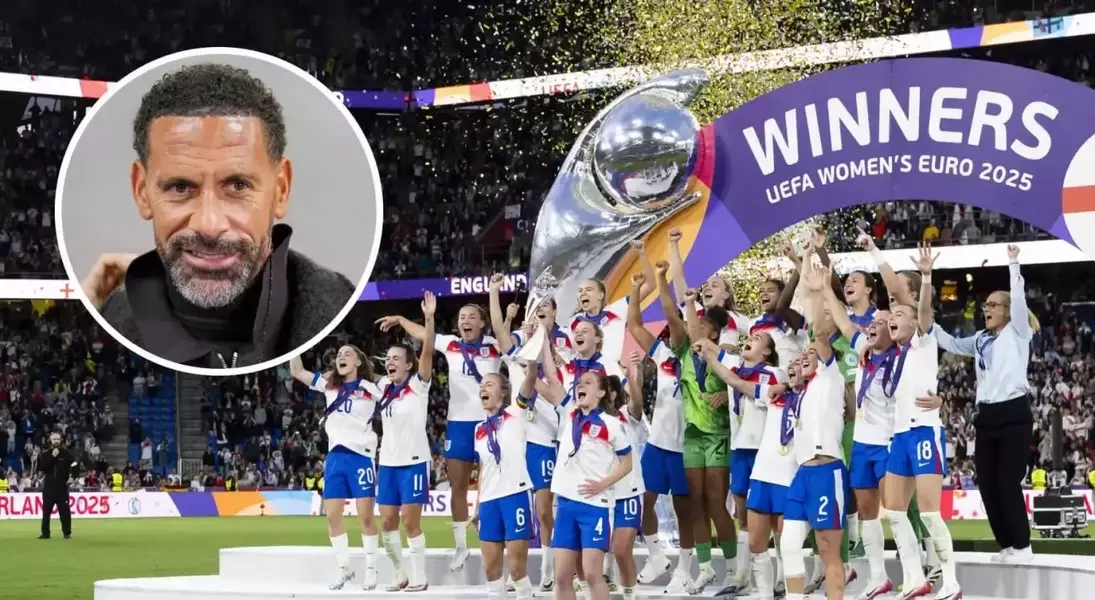
The recent victory of England's women's football team in Euro 2025 has inadvertently cast a spotlight on media coverage, particularly the BBC's role. This triumph, a significant moment in sports, has been overshadowed by a debate fueled by prominent figures like Rio Ferdinand, who have openly questioned the broadcaster's choices for its punditry panel. This controversy has been enthusiastically picked up by various news platforms, amplifying the discussion around the professionalism and focus of sports commentary. Beyond the media critique, the public discourse has also encompassed expectations for a national holiday to commemorate the victory, and a unique story about a goalkeeper's in-game strategy, framed misleadingly as 'cheating' by some.
The central point of contention emerged from Rio Ferdinand's public remarks regarding the BBC's selection for their Euro 2025 coverage. Ferdinand, a well-known football personality, expressed his dismay that Fara Williams, a respected figure in women's football, was not part of the BBC's commentary team. This sentiment was echoed and intensified by other media outlets, with headlines sensationalizing his comments as 'slams' and 'hits out' against the BBC. However, it was later revealed that Ferdinand's association with Williams through a shared sports management agency introduced a potential conflict of interest, suggesting his critique might have been motivated by promotional aims rather than purely objective assessment of broadcasting quality. This nuance was largely overlooked in the widespread reporting, focusing instead on generating controversy around the BBC.
Furthermore, the broader media narrative extended to scrutinizing the overall maturity of women's football coverage. One notable example was a 'Daily Telegraph' article that, despite its more measured content, was presented by other outlets as a direct condemnation of all women's football broadcasting for needing to 'grow up.' The original piece merely pondered the future evolution of commentary, suggesting a potential shift towards more analytical, 'Roy Keane or Alan Hansen-type' figures as the sport gains more elite status. This highlights a trend of misrepresenting journalistic content to fit preconceived agendas, particularly those critical of established broadcasters like the BBC.
Another tangential but widely discussed topic was the absence of a bank holiday to celebrate the Lionesses' Euro 2025 win. Various news sources highlighted the public's desire for such a holiday, often framing the government's non-decision as a deliberate denial. It was pointed out, however, that there is no historical precedent for declaring a bank holiday for sporting victories in England, a fact often omitted in the more sensational reporting. Past special bank holidays have predominantly been reserved for significant royal events. This aspect of the narrative underscores the media's tendency to amplify public sentiment and speculate on political decisions surrounding high-profile national achievements.
The media frenzy extended even to an incident involving England's goalkeeper, Hannah Hampton, who was observed using a 'cheat sheet' during a penalty shootout. This detail, widely reported, generated significant discussion, with some outlets using terms like 'cheat' to describe her actions. Yet, the use of such notes to prepare for opponent's tendencies is a recognized and legal part of sports strategy, not a form of cheating. This instance exemplifies how minor details can be blown out of proportion and mischaracterized in the pursuit of engaging headlines, often at the expense of accuracy and fair representation.
The aftermath of England's Euro 2025 victory has unfolded as a multifaceted media event. While celebrating a historic sporting achievement, it has also become a platform for dissecting media practices, questioning journalistic integrity, and observing the interplay between public expectation and official response. The extensive coverage, though at times sensationalized, underscores the growing prominence of women's football and its increasing impact on national discourse.
