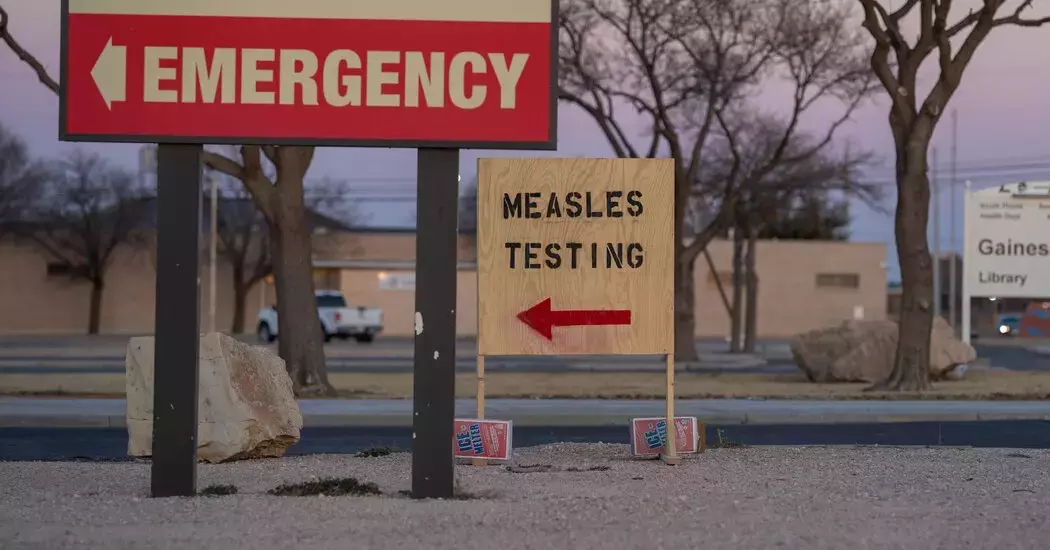
In recent months, a significant rise in measles cases has sparked widespread concern, particularly following the first U.S. death from the virus in a decade, which occurred in West Texas. This outbreak has prompted experts to address critical questions about the severity of the virus and the effectiveness of vaccines. While some officials downplay the situation, public health experts warn that the current outbreak is unusually large and highlights the dangers of declining vaccination rates.
Details of the Measles Outbreak in West Texas
In the heart of West Texas, during a season marked by unexpected challenges, an alarming surge in measles cases has taken hold. The outbreak has resulted in the tragic loss of a young life, marking the first fatality from the virus in the United States in ten years. Despite this, Robert F. Kennedy Jr., who recently met with President Trump and other cabinet members, described the situation as "not unusual," emphasizing that outbreaks occur annually. However, public health professionals disagree, noting that the scale of this particular outbreak is cause for serious concern.
Jason Schwartz, an associate professor at the Yale School of Public Health, remarked that while sporadic cases are not uncommon, an outbreak of this magnitude is rare and troubling. Statistics reveal that 164 individuals have contracted measles this year alone, surpassing half of the total cases reported in all of 2024 and significantly higher than the 59 cases documented in 2023. The resurgence of measles, once declared eliminated from the U.S. in 2000 due to successful vaccination efforts, underscores the importance of maintaining high immunization rates.
Reflection on the Importance of Vaccination
This outbreak serves as a stark reminder of the critical role that vaccines play in safeguarding public health. The decline in vaccination rates has contributed to the re-emergence of diseases like measles, which were previously under control. It is essential for communities to recognize the importance of immunizations and work together to protect vulnerable populations. As we face the challenges posed by this outbreak, it becomes clear that robust vaccination programs are indispensable in preventing future health crises.
