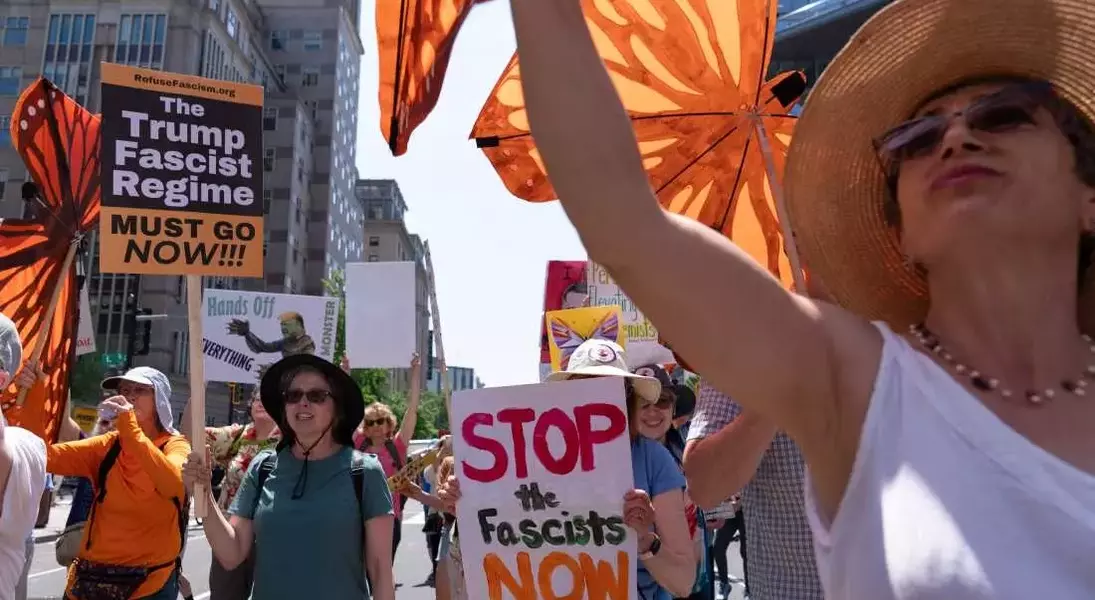
Across the United States, significant demonstrations are anticipated to unfold on May Day, with organizers calling for widespread boycotts of workplaces, educational institutions, and retail establishments. These actions are primarily directed at expressing dissent against the current administration's policies and what activists perceive as an undue influence of billionaires on governance. Echoing previous anti-administration rallies under the banner of "No Kings," these coordinated events, collectively branded "May Day Strong," will span numerous cities from coast to coast, coinciding with International Labor Day.
Unlike the nationally observed Labor Day in September, May 1st has historically served as a focal point for protest in the U.S., rooted in the 19th-century struggle for an eight-hour workday. The National Education Association, representing millions of educators, is a leading force behind Friday's protests, emphasizing the need to prioritize workers over the ultra-wealthy. This sentiment is fueled by concerns that a system favoring billionaires is adversely affecting essential services like public education, impacting countless individuals from bus drivers in New York to teachers in Idaho and nurses in Louisiana. Organizers project participation from over 500 labor unions, student organizations, and community groups, with a student group, Sunrise Movement, anticipating more than 100,000 students will participate in a "strike."
In North Carolina, where educational funding and teacher salaries are among the lowest nationally, approximately 20 public school districts will be closed due to anticipated staff absences. Educators and school employees plan to rally in Raleigh, pressing the state legislature for greater investment in education as part of the "Kids Over Corporations" initiative. While some lawmakers express concern over instructional time loss, union leaders argue that increased funding requires the wealthy to contribute their fair share, believing collective action is crucial for a future where communities and students receive necessary support. Similar events are scheduled for other major cities such as Chicago, Los Angeles, Seattle, and Washington, D.C.
These May Day actions underscore a persistent commitment to advocating for economic equity and robust public services. By continuing a long-standing tradition of May 1st protests, participants aim to amplify the voices of working-class citizens and challenge systemic imbalances. Their collective efforts highlight the critical importance of ensuring that governmental policies truly serve the welfare of all people, fostering a society where education, labor rights, and community well-being are paramount, rather than being overshadowed by private interests.
