
Securing a comfortable financial future in retirement often hinges on a thorough understanding of Social Security provisions, especially for married couples. Many retirees depend on these benefits, making it crucial to grasp the nuances that can affect their payouts. This article delves into three key Social Security rules tailored for married individuals, offering insights into how to optimize benefits and ensure financial stability in later life.
Crucial Social Security Regulations for Married Individuals Unveiled
In a recent analysis by Stefon Walters, published on October 13, 2025, at 8:30 AM, critical information for married couples navigating Social Security benefits was brought to light. With over 53 million individuals receiving Social Security retirement benefits in August, understanding these intricate regulations is more important than ever. Walters' report meticulously outlines how spouses can leverage their partner's earnings record, the implications of claiming benefits prior to their full retirement age, and the automatic transition to survivor benefits following a spouse's passing.
A significant aspect discussed is the ability to claim up to 50% of a spouse's primary insurance amount (PIA) through spousal benefits. Eligibility generally requires a marriage duration of at least one year, the spouse to be actively receiving benefits, and the claimant to be at least 62 years old (or caring for a child under 16 or with a qualifying disability). Notably, divorced individuals who were married for a minimum of 10 years can also access these benefits, provided they remain unmarried and meet the age requirement. This provision ensures a safety net for those who may have limited individual earnings histories.
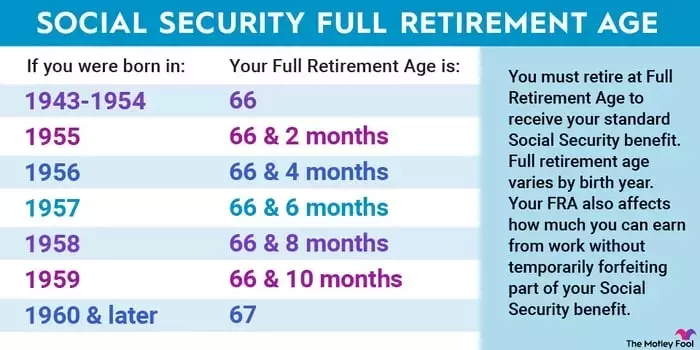
However, the report emphasizes that claiming spousal benefits prematurely results in reduced monthly payouts, akin to standard benefits but with different reduction rates. For instance, an individual with a full retirement age (FRA) of 67 who claims spousal benefits at age 62 could see a 35% reduction, compared to a 30% reduction for standard benefits. It's vital to note that unlike standard benefits, spousal benefits do not accrue delayed retirement credits if claimed beyond one's FRA, suggesting that claiming at FRA is typically the most advantageous timing.
Furthermore, Walters highlights the transition from spousal benefits to survivor benefits upon a spouse's death. This conversion can lead to a substantial increase in benefits, ranging from 71.5% to 100% of the deceased spouse's benefit, significantly more than the 50% offered by spousal benefits. To qualify for survivor benefits, criteria such as being at least 60 years old (or 50 with a disability), having been married for at least nine months, and not remarrying before age 60 (or 50 with a disability) must be met. This includes provisions for ex-spouses, children, and dependent parents.
Navigating Retirement with Informed Decisions
This comprehensive overview of Social Security for married couples underscores the importance of informed decision-making. The ability to claim spousal benefits offers a crucial financial lifeline, particularly for individuals with lower personal earnings. However, the varying reduction rates for early claims and the conversion to survivor benefits necessitate careful planning. Retirees and pre-retirees should proactively educate themselves on these rules to maximize their entitlements, ensuring a more secure and comfortable retirement. Understanding these provisions is not just about maximizing income; it's about building a robust financial foundation that adapts to life's changes, offering peace of mind in the golden years.
