Discover essential insights into maintaining your kitchen knives, ensuring their sharpness, longevity, and safe handling. This guide, drawing on expert advice, illuminates common errors and offers practical solutions to keep your blades in pristine condition.
Preserve Your Blades: Expert Strategies for Optimal Knife Longevity
Selecting the Ideal Cutting Surface to Protect Your Knife's Edge
The foundation of good knife care begins with your cutting surface. Many users inadvertently damage their knives by using inappropriate cutting boards. Materials like glass, stone, or flimsy plastic can rapidly dull and degrade a knife's finely crafted edge. Experts strongly recommend opting for cutting surfaces that offer a slight give, such as wood or high-density plastic, which are more forgiving on the blade and help maintain its sharpness over time.
The Art of Proper Knife Cleaning: Hand Washing for Blade Integrity
Effective knife cleaning is crucial, yet improper methods can lead to damage. Hand washing is universally endorsed by culinary professionals as the superior method. It is essential to gently wash blades by hand immediately after use and, critically, to dry them thoroughly. Leaving knives wet or moist can lead to rust and corrosion, compromising the blade's quality and lifespan. Placing knives loosely in a sink is also strongly discouraged due to safety risks and potential damage.
Why Dishwashers and Knives Don't Mix: Protecting Your Investment
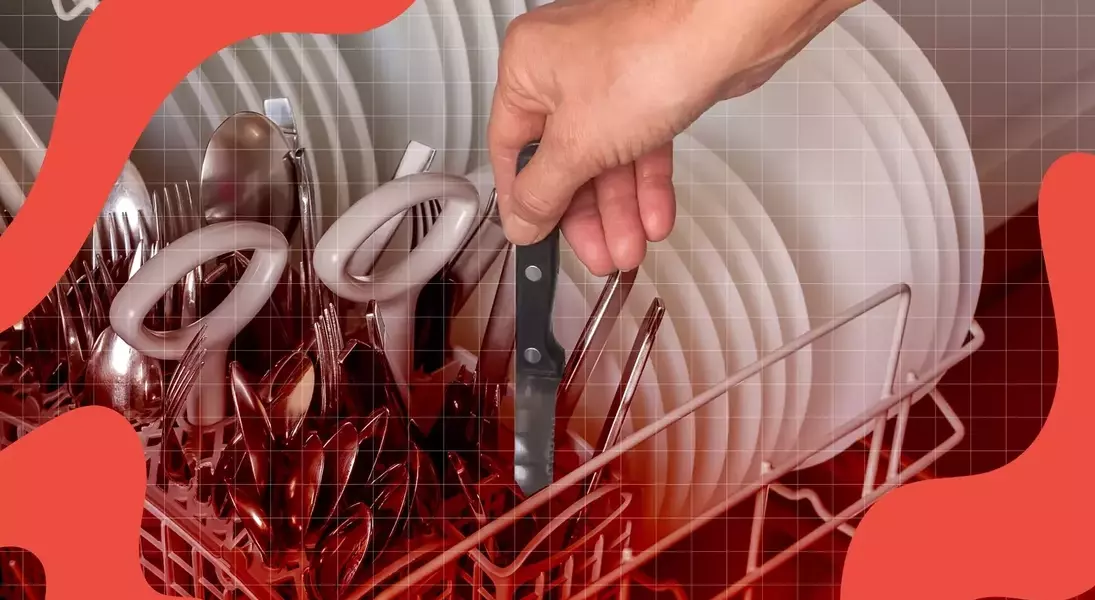
Despite the convenience, dishwashers are detrimental to kitchen knives. The intense water jets, harsh detergents, and jostling during cycles can cause significant damage. Detergents often contain lye, a caustic substance that can corrode the carbon steel of blades, leading to structural weakening and eventual failure. Furthermore, the high temperatures and physical impacts within a dishwasher can dull the edge, warp the blade, crack handles, and even break tips, thereby shortening the knife's life considerably.
Secure Storage: Avoiding the Perils of a Disorganized Knife Drawer
Storing knives haphazardly in a drawer is a common mistake that can lead to dull blades and safety hazards. When knives are stored loosely, they can clang against each other and other utensils, causing chips, nicks, and damage to their edges. To prevent this, it is advisable to use protective blade guards, knife blocks, or magnetic strips. These storage solutions safeguard the blades from impact and protect users from accidental cuts, ensuring both the longevity of the knives and kitchen safety.
The Imperative of Sharpening and Honing: Maintaining Peak Performance
Regular sharpening and honing are fundamental to knife maintenance, yet often overlooked by home cooks. A knife that struggles to slice a tomato is a clear indicator of a dull blade. Sharpening restores the edge, while honing realigns microscopic deflections, bringing the blade back to its optimal state. It's recommended to either learn proper sharpening techniques using a wet stone or to seek professional sharpening services. Incorporating a honing steel into routine knife care can dramatically improve performance and extend the lifespan of your cutting tools.
Beyond Cutting: The Dangers of Using Your Knife as a Scraper
While often seen in professional kitchens, using a knife blade to scrape ingredients off a cutting board is a practice that can quickly degrade its edge. This action introduces lateral stress that can bend or dull the blade. Culinary experts suggest using a bench scraper for this task, a specialized tool designed to gather food efficiently without harming the knife's delicate edge. Adopting this simple habit can significantly preserve your knife's sharpness and structural integrity.
The Multifunction Myth: Why Knives Should Stick to Cutting Tasks
Treating a kitchen knife as a universal tool for tasks beyond cutting, slicing, or chopping is a sure way to ruin it. Using a knife to open cans, turn screws, or pry objects can chip the blade, bend the tip, and compromise its structural integrity. Similarly, attempting to cut through frozen items or extremely hard objects without the appropriate tool can lead to severe damage. It is wise to use specialized tools for such tasks or allow frozen items to thaw. Furthermore, having a selection of knives for different culinary tasks, such as a paring knife for small jobs and a cleaver for heavy-duty work, ensures that each blade is used for its intended purpose, enhancing both efficiency and safety.
Investing Wisely: The Benefits of a High-Quality Blade
The quality of your knife significantly impacts its performance and durability. Many experts advocate for investing in high-quality carbon steel blades, particularly those of Japanese design, over more common stainless steel. While stainless steel offers ease of maintenance, carbon steel provides a sharper, finer edge and greater control. A superior blade, though often a greater initial investment, will hold its edge longer and perform more effectively, making it a more economical and satisfying choice in the long run.
