
The second quarter of 2026 witnessed a dynamic financial landscape, characterized by a significant market rebound, shifting sector leadership, and emerging investment trends. This analysis delves into the nuances of market performance, the speculative nature of certain sectors, the enduring appeal of small-cap investments, and the broader economic influences shaping investor sentiment.
Navigating Volatility: A Period of Opportunity and Caution
Market Rebound: A Swift Recovery in Q2 2026
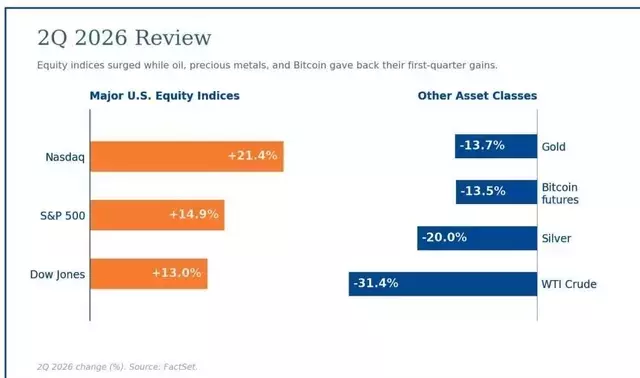
Following a modest decline in the first quarter, the S&P 500 and Nasdaq indices demonstrated a powerful comeback in the second quarter of 2026, achieving their most substantial quarterly gains since 2020, with increases of 14.9% and 21.4% respectively. The Russell 2000 index, representing smaller companies, also reached an all-time high, culminating in its strongest first half of the year since 1991. This robust market performance was significantly influenced by a sharp drop in oil prices, which had previously contributed to the first quarter's downturn.
Broadening Market Rally: Beyond Tech Giants
The market's upward trajectory in Q2 was notably widespread, with nine out of eleven S&P 500 sectors recording gains. While energy and utilities experienced declines, the overall market leadership diversified, extending beyond technology into industrials, energy, and financials. This expansion marked a departure from the previous concentration on a few dominant tech companies, indicating a healthier, more balanced market advance.
Semiconductor Frenzy: A New Type of Bubble?
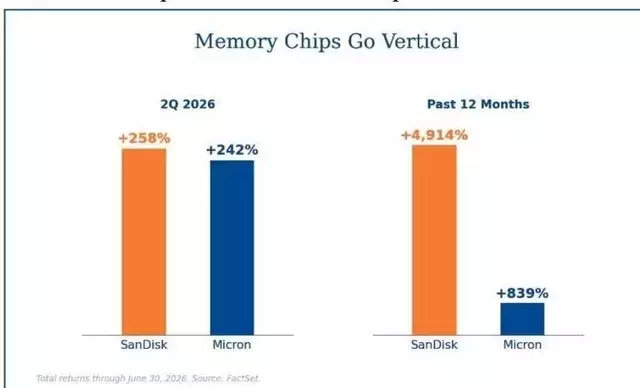
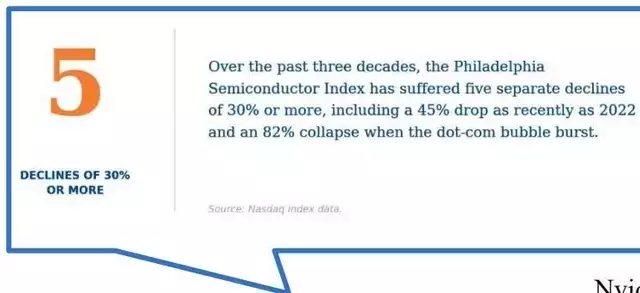
A distinctive feature of the current market cycle is the intense speculation surrounding artificial intelligence (AI) and semiconductor stocks. Unlike previous bubbles driven by overvalued companies with minimal profits, the AI boom appears to be rooted in genuine earnings growth. However, concerns emerge as semiconductor stocks, particularly memory-chip manufacturers like SanDisk and Micron, have seen parabolic increases, dominating a substantial portion of the S&P 500's value. This mirrors the boom-and-bust cycles historically observed in the memory chip industry, raising questions about the sustainability of current profit levels.
Software Sector Sentiment: Trusting Tomorrow's Profits
In stark contrast to the semiconductor surge, the software sector has faced investor skepticism regarding its future profitability. Despite strong current earnings and robust business models, the market's apprehension stems from concerns that AI advancements might diminish the need for traditional software solutions. This pessimistic outlook has led to significant markdowns in software stock valuations, presenting potential opportunities for investors willing to bet on the long-term resilience and adaptability of these companies.
Valuation Discrepancies: Large Caps vs. Small Caps
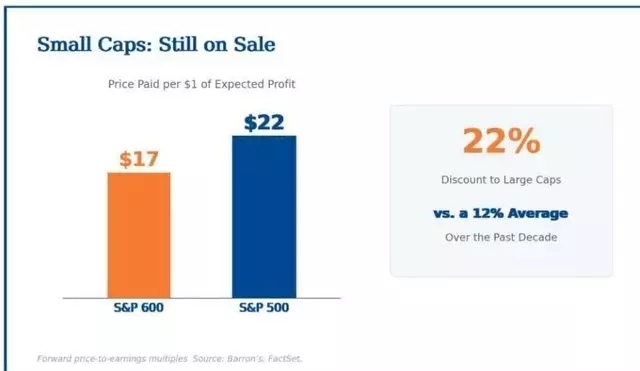
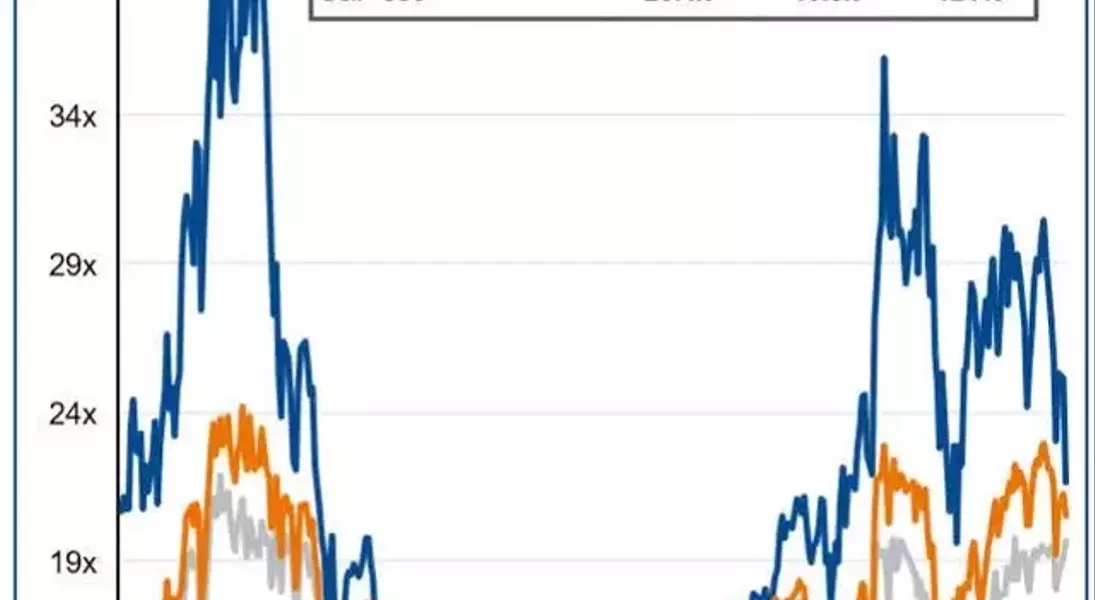
A notable irony in the current market is the re-evaluation of large-cap company valuations. The premium commanded by the ten largest companies in the S&P 500 over the remaining 490 has substantially decreased, making their valuations more aligned with historical averages. Concurrently, small-cap stocks, despite their impressive year-to-date performance, continue to trade at a significant discount compared to large-cap counterparts, suggesting ongoing opportunities for value-oriented investors. The market's increasing selectivity underscores the importance of thorough fundamental analysis.
Shifting Federal Reserve Policy and Market Implications
The quarter also saw a change in Federal Reserve leadership, with a new chairman signaling a potentially more hawkish stance on inflation. This shift could have significant implications for interest rates and, consequently, for market sectors, especially small-cap companies. Small businesses, often reliant on floating-rate debt, are particularly vulnerable to interest rate hikes, highlighting a potential risk factor amidst the broader market rally.
The Supply-Demand Balance in Public Markets
A surge in public stock offerings, including initial public offerings (IPOs) and follow-on sales, indicates a substantial increase in market supply. Projections for 2026 suggest a record year for stock issuance, driven by major events like SpaceX's IPO. Simultaneously, large technology companies, traditionally significant buyers of their own shares through buybacks, are redirecting capital towards AI development, reducing their market demand. While analysis suggests the market can absorb this increased supply, the historical tendency for heavy issuance to cluster near market tops serves as a cautionary note for investor
