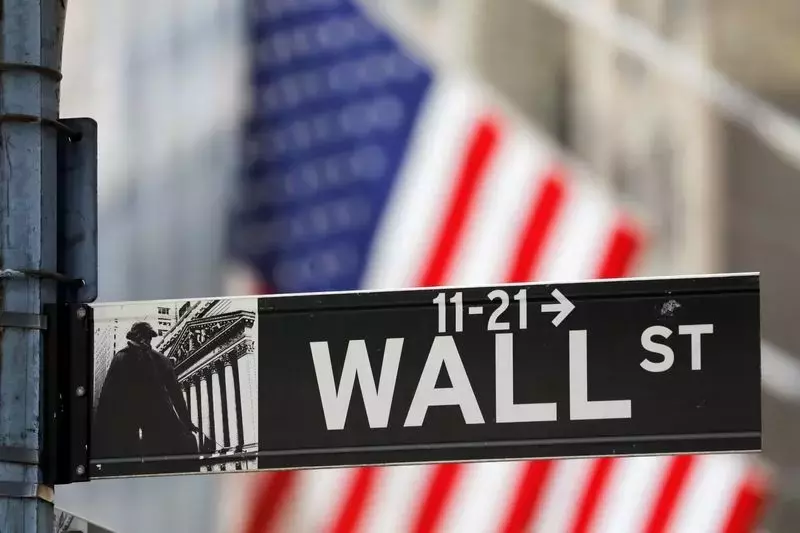
The holiday season typically brings a sense of optimism to Wall Street, but this year's festivities were abruptly interrupted on Friday. Investors witnessed a significant downturn across all major indices, with tech and growth stocks leading the decline. The sell-off not only dampened the anticipated Santa Claus rally but also raised concerns about market stability heading into the new year.
Markets Face Uncertainty as Tech Giants Stumble
Friday's trading session marked a stark departure from the previous week's positive momentum. The Dow Jones Industrial Average experienced a sharp drop, losing nearly 0.98% by mid-afternoon. This decline ended a five-session winning streak and signaled a potential shift in market sentiment. The S&P 500 and Nasdaq Composite followed suit, slipping 1.38% and 1.85%, respectively. These losses underscored the fragility of recent gains and highlighted the vulnerability of even the most resilient sectors.
The sudden reversal caught many off guard, especially given the historical tendency for markets to rise during the final days of December and the early part of January. According to data from the Stock Trader’s Almanac, the S&P 500 has historically climbed an average of 1.3% during this period since 1969. However, as Steve Sosnick, chief market strategist at Interactive Brokers, noted, "Today serves as a reminder that statistical likelihoods do not guarantee outcomes."
Rising Yields Signal Caution for Investors
The surge in U.S. Treasury yields played a pivotal role in Friday's market turmoil. The benchmark 10-year note reached its highest level in over seven months, hovering around 4.61%. Higher yields have traditionally posed challenges for growth stocks, as they increase borrowing costs and reduce the attractiveness of future earnings. This environment was particularly tough on technology megacaps, which had been driving much of the market's upward trajectory in 2024.
Tesla led the charge among decliners, dropping 4.4%, while other tech giants like Amazon, Microsoft, and Nvidia also saw significant losses. The broader impact was evident across all 11 major S&P sectors, with consumer discretionary, information technology, and communication services bearing the brunt of the sell-off. These sectors, which had previously been the stars of 2024, now faced the prospect of a correction that could last several weeks.
A Mixed Bag of Market Reactions
Not all stocks succumbed to the broader market downturn. Amedisys, a home health service provider, gained 4.7% after UnitedHealth extended the deadline for their $3.3 billion merger. Meanwhile, Lamb Weston saw its stock climb 4.1% following news that activist investor Jana Partners was pushing for changes at the French fry maker, potentially leading to a board overhaul. These divergent performances offered a glimpse of resilience within an otherwise challenging market environment.
Trading volumes remained subdued throughout the holiday-shortened week, with activity expected to remain low until early January. The next major event on investors' radar is the December employment report, scheduled for release on January 10. This report will provide critical insights into the health of the labor market and could influence future market movements.
Looking Ahead: Navigating Market Volatility
Despite Friday's setbacks, the overall weekly performance for the major indices remained positive. The S&P 500, for instance, closed the week just 2.3% below its all-time high. Analysts are cautiously optimistic, viewing the current pullback as a healthy correction rather than the beginning of a prolonged downturn. Jay Woods, chief global strategist at Freedom Capital Markets, emphasized that "Tech's tremendous run may be starting to cool, but it's part of a natural market cycle."
As we transition into the new administration, investors will need to stay vigilant. The coming weeks will likely bring more volatility as market participants adjust to changing economic conditions and policy shifts. However, history suggests that periods of uncertainty often present opportunities for those who can navigate the turbulence effectively.
