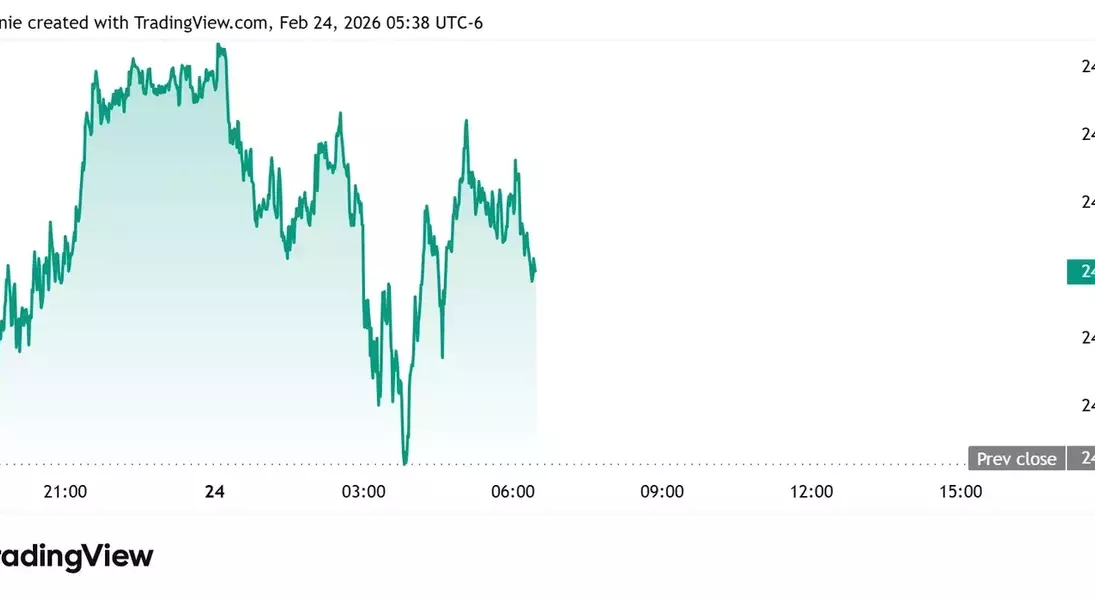
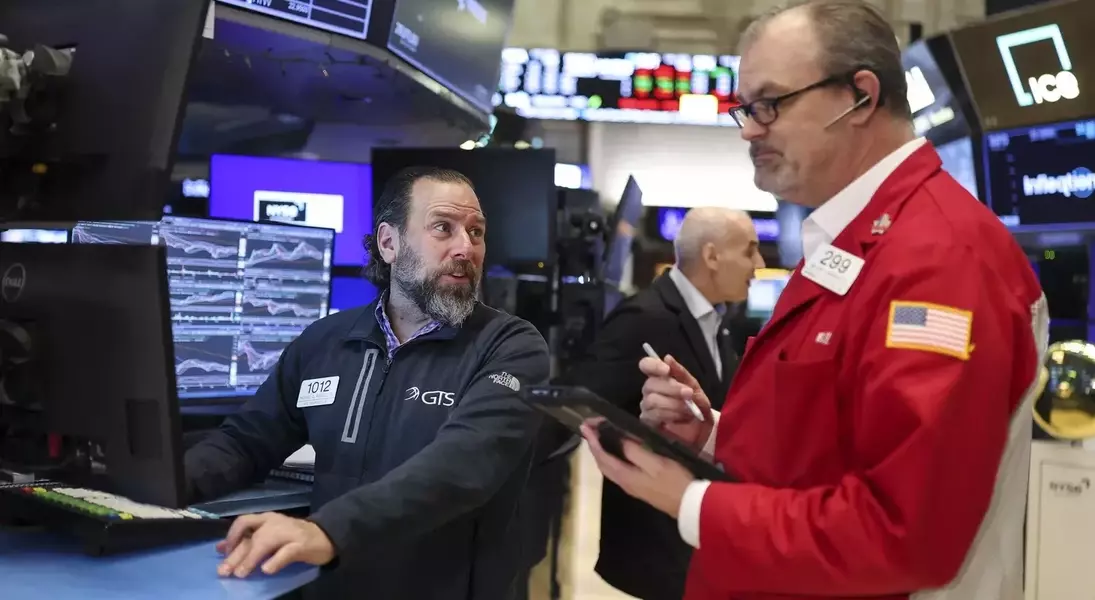
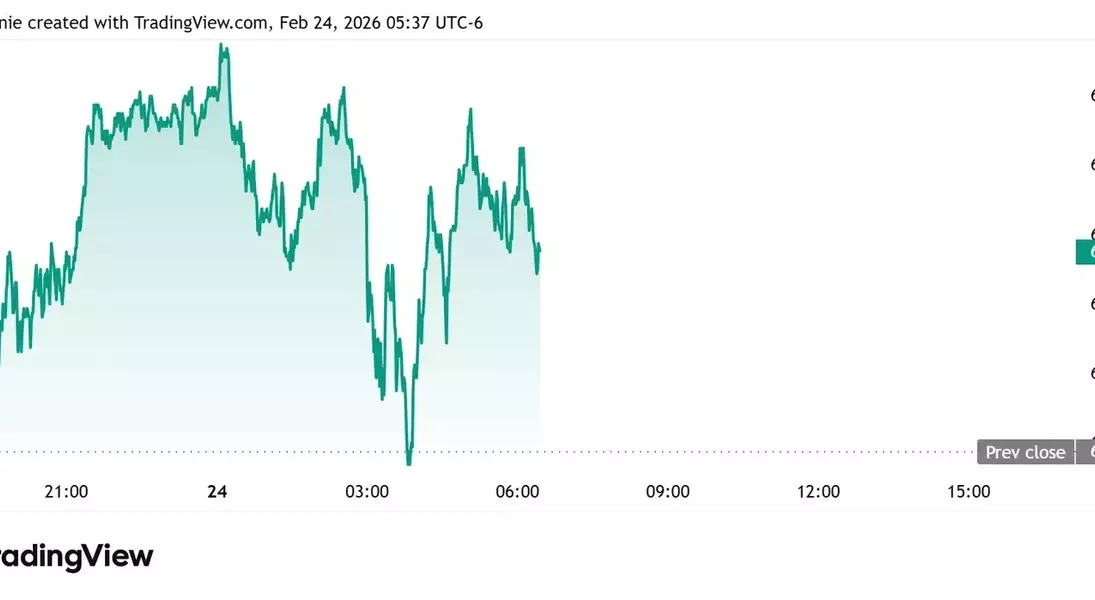
On Tuesday, stock futures displayed limited fluctuation, coming off a day where primary market indexes experienced a notable decline. This downturn was largely driven by apprehensions regarding the transformative impact of artificial intelligence and lingering ambiguities surrounding presidential tariffs. While Nasdaq 100 and Dow Jones Industrial Average futures saw modest gains, S&P 500 futures hovered near flat levels. This subdued performance on Tuesday reflects investor caution after Monday's significant losses, which saw the Dow plummet by 1.7% (over 820 points), and both the Nasdaq and S&P 500 drop by 1.1% and 1%, respectively, highlighting a sensitive market environment.
The previous trading day's sharp decline in market indexes was partly attributed to renewed uncertainty in the global trade landscape. Just days after the Supreme Court invalidated most of the tariffs imposed in April, the administration initially announced a 10% worldwide tariff increase, which was then escalated to 15% the following day. This rapid shift in trade policy created significant jitters among investors, contributing to a broad sell-off across various sectors.
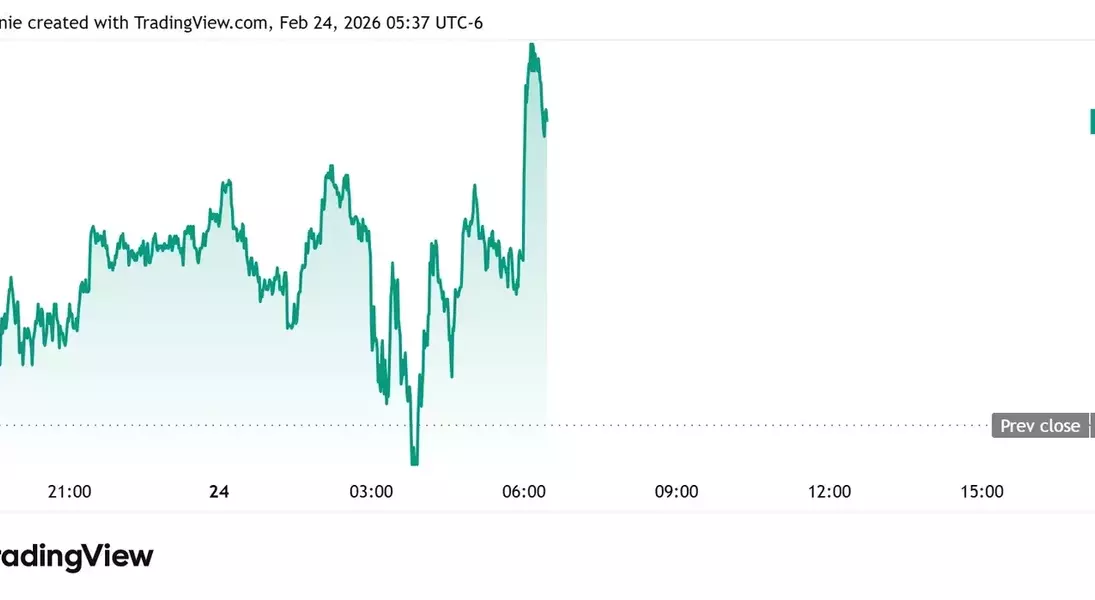
In contrast, Advanced Micro Devices (AMD) shares experienced a significant surge, climbing 10% in premarket trading on Tuesday. This boost came after the semiconductor giant secured a major deal with Meta Platforms to supply 6 gigawatts of AMD Instinct GPUs, crucial for Meta's AI infrastructure. While the financial specifics were not publicly disclosed, reports indicated a value exceeding $100 billion. Despite this positive development for AMD, Meta's shares edged down, and Nvidia (NVDA), a key competitor to AMD, saw a modest decline of over 1% ahead of its much-anticipated earnings report scheduled for Wednesday.
The market also reacted to fears about AI's potential to disrupt established businesses. On Monday, shares of several tech companies, including IBM, Datadog, CrowdStrike, and AppLovin, fell sharply by 13%, 11%, 10%, and 9%, respectively. These companies' valuations were impacted by investor anxiety over how rapidly evolving AI technologies might challenge their current business models. However, some of these stocks, namely IBM, Datadog, and CrowdStrike, showed signs of recovery in pre-market trading on Tuesday, while AppLovin continued its downward trend.
Other corporate news also influenced individual stock performances. Home Depot (HD) saw its stock rise by 2.5% following its earnings announcement, while Hims & Hers Health (HIMS) shares dropped by 5%. Whirlpool (WHR) experienced a 9% decline after announcing plans to issue $800 million in new shares, partly to manage its debt. Conversely, FedEx (FDX) shares showed a slight uptick before the market opened, as the package delivery service filed a lawsuit against the U.S. government regarding the recently imposed tariffs.
Beyond equities, commodity and bond markets also reflected a dynamic environment. Bitcoin traded around $63,000, a decrease from its overnight peak near $65,000. The 10-year Treasury yield, a key indicator for various consumer loan interest rates, including mortgages, slightly decreased to 4.03% from Monday's close of approximately 4.04%. Gold futures fell by 1% to $5,170 an ounce, while silver futures registered a 1% increase, reaching $87.35 an ounce. West Texas Intermediate futures, the benchmark for U.S. crude oil, saw a modest rise of 0.3% to $66.50 a barrel. The U.S. dollar index, which measures the dollar's strength against a basket of international currencies, was up 0.2% at 97.91.
The market's current state is a blend of apprehension and opportunity, shaped by the rapid advancements in artificial intelligence, fluid trade policies, and corporate earnings. While AI disruption causes some stocks to falter, it simultaneously fuels growth in companies like AMD, which are integral to the AI infrastructure. The overarching sentiment is one of careful observation, as investors navigate economic shifts and technological evolution.
