
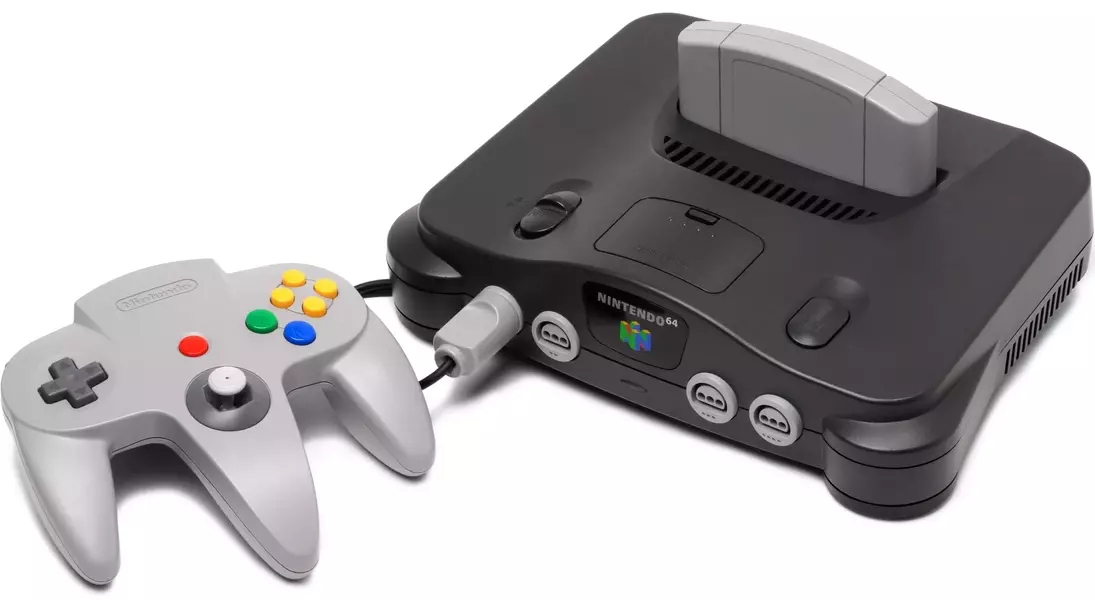
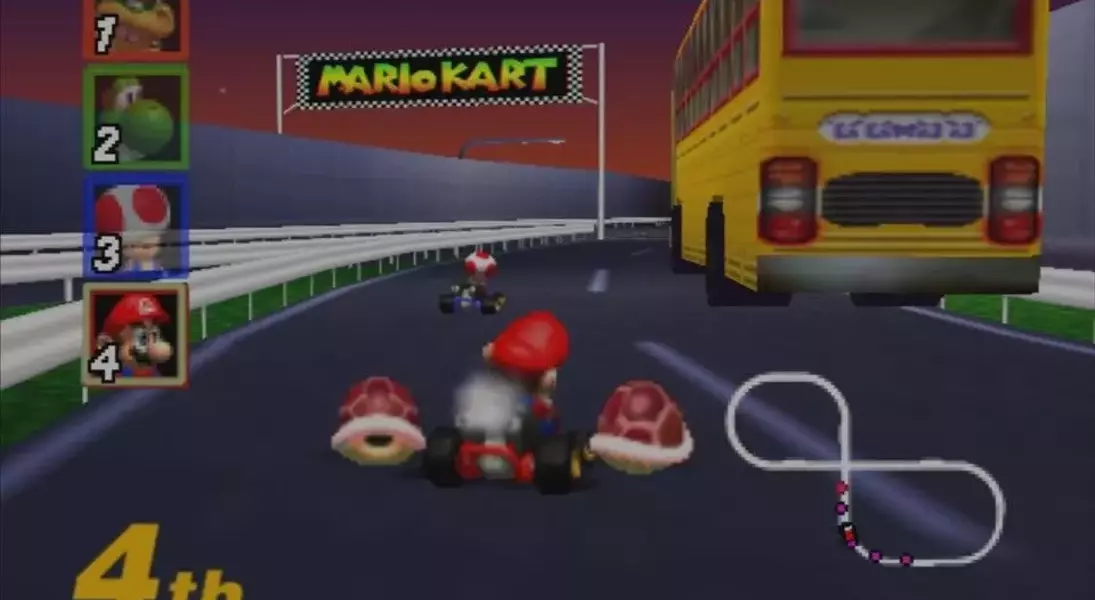
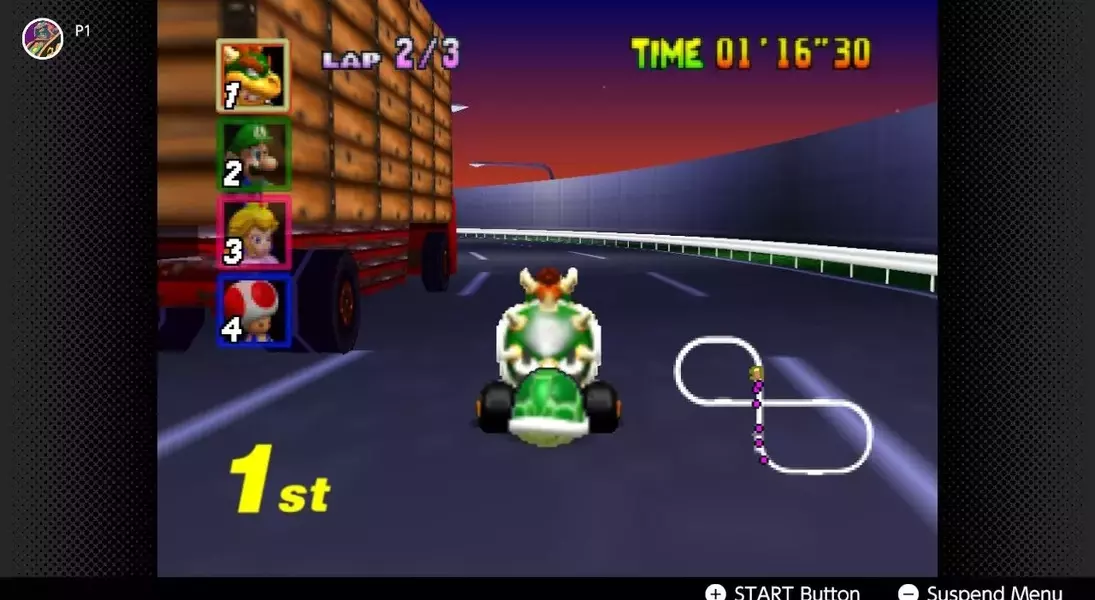
Nintendo has a long-standing history of creating groundbreaking games that continue to shape the industry. The Nintendo 64, launched three decades ago, stands as a testament to this enduring legacy. Its impact is still felt today, with titles from its library inspiring new projects and remakes. While games like a new Starfox for Switch 2 and a remake of The Legend of Zelda: Ocarina of Time have been announced, one particular title on the N64, Mario Kart 64, has not seen a direct modern update. Instead, its innovations served as the foundation for some of Nintendo's most successful and influential sequels, demonstrating its profound and lasting influence on the gaming world.
Mario Kart 64 cemented the formula for a successful racing game, building upon its predecessor, Super Mario Kart. Its introduction of four-player local multiplayer, diverse power-ups, and sophisticated drifting mechanics created an engaging and enduring experience. The game also popularized the infamous blue shell, an item designed to level the playing field by targeting the lead player, which became a hallmark of the series' dynamic difficulty. These elements combined to create a game that was not only fun but also strategically deep, ensuring its long-term appeal and setting a high bar for future racing titles.
The Enduring Influence of Mario Kart 64 on the Racing Genre
When the Nintendo 64 first arrived on the scene, it didn't immediately launch with a Mario Kart title, which was not uncommon for consoles at the time. Initially, Super Mario 64 and Pilotwings 64 were the primary attractions. However, the arrival of Mario Kart 64 approximately two weeks after Cruis'n USA in Japan, and later in the West, provided a crucial incentive for players to invest in the new hardware. For those who cherished the original Super Mario Kart, this sequel offered compelling reasons to upgrade. More significantly, its developers introduced a wealth of innovative features that solidified a winning formula, paving the way for some of Nintendo's most commercially successful games. These advancements included the ability for four players to race simultaneously, a broader array of power-ups, intricate and memorable shortcuts, refined drifting mechanics, and an expanded character roster. This robust foundation directly contributed to the phenomenal success of subsequent titles in the series, such as Mario Kart 8, which has sold nearly 80 million copies across its various platforms, underscoring the foundational importance of Mario Kart 64.
A notable innovation introduced in Mario Kart 64 was the concept of dynamic difficulty, often referred to as "rubber banding," epitomized by the controversial yet iconic blue shell power-up. Unlike its predecessor, where skilled players could easily lap competitors, Mario Kart 64 implemented a system where leading players were more frequently targeted by items, while those further behind gained access to more powerful weapons. The blue shell, in particular, exclusively aimed for the leading racer, creating an unpredictable and often dramatic shift in race dynamics. This system, while sometimes frustrating for expert players, ensured that races remained competitive and engaging for players of all skill levels, aligning perfectly with the game's party-centric design. Furthermore, the game saw an expansion of its character lineup, replacing Koopa Troopa and Donkey Kong Jr. with fan favorites Wario and Donkey Kong, each bringing unique personalities and iconic tracks. Courses like Donkey Kong's jungle-themed track and Wario's Stadium, with its distinct hilly terrain and hidden shortcuts, were designed with environmental emphasis, making each track feel uniquely vibrant despite a smaller overall number. This careful crafting of characters and environments, combined with the innovative gameplay mechanics, solidified Mario Kart 64's reputation as a groundbreaking title.
Innovations in Gameplay: Drifting and Dynamic Difficulty
Mario Kart 64 revolutionized racing mechanics, most notably with its advanced drifting system. In Super Mario Kart, players would hop around corners to maintain speed, with prolonged slides leading to disruptive spin-outs. Mario Kart 64, however, introduced a sophisticated drifting technique that rewarded strategic power slides. Upon landing from a hop, holding the slide button would cause the kart's tires to smoke. By steering against the drift, players could change the smoke's color, progressing from white to red. Releasing the button at the precise moment of red smoke would grant a brief speed boost. This technique, affectionately dubbed "snaking," provided skilled players with opportunities to gain a significant advantage even on straightaways, transforming cornering into a dynamic and skill-based maneuver. While the blue shell might occasionally interrupt a player's lead, the introduction of this refined drifting system added a layer of depth and competitive strategy that was absent in earlier titles, enriching the overall gameplay experience and making every race a thrilling challenge.
Beyond its innovative drifting system, Mario Kart 64 significantly enhanced the game's approach to player engagement and competitiveness, particularly through its dynamic difficulty adjustments and the iconic blue shell. While the blue shell often sparked debate among players due to its ability to disrupt a leading player's momentum, it served a crucial purpose in ensuring a more balanced and exciting race for everyone involved, regardless of skill level. This feature was especially beneficial for a game that heavily leaned into the party atmosphere, allowing friends with varying levels of experience to enjoy a seemingly close competition. The Nintendo 64's four controller ports were perfectly suited for this, enabling up to four players to participate simultaneously, provided they had the necessary controllers. The game also refined character personalities and track designs, replacing some previous characters with new, memorable additions like Wario and Donkey Kong. Their inclusion brought fresh dynamics and introduced iconic courses, such as Donkey Kong's jungle-themed track with its distinctive ferry, and Wario's Stadium, known for its undulating terrain and game-changing shortcuts. These meticulous improvements in character roster, track design, and gameplay mechanics collectively cemented Mario Kart 64's status as a pivotal game that not only built upon its predecessor but also set a new standard for racing games, proving the enduring appeal of the Mario Kart franchise and influencing subsequent best-selling iterations like Mario Kart Wii and Mario Kart 8 Deluxe.
