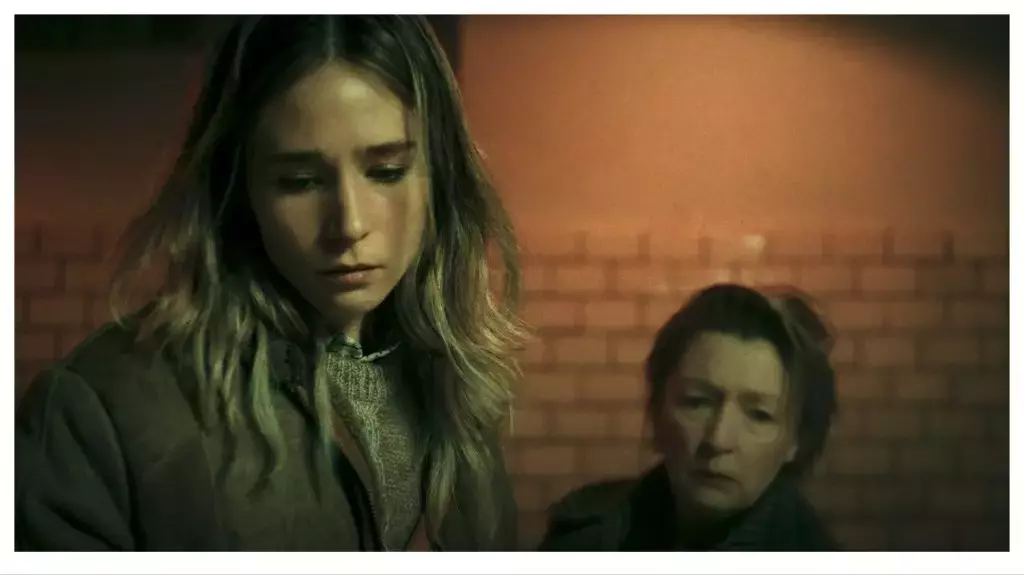
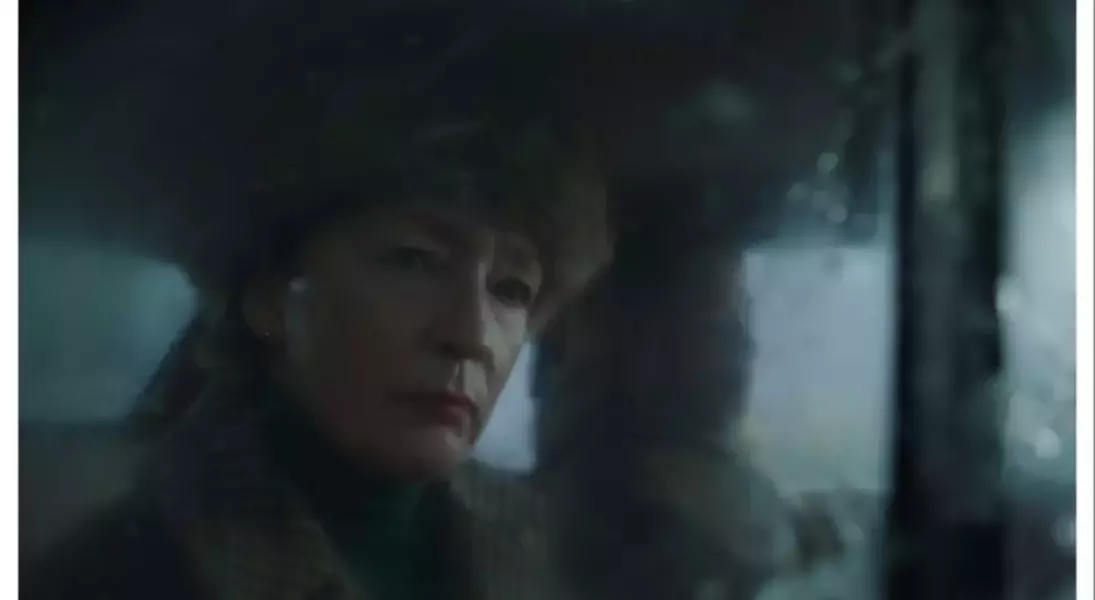
In a compelling new cinematic endeavor, renowned actress Lesley Manville takes center stage in Kasia Adamik's forthcoming film, 'Winter of the Crow.' This production plunges viewers into the tumultuous political landscape of Poland in 1981, where a British academic finds herself inadvertently entangled in the widespread civil unrest following the declaration of martial law. Manville's portrayal offers a nuanced exploration of an outsider's journey from detached observation to profound engagement within a foreign nation grappling with profound societal upheaval. The narrative, enriched by the literary foundation of Nobel laureate Olga Tokarczuk's short story, promises a compelling blend of historical backdrop and personal transformation.
The film, set to premiere at the Toronto International Film Festival and conclude the San Sebastián Film Festival, centers on Joan, a character played by Manville, who arrives in Poland to deliver a lecture. Her professional visit quickly devolves into an unforeseen entanglement with the country's severe political turmoil. Manville emphasizes the profound disorientation her character experiences, stating the difficulty of imagining being thrust into such political chaos in an unfamiliar land. This sudden immersion forces Joan to confront realities far removed from her academic pursuits, initiating a journey of unexpected personal and moral awakening.
As the narrative unfolds, Joan finds herself on the run, allied with young radicals, completely cut off from her expected comfort and routine. Manville humorously notes Joan's initial shock at the harsh conditions, contrasting sharply with her expectations of a comfortable hotel and professional respect. Despite these initial grievances, Joan’s character undergoes a significant shift. Witnessing the atrocities unfolding around her, she becomes deeply moved by the plight of those involved in the Solidarity movement, ultimately seeking to document the events and contribute to their cause. This transformation from a self-interested individual to someone dedicated to a larger humanitarian effort forms a central emotional arc of the story.
Manville, known for her diverse roles and Oscar nomination for 'Phantom Thread,' expressed her consistent desire to choose projects that offer distinct challenges. She recounted her recent experience in Luca Guadagnino's 'Queer,' highlighting her preference for characters that diverge from her own persona. This pursuit of varied roles is evident in 'Winter of the Crow,' where her character's initial ignorance of the political situation serves as a catalyst for a deeper engagement with the historical events unfolding around her. Her extensive background, including long-standing collaborations with director Mike Leigh, has honed her ability to adapt to diverse directorial styles while retaining a profound connection to her craft, a legacy she acknowledges as deeply ingrained within her.
Director Kasia Adamik, daughter of renowned filmmaker Agnieszka Holland, approached 'Winter of the Crow' with a vision to transcend a mere historical recounting. While rooted in a significant moment of Polish history, Adamik aimed for a universal and elevated narrative, drawing inspiration from films that explore subjective experiences and distorted realities. She incorporated subtle homages, such as references to photographer Chris Niedenthal, whose work captured the essence of the communist era. Adamik also infused personal anecdotes, including her own childhood memories of General Jaruzelski’s declaration of martial law, to add layers of authenticity and emotional depth. Her unique perspective as an outsider, having been raised in France and the U.S., afforded her the freedom to interpret the historical context without being constrained by conventional expectations or national sensitivities.
The collaborative effort involving Tokarczuk’s story and screenwriters Sandra Buchta, Adamik, and Lucinda Coxon, deliberately presents the political landscape through the eyes of an outsider. This deliberate choice highlights how a lack of understanding of established rules can paradoxically lead to a questioning of those rules, and simultaneously, a lack thereof. Adamik underscored the contemporary relevance of this theme, noting how Joan’s initial political apathy resonates with modern audiences. By immersing Joan in a totalitarian environment, the film seeks to illustrate the lived experience of such a system, offering audiences a contemplative rather than didactic warning about the nature of authoritarian states. Manville's compelling performance, infused with a touch of the absurd, effectively conveys Joan's evolution from a disengaged academic to an individual deeply moved by the human cost of political oppression, ultimately finding a profound saving grace through her unexpected acts of solidarity.
