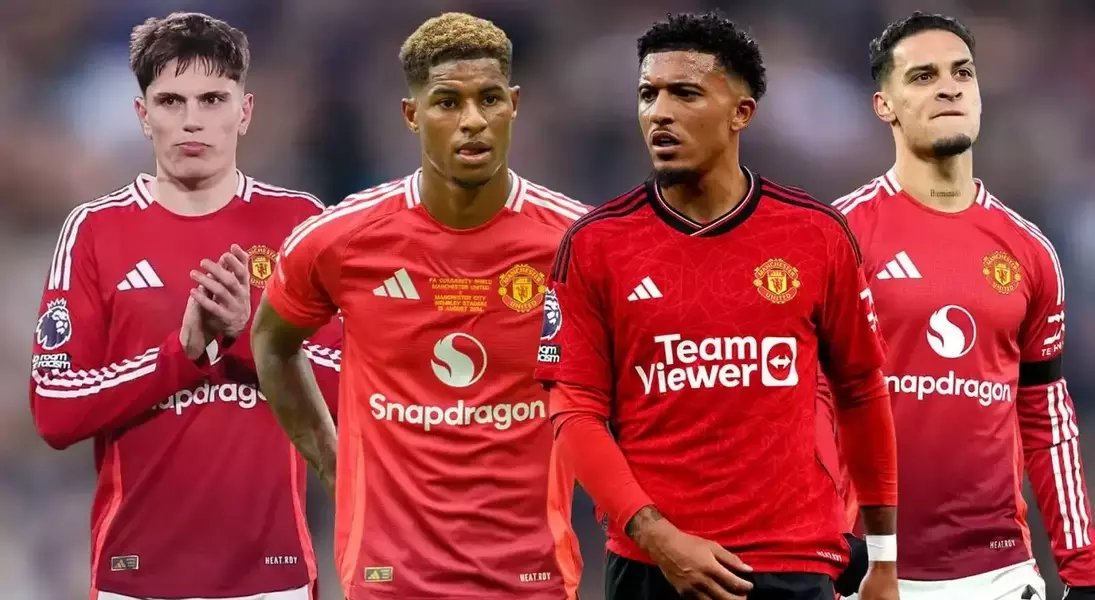
Manchester United is currently grappling with a substantial transfer predicament, as their ambitious target of recouping £160 million from the sale of five 'unwanted' players appears increasingly unattainable. This financial impasse is directly impeding the club's plans for further squad enhancements this summer. A detailed examination of Tyrell Malacia, Jadon Sancho, Antony, Marcus Rashford, and Alejandro Garnacho reveals a complex landscape of inflated valuations, high salaries, and limited buyer interest, forcing United to confront the harsh realities of the transfer market. The situation highlights a misalignment between the club's desired financial returns and the players' actual market appeal, presenting a formidable hurdle for the Red Devils as they strive to reshape their roster.
The club's strategy hinges on offloading these individuals to generate funds, but the current market dynamics suggest a considerable downward adjustment in expected revenues. Each player's unique circumstances, from injury concerns and performance dips to exorbitant wage demands, contribute to a collective challenge in facilitating their departure. Unless United adopts a more pragmatic approach to their asking prices and salary expectations, they risk starting the new season with a stagnant squad, unable to introduce fresh talent. This dilemma underscores the intricate balance between financial prudence and competitive ambition in elite football.
The Challenging Reality of Player Disposals
Manchester United's initial hopes of a lucrative clear-out for five players have proven to be overly optimistic, reflecting a detachment from market realities. The club had envisioned a significant cash injection, but potential buyers are unwilling to meet such inflated figures. This disconnect is slowing down United's recruitment process, as funds from outgoing transfers are crucial for securing new acquisitions. The longer these players remain on the books, the more it impacts the club's financial flexibility and ability to evolve the squad.
Specifically, Tyrell Malacia, despite recent injury recovery, faces doubts about his versatility and market appeal, with potential buyers hesitant to commit to his high wages for a player with perceived limitations. Jadon Sancho's situation is even more complex, given his hefty salary and reluctance to accept a pay cut, making a permanent transfer difficult. Offers, like the one from Juventus, suggest a significant reduction in his earnings, which he may not readily accept, potentially leading to another loan deal where United would still bear a portion of his salary. Antony's loan spell in Spain offered some rehabilitation, but Real Betis's financial constraints mean a permanent move is unlikely at the initial asking price, and United's reluctance for another loan creates a standoff. Marcus Rashford, arguably the most marketable of the group, is still subject to significant valuation differences from interested clubs like Barcelona, who prefer loan-to-buy options, and Bayern Munich, whose valuations for other targets indicate a conservative spending approach. Finally, Alejandro Garnacho, while representing a good chance for a cash return, is unlikely to command United's initial £70 million valuation due to perceived limitations in his play and concerns about his temperament, with interested parties like Chelsea likely to seek more favorable terms.
Individual Hurdles and Market Dynamics
The individual circumstances surrounding each player present unique hurdles for Manchester United in their bid to offload them. For Tyrell Malacia, his recent injury and Ruben Amorim's assessment of his playing style diminish his market value, forcing United to consider a significant price reduction simply to avoid a financial loss. The challenge is not just the transfer fee but also finding a club willing to match his current wages, which few can or will.
Jadon Sancho's prohibitive salary remains the primary obstacle to his departure. Even with interest from top clubs, his refusal to compromise on his wages means United may have to settle for a loan arrangement, effectively subsidizing his salary, or face the prospect of him remaining at the club for another year. Antony's situation is similar, with Real Betis's financial limitations making a permanent transfer unlikely at United's preferred price. His strong preference to return to Andalusia gives Betis leverage, and other clubs are not pressing to meet United's reduced valuation. Marcus Rashford, despite being a valuable asset, faces a market where clubs like Barcelona are financially restricted, pushing for loan deals that defer financial commitment. This allows Rashford to pursue his desired move while United still carries much of his wage burden. Alejandro Garnacho, while possessing considerable potential, also comes with character concerns and technical limitations that deter buyers from meeting United's initial, high asking price. The preference for a 'try before you buy' approach from savvy clubs underscores the perceived risk associated with a permanent transfer, pushing United to accept a much lower fee to facilitate his exit. These collective challenges highlight the urgent need for United to adapt their transfer strategy to the prevailing market conditions, prioritizing player movement over inflated valuations.
