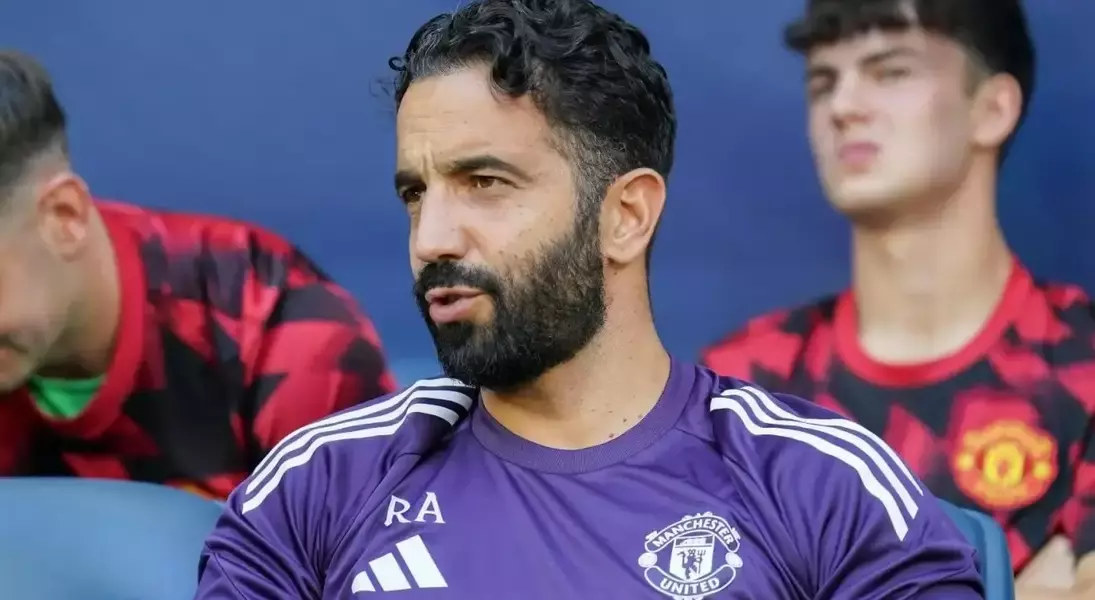
Manchester United's summer transfer strategy is taking shape with a clear focus on strengthening three critical areas: attack, goalkeeping, and midfield. The club is prioritizing key acquisitions to bolster their squad depth and quality for the upcoming season. However, these ambitious plans are heavily reliant on the successful departure of existing players, highlighting a complex balancing act between recruitment and squad optimization. Manager Ruben Amorim remains flexible, indicating a willingness to reincorporate players into the main squad if transfer deals don't materialize as expected, underscoring a pragmatic approach to the transfer window.
The pursuit of a new number nine leads the charge, with Benjamin Sesko identified as the primary target. Intense negotiations are underway to secure his services, although the club maintains an interest in alternative options like Ollie Watkins. Concurrently, efforts are being made to address the goalkeeping situation, particularly with Andre Onana's anticipated unavailability. In midfield, specific targets have emerged as the club seeks to enhance its central command. The success of these incoming transfers is intrinsically linked to the club's ability to offload several current players, whose sales are crucial for generating the necessary transfer funds.
Reinforcing the Attack and Goalkeeping Ranks
Manchester United's immediate transfer priorities revolve around securing a prolific striker and a reliable goalkeeper. The club has initiated formal discussions for Benjamin Sesko, indicating a strong commitment to bringing him to Old Trafford. His acquisition is seen as vital for enhancing the team's offensive capabilities. Simultaneously, the goalkeeping department is a significant area of focus, especially with Andre Onana's expected absence. This necessitates the recruitment of a capable shot-stopper to maintain defensive solidity, with Emiliano Martinez being a notable name on their radar.
The search for a new forward has seen Benjamin Sesko emerge as the leading candidate, with Manchester United actively engaged in negotiations to secure his signature. While there is competition from other clubs, United's strategic moves suggest a determined effort to land the highly-rated striker. Should the deal for Sesko face hurdles, the club has also identified Ollie Watkins as a viable alternative, though Aston Villa's strong stance on retaining him presents a challenge. In the goalkeeping sector, the impending absence of Andre Onana has accelerated the club's search for a replacement. Emiliano Martinez is among the preferred choices, and the club is also considering the potential sale of Altay Bayindir to create space and funds for new arrivals. These tactical decisions underscore a comprehensive approach to fortifying critical positions within the squad, ensuring competitive depth across all lines.
Strengthening the Midfield and Managing Player Exits
Beyond the attacking and goalkeeping positions, Manchester United is keen on bolstering their central midfield. The acquisition of new midfield talent is considered essential for controlling games and adding depth to the squad. However, the realization of these transfer ambitions is directly tied to the club's success in offloading several high-profile players. This strategic approach highlights the critical need for financial flexibility, which can only be achieved through player sales.
The midfield is another key area targeted for reinforcement, with Sporting's Morten Hjulmand and Bayern Munich's Joao Palhinha identified as potential solutions to enhance the team's presence in the middle of the park. These additions, however, are largely dependent on the club's ability to generate transfer funds through outgoing transfers. Players such as Alejandro Garnacho, Jadon Sancho, Antony, and Tyrell Malacia are among those who could be moved on, with the club actively seeking buyers. Manager Ruben Amorim has made it clear that while the club is open to selling these players if the right offers come in, he is prepared to integrate them back into the squad if no suitable deals materialize. This firm stance ensures that the club maintains control over its assets, balancing the desire for new talent with the need to manage existing resources effectively, ultimately aiming to build a more cohesive and competitive squad.
