Manchester United is undergoing a significant offensive overhaul, investing heavily in a new frontline to address past scoring deficiencies. This comprehensive analysis explores the strategic integration of three key acquisitions—Benjamin Sesko, Matheus Cunha, and Bryan Mbeumo—into Ruben Amorim's tactical vision. The focus is on their individual strengths and how their combined abilities promise to forge a formidable attacking force, aiming to elevate the team's performance and address critical gaps from the previous season.
Unleashing a New Era: United's £200 Million Attack Ready to Electrify the Pitch
A Bold Investment in Attacking Prowess: Manchester United's New Offensive Trio Takes Shape
Manchester United's manager, Ruben Amorim, is on the cusp of revolutionizing the team's offensive lineup. With the recent acquisitions of Matheus Cunha and Bryan Mbeumo, and an agreement now in place for Benjamin Sesko from RB Leipzig, the club's spending on its forward line for the 2025-26 season is poised to exceed £200 million. This substantial investment signals a clear intent to rectify the team's struggles in front of goal, which saw them finish sixth in the Premier League with their lowest-ever goal tally.
Forging Synergy: Integrating United's New Attacking Talent within Amorim's System
The success of Manchester United's ambitious new attack hinges on how effectively this fresh trio can coalesce within Amorim's strategic framework. While individual player performance is inherently unpredictable after a club transfer, the challenge intensifies when attempting to forecast the collective chemistry of an entirely reconfigured forward line. Nevertheless, the recent contributions and playing styles of these three players offer encouraging insights into their potential for mutual enhancement and seamless integration as Manchester United teammates.
Optimizing Positions: Understanding the Positional Dynamics of United's New Forwards
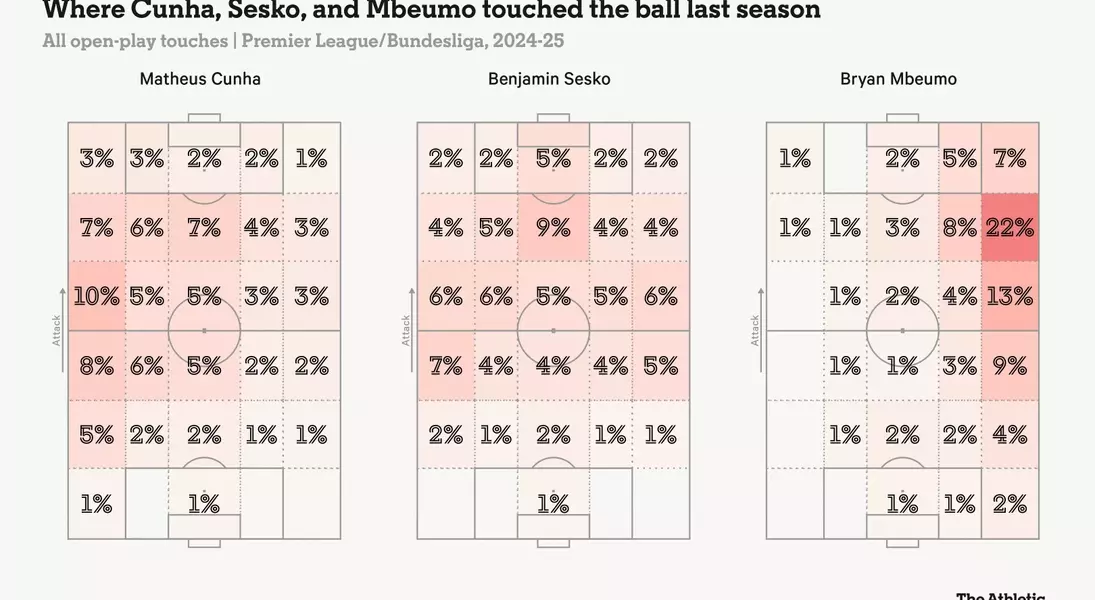
A fundamental aspect of establishing fluidity within the new attack is ensuring optimal positional compatibility. While the exact tactical setup Amorim will adopt remains to be seen—especially with Sesko's transfer pending and limited joint playtime between Mbeumo and Cunha—their individual preferences suggest a naturally balanced unit. Analysis of their recent touch maps reveals Mbeumo's strong inclination for the right flank, Cunha's tendency to drift centrally from the left, and Sesko's role as a central striker, indicating a viable configuration that allows all three to operate in their preferred areas.
Beyond Positions: Unlocking the Interplay and Chemistry of the New Attack
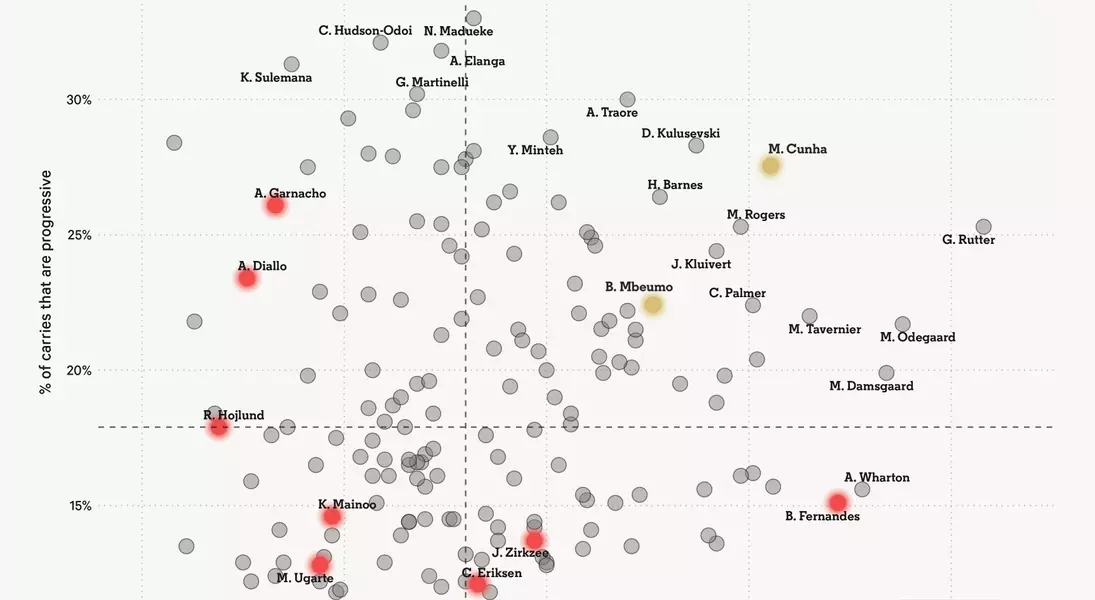
Merely placing three skilled players in their preferred roles does not guarantee cohesive chemistry. The true measure of their success lies in their interaction: does the central forward make runs that complement wide players? Do they deliver passes that enable the main striker to thrive? Can they execute a unified pressing strategy? Cunha and Mbeumo, as stylistic mirror images, are well-suited to interplay naturally. Both excel at advancing play through powerful ball carries and incisive progressive passes, addressing a critical deficiency in United's attack last season. Cunha also offers tactical flexibility, having operated as a left-sided No. 10 in a 3-4-2-1 system, a formation Amorim is committed to at United.
The Sesko Enigma: Defining the Role of the Central Striker within the New Framework
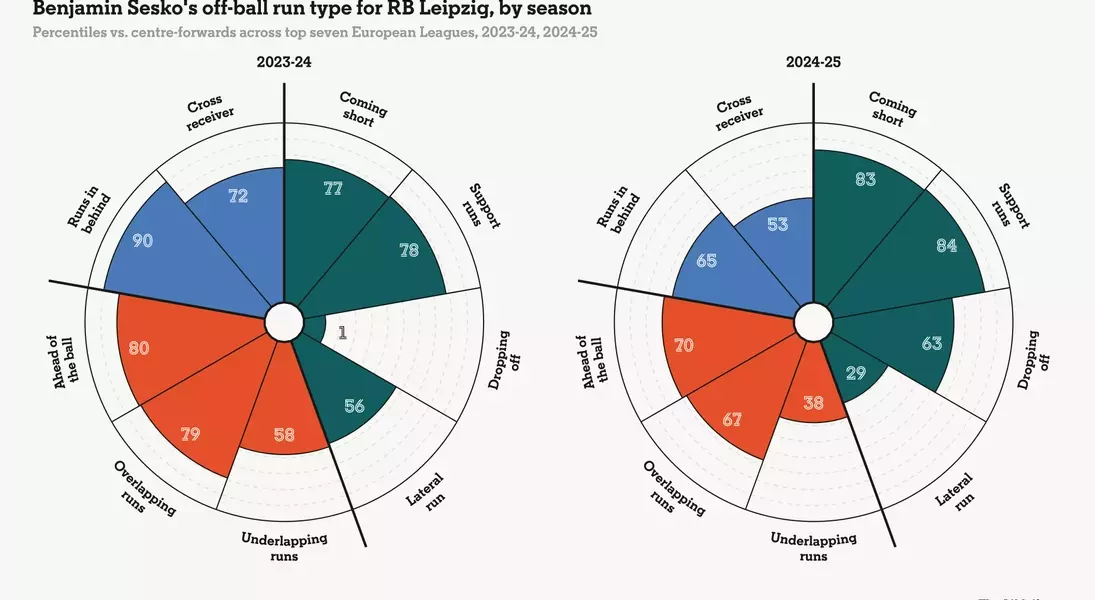
The precise connection between the wide attackers and Sesko remains less defined, largely due to the young Slovenian's limited experience and his varied performances at Leipzig. Initially deployed as a classic penalty-box striker, Sesko later adapted to a deeper role as Leipzig's creative supply dwindled. To understand his potential fit, it's crucial to examine the types of central forwards Cunha and Mbeumo have previously excelled with, Amorim's typical demands for his strikers, and how Sesko's profile aligns with these expectations.
Diverse Striker Needs: Tailoring Sesko's Role to Complement Cunha and Mbeumo's Styles
While Mbeumo and Cunha share certain stylistic traits, they seek distinct contributions from their central forward. Mbeumo flourished alongside Yoane Wissa at Brentford, benefiting from Wissa's relentless off-ball movement that created space for him to exploit. Conversely, Cunha often relied on Jorgen Strand Larsen to drop deep, using the Norwegian's physicality for quick one-two passes that facilitated his runs into the box. Sesko has demonstrated a willingness to drop deep and link play, suggesting he can provide the quick, fluid passing combinations that both Cunha and Mbeumo desire.
Amorim's Demand: Striker Movement and Sesko's Aerial Prowess
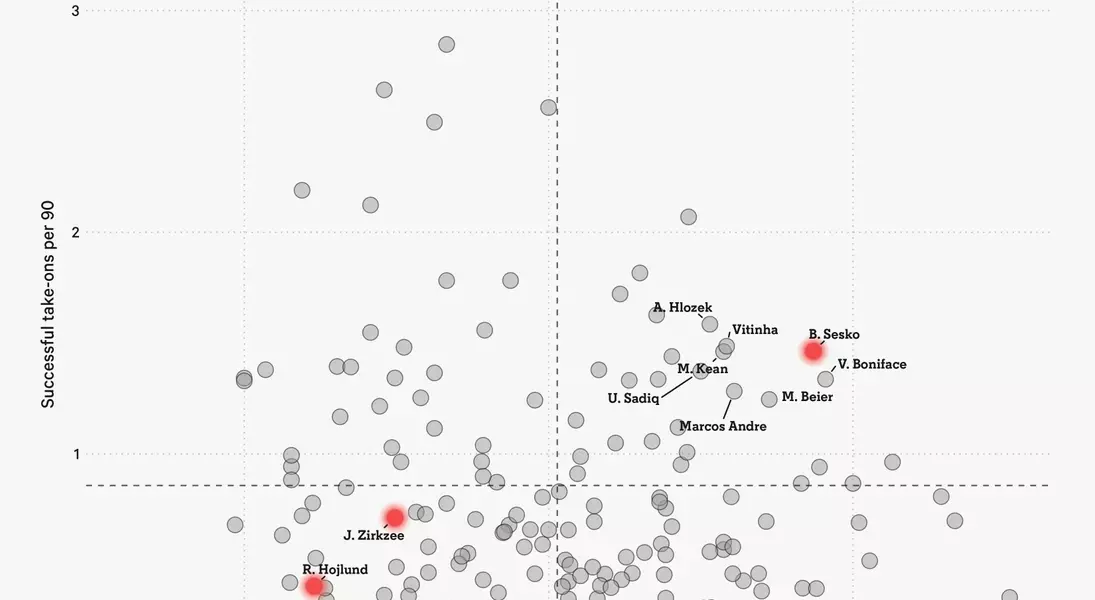
Ruben Amorim highly values long, direct runs into the channels from his central forwards, designed to stretch defenses and create space for the two attacking midfielders. While Sesko showed this tendency in his first Leipzig season, it became less frequent as the team's form declined. Current United forward Rasmus Hojlund consistently makes such runs, but his aerial struggles—winning only 25 percent of duels—are a concern. The 6ft 5in Sesko, despite potentially less prolific movement, compensates with superior aerial dominance and successful take-ons, crucial for retaining possession from long balls and allowing the attack to converge.
Beyond Scoring: Sesko's All-Round Contribution to United's Attack
Manchester United's current setup does not yet support a static, penalty-box striker akin to Erling Haaland; their No. 9 must be actively involved in all phases of play. Sesko's willingness to engage deeply in play is evident, providing a strong foundation for his integration. Crucially, he possesses a Haaland-esque ability to find and convert chances regardless of team dynamics, having consistently scored double-digit goals even during Leipzig's turbulent periods. This inherent knack for finishing, shared by all three new forwards who each netted over 10 goals last season, promises to be the quickest route to building chemistry and confidence within the new United attack.
