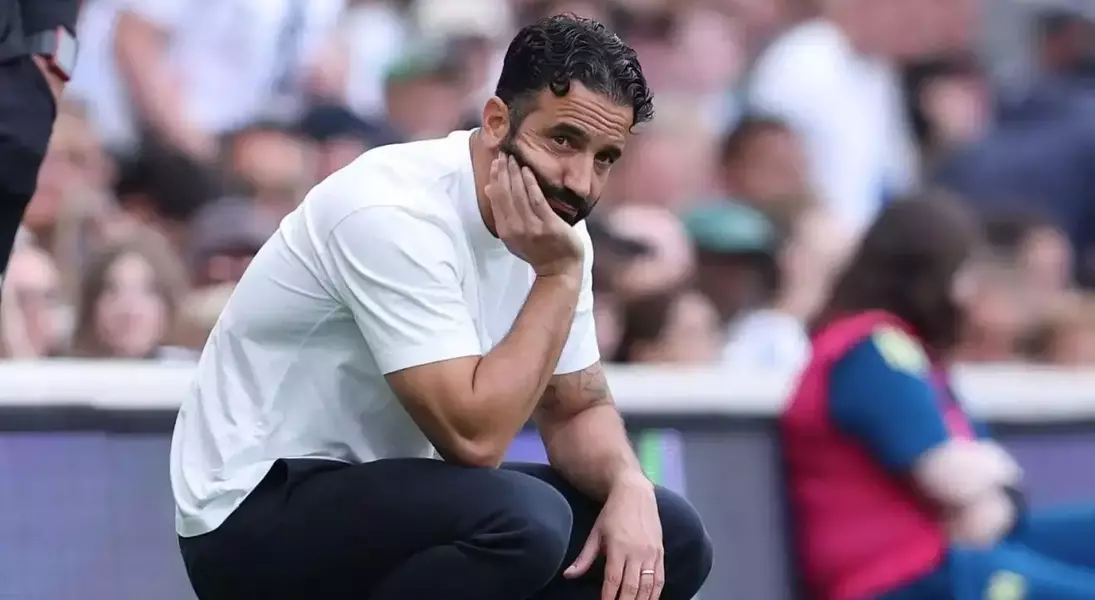
The start of the football season has brought renewed scrutiny upon Manchester United, particularly concerning the leadership of manager Ruben Amorim. A mere two games into the campaign, a palpable divide has emerged among the fanbase: some advocate for patience and support, while others are quick to declare the experiment a failure. This early-season turmoil, marked by a loss and a draw, has ignited intense debate regarding the team's trajectory, the players' commitment, and the efficacy of recent tactical and personnel decisions. The fervent discussions highlight a club grappling with identity and performance issues, with many questioning whether the substantial summer investments will translate into meaningful improvements on the pitch.
The current predicament at Old Trafford extends beyond mere results, delving into the very psyche of the club and its supporters. After a significant financial outlay of £200 million for new talent, the expectation was for an immediate upturn in fortunes. However, the team's struggle to secure victories, coupled with perceived individual underperformances, has fueled a wave of discontent. Critics point to a lack of cohesion and confidence, exemplified by a contentious moment where a player attributed a penalty miss to external factors rather than personal accountability. This incident, among others, has led to accusations of a culture where excuses are more prevalent than a collective drive for improvement.
Several perspectives illuminate the depth of the challenges. One fan lamented the team's poor run, noting a dismal record of 28 points from the last 29 matches, suggesting a deeper malaise than just a temporary slump. Concerns were also raised about the form of key players, with some arguing that seasoned veterans like Shaw, Mount, and Casemiro are no longer performing at the required level. The tactical deployment of players, such as deploying a natural winger as a wing-back, has also drawn sharp criticism, indicating a disconnect between strategic vision and on-field execution. The prevalent sentiment among a vocal segment of the fanbase is one of profound disappointment and a longing for greater accountability from both the coaching staff and the players.
The debate around Ruben Amorim's future is further complicated by the history of managerial changes at the club. Some fans feel that demanding his immediate dismissal after just two games is premature and reflects an impatience that has plagued Manchester United for years. They argue that any manager needs time to implement their philosophy and integrate new signings. Conversely, others believe that the club's continued underperformance, despite significant investment and coaching changes, points to systemic issues that go beyond any single individual. The frustration is palpable, with supporters expressing a sense of déjà vu, having witnessed similar cycles of hope followed by disappointment.
Moreover, the reaction from the fanbase itself has become a point of contention. There's a growing sentiment that a portion of the supporters prioritize being 'right' about their predictions of failure over genuinely backing the team. This attitude, characterized by an eagerness to criticize and predict doom, contributes to a toxic atmosphere that may hinder the team's ability to rebound. The discussion highlights a crucial internal conflict: whether the fans' role is primarily to support through thick and thin, or to act as vocal critics demanding immediate success. This internal division within the supporter base adds another layer of complexity to the challenges facing Manchester United in these early stages of the season.
Ultimately, the current situation at Manchester United signifies a critical juncture for the club. The early season struggles under Ruben Amorim have exposed deep-seated issues that resonate with both on-field performance and fan sentiment. As the season progresses, the pressure will only intensify for the team to find its footing and for the management to demonstrate a clear path forward. The coming weeks will be crucial in determining whether this early turbulence is merely a blip or indicative of a more profound crisis for one of football's most storied institutions.
