A burgeoning talent within Manchester United's ranks, midfielder Kobbie Mainoo, is reportedly seeking a temporary departure from the club. This comes as the young player aims to secure more consistent playing time, which has been scarce under the current managerial tenure. Despite being recognized as a standout prospect, Mainoo's opportunities have been limited, leading to a growing desire for a loan spell. The situation has garnered significant attention, with several prominent European clubs expressing keen interest in the young midfielder's availability, underscoring his high potential in the football world.
Midfielder Mainoo Pursues Temporary Departure from Old Trafford
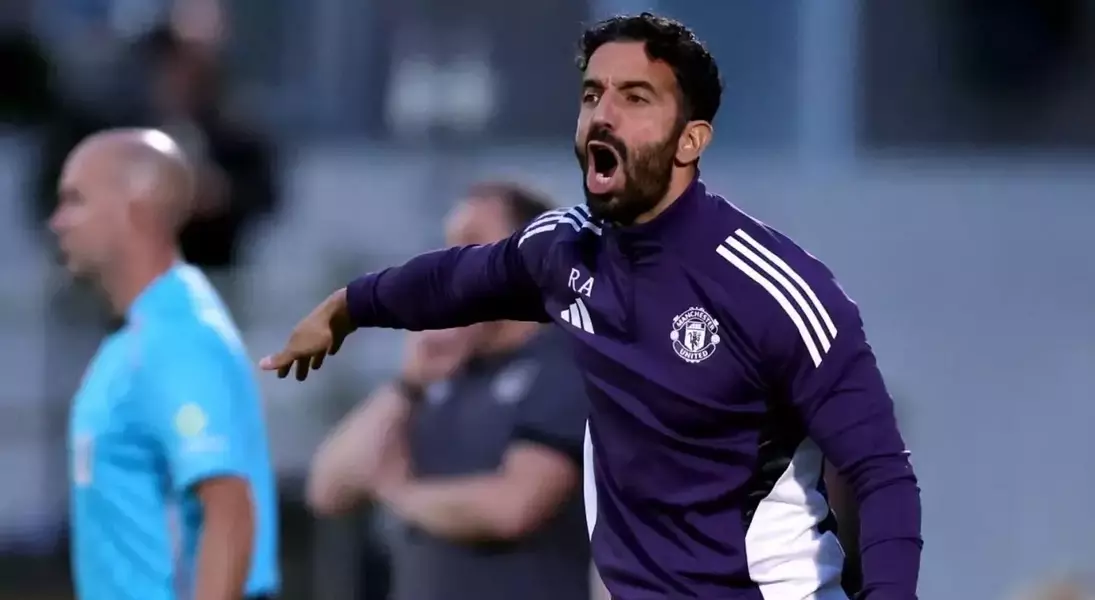
In a developing story at the legendary Old Trafford, home of Manchester United, young midfielder Kobbie Mainoo has made a definitive request to the club's management. Reports confirm that Mainoo, a highly-touted academy graduate, is actively seeking a loan move before the summer transfer window concludes its activity. This pivotal decision stems from his yearning for more consistent first-team exposure, a commodity that has been notably absent for the talented player under coach Ruben Amorim during the nascent stages of the current season.
Mainoo's appearances have been sparse, with his solitary outing being in a League Cup encounter against Grimsby Town, a match that saw the Red Devils fall in a penalty shootout. This limited participation stands in stark contrast to his growing reputation as one of United's most exciting youth prospects. According to insights from a respected transfer authority, Fabrizio Romano, Mainoo directly communicated his wish for a loan, emphasizing his commitment to Manchester United in the long term while prioritizing immediate playing opportunities. Romano relayed via his social media channels and YouTube presence that Mainoo's intention is solely for a temporary transfer, not a permanent exit, reiterating the player's enduring affection for the club. He noted that despite Manchester United's reluctance to sanction such a move, over fifteen clubs from across Europe, including interest from Spain, England, and Napoli from Italy, have made inquiries for his loan services.
This pursuit of playing time aligns with sentiments from notable football figures. Joel Beya, co-host of Rio Ferdinand's podcast, recalled Paul Scholes's high praise for Mainoo, comparing him to the legendary Zinedine Zidane. Scholes famously remarked that Mainoo, even at 19, was ten times the player he was at that age. Ferdinand, while acknowledging Mainoo's immense talent, drew a comparison to Clarence Seedorf, suggesting a similar style of play. Both pundits underlined the importance of regular football for Mainoo's continued development, particularly given his early success representing England at the international level, an achievement that surpassed Scholes's own at a similar age. The consensus among these observers is that Mainoo must proactively address his current playing situation, whether through dialogue with the coaching staff or by intensifying his efforts in training to seize any forthcoming opportunities.
The coming days before the transfer deadline are set to be critical for Mainoo and Manchester United as they navigate this delicate situation, balancing the player's developmental needs with the club's long-term vision.
From a reflective vantage point, this scenario with Kobbie Mainoo serves as a potent reminder of the intricate balance between nurturing young talent and the immediate demands of top-tier professional football. For any budding athlete, consistent competitive exposure is the bedrock of growth. When a player of Mainoo's undeniable calibre finds himself on the periphery, it's not merely a personal setback but a broader systemic challenge. Clubs are tasked with the delicate act of fostering potential without stifling ambition. This situation underscores the critical importance of strategic loan deals, which can offer invaluable experience and accelerate development, ultimately benefiting both the player and the parent club in the long run. It prompts a contemplation: are we, as fans and observers, too quick to label and compare young players to legends, inadvertently burdening them with unrealistic expectations? Perhaps the focus should always be on providing the optimal environment for their unique journey to unfold, allowing them to carve their own paths rather than being confined by the shadows of greatness. Mainoo's proactive stance is commendable, showcasing a maturity that recognizes the transient nature of opportunity in football and the necessity of seizing it to fulfil one's aspirations.
