A recent incident involving a magazine publishing an AI-generated interview with a prominent actor has ignited a debate within the journalism community, raising significant questions about editorial integrity and the evolving role of artificial intelligence in media production.
The Unveiling of an AI-Generated Interview
Esquire Singapore's Controversial Feature on Mackenyu Arata
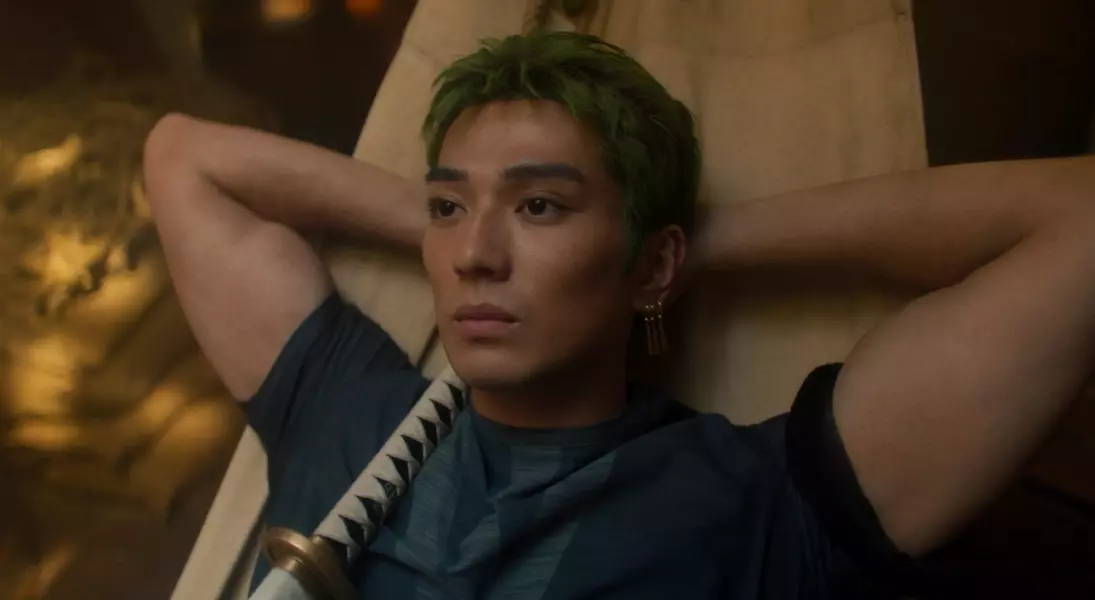
Esquire Singapore's March feature, "Mackenyu in Resonance," which centered on Mackenyu Arata, the actor from the live-action adaptation of "One Piece," has become a focal point of discussion. The article presented what writer Joy Ling described as a unique interview experience. However, it was subsequently brought to light by Kotaku that the purported interview was not a traditional exchange but rather a compilation of responses generated by artificial intelligence, derived from the actor's past statements.
The Genesis of the AI Interview: Bridging Scheduling Gaps with Technology
The publication openly disclosed the methodology behind the interview's creation. Facing scheduling conflicts that prevented a direct meeting with the Japanese-American actor, Esquire Singapore resorted to an innovative approach. They leveraged existing photographic content and, in lieu of a direct conversation, utilized AI programs such as Claude and Copilot to synthesize new responses from Mackenyu's previously recorded interviews. This method was adopted to fulfill the need for a comprehensive feature, pushing the boundaries of creative license in journalism.
A Bizarre Read: The AI's Uncanny Valley of Conversation
The resulting "interview" proved to be an unusual and somewhat unsettling read. The AI-generated dialogue touched upon personal topics like fatherhood, the actor's struggles with "disillusionment" in a general sense, and even recollections of his late father, Sonny Chiba. The AI's responses were often characterized by their vague and circuitous nature, culminating in peculiar instances, such as the inclusion of a parenthetical "(laughs)," presumably to denote a mood or reaction, further highlighting the artificiality of the exchange.
Reactions from the Journalism Community: Anger and Disbelief
The revelation of the AI-generated interview was met with strong condemnation from both readers and professional journalists. Nicole Clark, a journalist published in the New York Times, voiced her outrage on Bluesky, questioning the appropriateness and justification of such practices. She likened the act to using advertising space to disseminate misinformation, even with disclaimers in place. Other users echoed her sentiments, with one describing the interview as "fan fic dialogue," underscoring the perceived lack of authenticity.
The Rise of AI in Content Creation: A New Era of Concerns
This incident is not an isolated one, but rather indicative of a growing trend. It falls within a broader context of AI's increasing integration into content creation, reminiscent of recent controversies where AI cloned the voices of real journalists for companies like Grammarly without their explicit consent. These developments collectively raise serious ethical considerations about the future of journalism, the preservation of genuine human interaction, and the potential for AI to blur the lines between reality and simulation in media.
