A recent experiment by tech YouTubers Jakkuh and Zip Tie Tech delves into an unusual yet effective method to enhance the gaming performance of the Apple MacBook Neo. This endeavor was spurred by the laptop's tendency to run its GPU at alarmingly high temperatures under even moderate loads, hinting at a bottleneck for potential gaming capabilities. Despite the MacBook Neo's affordable price point and efficiency with standard macOS applications, its integrated graphics and unified memory present challenges for demanding gaming. The duo's ingenuity, involving custom water cooling, not only showcased significant performance gains but also highlighted the dedication of the enthusiast community to push hardware boundaries.
Detailing the Innovative Cooling System for MacBook Neo
In a detailed undertaking, tech enthusiasts Jakkuh and Zip Tie Tech embarked on a quest to optimize the Apple MacBook Neo's gaming performance. The journey began with the observation that the MacBook Neo's GPU frequently reached 105 degrees Celsius under various workloads, prompting the need for a more robust cooling solution. Initially, a simple modification of replacing the laptop's thin graphene thermal pad with a spare M.2 thermal pad yielded promising results, increasing its 3DMark Solar Bay Extreme score by 14%, from 1257 to 1430.
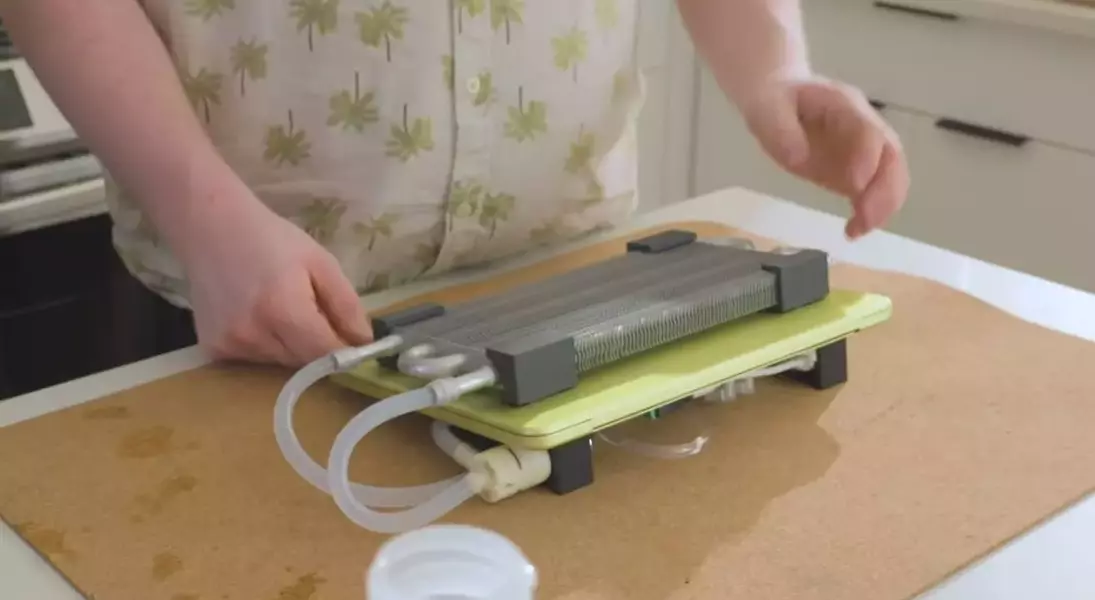
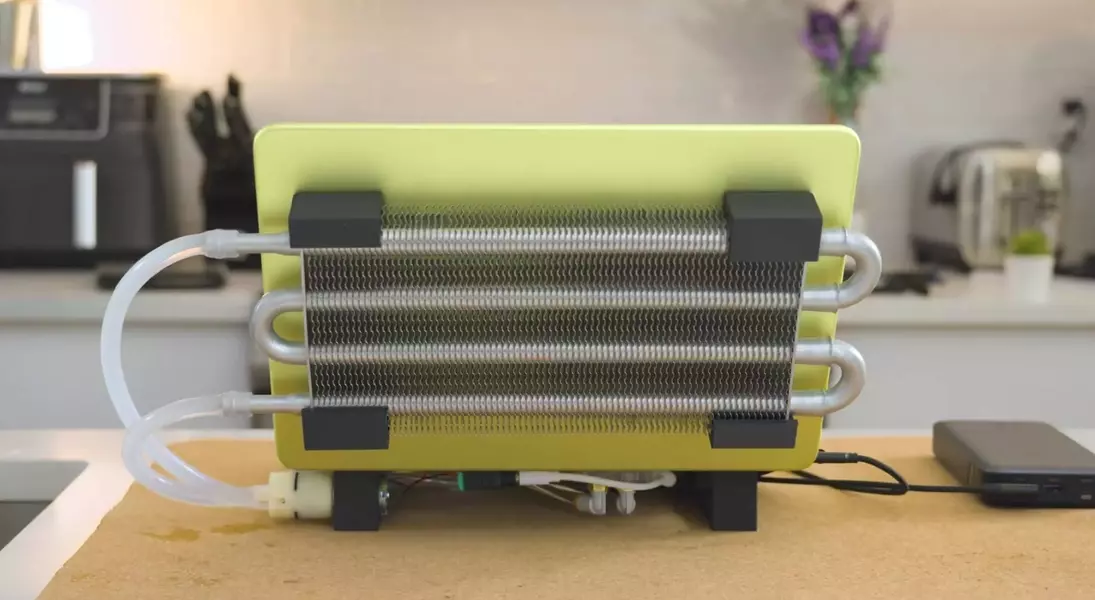
The ultimate solution involved a complex custom water-cooling loop. This setup included a precisely crafted copper plate and an acrylic water block, both designed to sit directly atop the MacBook Neo's chip. These components were then connected via tubing to an unexpected array of parts: a smart home plant watering pump and a Hayden Automotive 1011 power steering oil cooler, repurposed from its automotive application. The design and construction of the water block and copper plate required intricate CNC milling to ensure exact dimensions and even internal threading for secure connections. The copper plate was further refined with custom fins, intended to maximize heat dissipation.
Beyond the machining, the process demanded meticulous manual effort, including the creation of a custom o-ring to seal the interface between the copper plate and the water block. A precise cutout was milled into the MacBook Neo's chassis backplate to accommodate the water block, and thermal paste was applied to ensure optimal heat transfer. The completed system, while adding considerable bulk and requiring a specially designed 3D-printed laptop stand to manage weight distribution, demonstrated remarkable improvements. In a multi-core Cinebench test, the water-cooled MacBook Neo achieved a score of 1938, surpassing the base model's 1567, the thermal-padded version's 1819, and even the MacBook Air M1's 1836. Furthermore, in 3DMark Solar Bay Extreme, the score rose to 1450, establishing a new world record for the A18 Pro's GPU. However, despite these impressive gains, the laptop's 8GB of unified memory and the inherent limitations of macOS for gaming compatibility mean it remains a far cry from a dedicated gaming machine.
Reflections on Pushing Technological Limits
This fascinating endeavor by Jakkuh and Zip Tie Tech serves as a powerful reminder of the innovative spirit within the tech community. It illustrates that even with devices not primarily designed for high-performance tasks, there's always room for enthusiasts to experiment and unlock unforeseen potential. While the practical application of a water-cooled MacBook Neo for everyday gaming might be debatable due to its bulk and complexity, the project underscores the value of curiosity and unconventional problem-solving. It challenges us to rethink the boundaries of existing technology and consider how creative modifications can redefine a product's capabilities. This kind of exploration not only yields impressive technical achievements but also inspires others to delve deeper into the mechanics of their devices, fostering a greater understanding and appreciation for hardware engineering.
