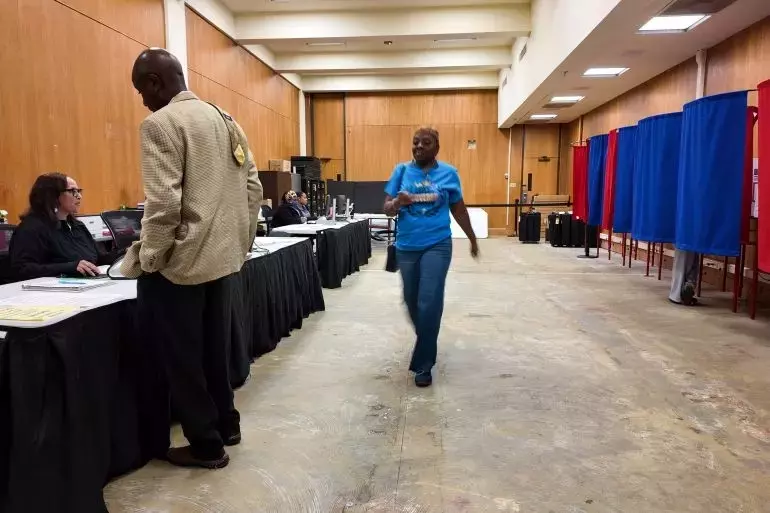
Louisiana has postponed its primary election for the US House of Representatives, a decision triggered by a recent Supreme Court ruling that could significantly alter the state's congressional map. This controversial move has ignited a legal battle, with various civil rights and voting advocacy groups challenging the suspension, asserting that it jeopardizes voter rights and the democratic process. The unfolding situation in Louisiana reflects a larger national trend of intense redistricting disputes, with both major political parties strategically redrawing electoral maps in preparation for upcoming midterm elections.
The Supreme Court's verdict has prompted concerns about potential voter disenfranchisement and the fairness of the electoral system. Critics argue that pausing an election so close to its scheduled date creates confusion and could prevent some citizens, particularly those who have already cast their ballots, from exercising their democratic right. The ongoing legal and political wrangling highlights the complexities and high stakes involved in legislative reapportionment, especially when it intersects with fundamental voting rights.
The Supreme Court's Influence on Louisiana's Electoral Landscape
The United States Supreme Court's recent decision has had a profound impact on Louisiana's electoral structure, specifically concerning the drawing of congressional districts. In late April, the Court issued a 6-3 ruling that effectively weakened a critical component of the Voting Rights Act of 1965. This particular provision was originally designed to safeguard the voting power of minority populations, preventing their electoral influence from being diminished through the strategic division of districts. Critics of the ruling argue that it creates a formidable challenge for those attempting to prove discriminatory intent in district mapping, potentially making it nearly impossible to challenge maps that dilute minority votes.
In the context of Louisiana, the Supreme Court's ruling specifically invalidated a congressional map that had been established in January 2024. This map had notably created a second majority-Black district within the state, a development that came about following a legal challenge asserting that Louisiana was in violation of the Voting Rights Act. The challenge pointed out that despite African Americans comprising a significant portion of the state's electorate, only one of its six congressional districts was majority-Black. The Court's decision to overturn this map has reignited debates over racial representation and fairness in the state's political landscape, leading to the current electoral uncertainty.
The Suspension of Louisiana's Primary and its Ramifications
The gubernatorial administration in Louisiana made the decision to suspend the primary elections for the US House just two weeks before they were scheduled to take place. This abrupt halt was a direct response to the Supreme Court's aforementioned ruling, which mandated a reconsideration of the state's congressional district map. Governor Jeff Landry's administration justified the postponement by stating that proceeding with elections under a potentially unconstitutional map would compromise the integrity of the electoral process and infringe upon voters' rights. The governor's order aimed to provide the state legislature with the necessary time to devise a new congressional map that adheres to legal standards, with Republicans in the State Senate already advancing an initial redrawn proposal.
However, this suspension has not gone unchallenged. A coalition of prominent voting and civil rights organizations has vehemently opposed the executive order, filing legal actions to contest its validity. These groups argue that the sudden change in election dates could lead to widespread voter confusion and disenfranchisement, particularly affecting those, such as military personnel, who may have already cast their ballots via absentee voting. They further contend that the state officials' actions prioritize partisan interests over the constitutional rights of Louisiana's citizens, thereby eroding public trust in the democratic system. The controversy highlights the delicate balance between legislative adjustments and the protection of fundamental voting access, especially during a period of national redistricting upheaval.
