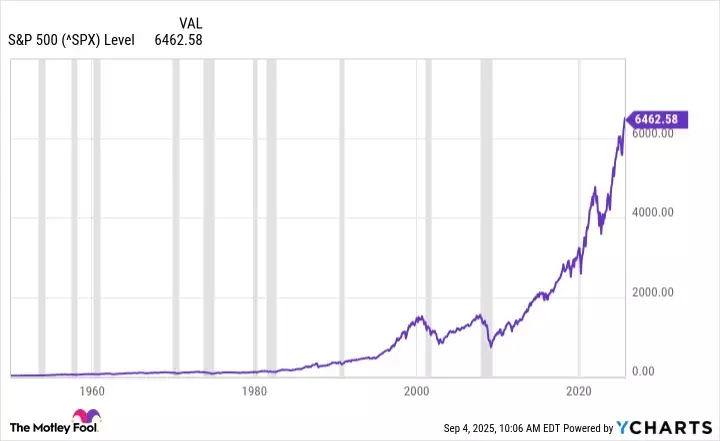

This analysis critically examines the financial prospects offered by lottery participation versus investment in the S&P 500 index. While the appeal of instant, life-changing lottery jackpots is undeniable, the statistical reality reveals an infinitesimally small chance of success. In contrast, historical data consistently demonstrates that investing in a broad market index like the S&P 500, particularly through index funds or ETFs, provides a far more probable and stable route to significant wealth accumulation over time. The article underscores that understanding these probabilities is crucial for making informed financial decisions.
Lotteries present an alluring fantasy of transforming a minimal sum into a fortune, with tickets often costing just a few dollars. This low entry barrier fuels widespread participation, driven by the dream of an overnight windfall. However, the true beneficiaries of this system are the lottery organizations themselves. In 2023, approximately $103 billion was spent on lottery tickets across the United States, yet only $69 billion was returned in winnings. This disparity resulted in roughly $30 billion in revenue for lotteries, a portion of which covers operational costs and contributes to public causes, such as education, averaging about 2.3% of state revenues in participating states. This model inherently means that the vast majority of participants contribute to the system without receiving any returns.
The probability of winning a lottery, especially large, publicized jackpots, is exceptionally low. For instance, if 292 million individuals participate, the odds of winning can be as slim as 1 in 292 million. These unfavorable odds suggest that for most individuals, the money spent on lottery tickets could be better allocated. A more financially sound alternative involves investing these funds into an S&P 500 index tracker, such as the Vanguard S&P 500 ETF (VOO).
In stark contrast to the lottery's long shot, the S&P 500 index has historically shown a consistent upward trend. Over the past decade, the index has yielded an average annual return of approximately 10%. While the market experiences year-to-year volatility, a long-term investment strategy, often championed by financial experts like Warren Buffett, tends to yield positive results. Even investments made at market peaks have historically recovered and grown, assuming a sufficiently long holding period. The long-term trajectory of the S&P 500 demonstrates that market downturns appear as minor fluctuations within a broader pattern of growth, making it a far more secure investment than a lottery ticket.
The appeal of market investment as a wealth-building strategy is increasingly recognized, with over 60% of U.S. adults holding stock either directly or through mutual funds and exchange-traded funds. Although a significant portion of stock market wealth is concentrated among the wealthiest segment of the population, the accessibility and historical performance of the stock market, particularly index investments, make it a more reliable vehicle for financial growth than the lottery. This historical trend suggests that strategic, long-term market participation is a proven method for wealth accumulation.
While participating in the lottery can be a source of entertainment or a small indulgence, it is not a viable strategy for building wealth. Its primary outcome for most is a reduction in financial resources. For those genuinely seeking to enhance their financial standing, investing in the stock market, especially by consistently contributing to an S&P 500 index fund and maintaining a long-term perspective, offers a statistically superior and historically proven path to prosperity. This approach provides a robust framework for financial growth, fundamentally differing from the high-risk, low-reward nature of lottery games.
