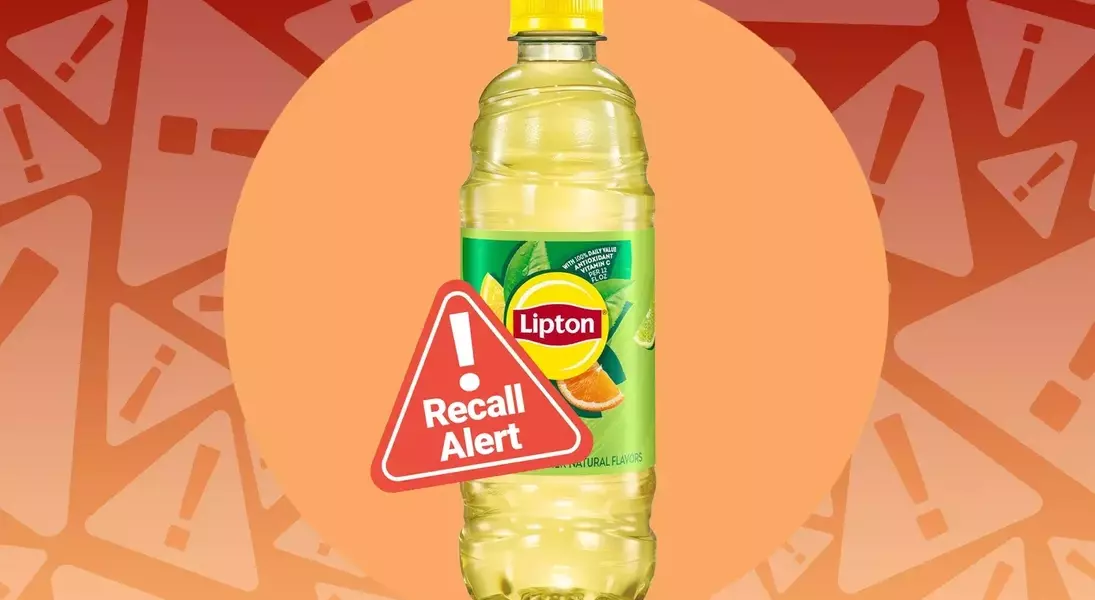
PepsiCo has issued a significant recall affecting more than 34,000 bottles of Lipton Green Tea Citrus. The recall stems from a critical mislabeling issue where bottles, sold within 12-pack units, were erroneously marked as having zero sugar. This error poses a potential health risk, particularly for consumers managing specific health conditions like diabetes, who rely on accurate nutritional information to control their sugar intake.
Details of the Lipton Iced Tea Recall
PepsiCo recently announced the recall of approximately 34,000 bottles of Lipton Green Tea Citrus. The core problem lies in the incorrect labeling of individual bottles within multipacks. While the external packaging correctly identifies the product as Lipton Green Tea Citrus, the bottles inside are labeled as Lipton Diet Green Tea Mixed Berry, implying a zero-sugar content. However, the mislabeled bottles actually contain the sugary Green Tea Citrus, which has 25 grams of sugar per serving, a stark contrast to the advertised zero sugar.
This recall encompasses 2,854 cases, each containing 24 bottles, distributed across multiple states: Arizona, Colorado, New Mexico, Utah, Texas, Kansas, Nebraska, Oklahoma, Wyoming, and South Dakota. Consumers can identify affected products by checking for a "sell-by" date of December 1, 2025, and the specific code HHMM DW 08035. The U.S. Food and Drug Administration (FDA) has classified this as a Class II recall, indicating that consuming the product could lead to "temporary or medically reversible" health consequences.
The mislabeling is particularly concerning for individuals who strictly monitor their sugar consumption, such as those with diabetes. For these consumers, unknowingly ingesting 25 grams of sugar could have adverse health effects. While the product is not inherently unsafe for those without sugar intake concerns, affected consumers are advised to return the items to their place of purchase for a full refund. For further inquiries, consumers can reach out to their local FDA Complaint Coordinator.
This incident underscores the critical importance of accurate food labeling and the potential health implications when such standards are not met. It serves as a reminder for both manufacturers to maintain stringent quality control and for consumers to remain vigilant, especially when dietary restrictions are involved. This recall highlights the broader responsibility of food companies to ensure the safety and transparency of their products to protect public health.
