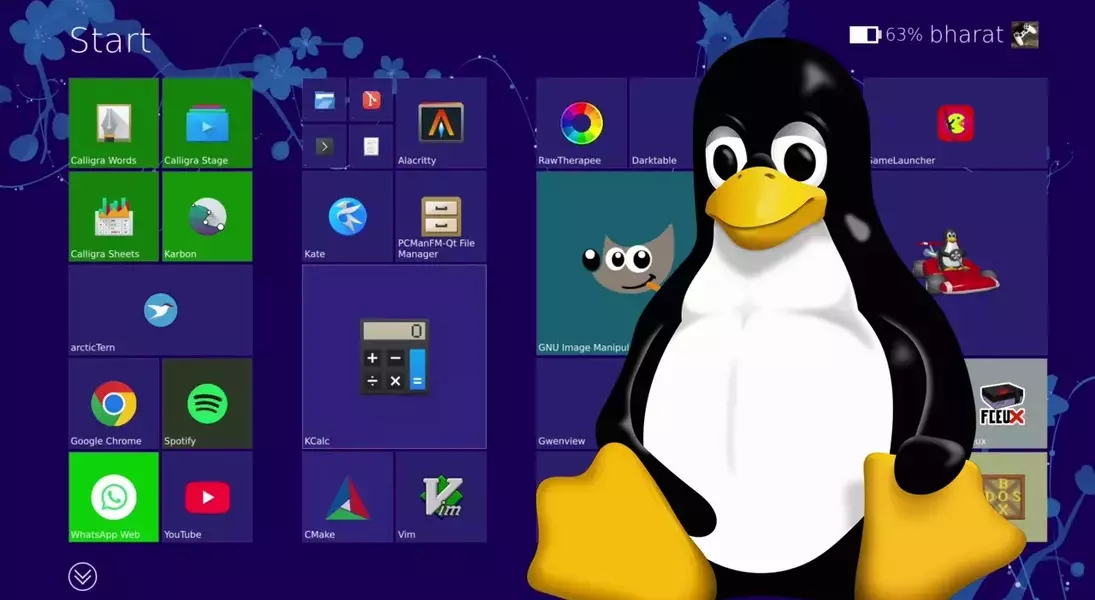
In an intriguing turn of events, a dedicated developer has successfully brought the distinctive user interface of Windows 8 to the Linux operating system. This project aims to cater to a niche audience that harbors a fondness for Microsoft's often-criticized desktop design from 2012. By recreating the tile-based aesthetic and fluid animations, this new desktop environment, known as Win8DE, offers a unique blend of nostalgia and open-source functionality for Linux users.
The journey to this unusual creation traces back to 2012, a pivotal year when Microsoft introduced Windows 8, a desktop environment heavily influenced by touchscreen devices and mobile interfaces. This shift, which largely abandoned the traditional mouse and keyboard experience, proved to be controversial, leading to a significant exodus of users seeking alternative operating systems. Gabe Newell of Valve famously characterized Windows 8 as a detrimental development for the PC sector, prompting his company's investment in Linux development.
Despite its brief and tumultuous reign, a developer known as er-bharat has identified a segment of the computing community that appreciates the unique aspects of Windows 8. The Win8DE project on GitHub openly acknowledges the irony, stating that it's designed for individuals who enjoyed Windows 8's animations but have since migrated to Linux. It also addresses the practical challenges of reverting to the original Windows 8, such as outdated applications and compatibility issues with modern hardware.
The recreation is remarkably faithful to the original Windows 8 experience. A demonstration video showcases the familiar vibrant tiles and rectangular app icons, along with the distinctive horizontally scrolling desktop that allowed users to navigate between various application pages. The mobile-like app drawer is also present, offering a compact view of installed software. Even the typography and color schemes evoke a strong sense of the mid-2010s operating system.
While not aspiring to compete with established and highly polished Linux desktop environments like KDE Plasma, Gnome, or Cinnamon—which have benefited from years, even decades, of refinement—Win8DE carves out its own humorous and functional niche. The developer, er-bharat, even made a point to exclude the 'charms menu,' a feature of Windows 8 widely considered unhelpful, further demonstrating an understanding of the original system's shortcomings while focusing on its more celebrated visual elements.
This ongoing development offers a fascinating opportunity for Linux users to revisit a distinctive period in computing history. The project’s active status suggests a commitment to further enhancing this unique desktop environment, inviting adventurous users to explore a reimagined past on a modern platform.
