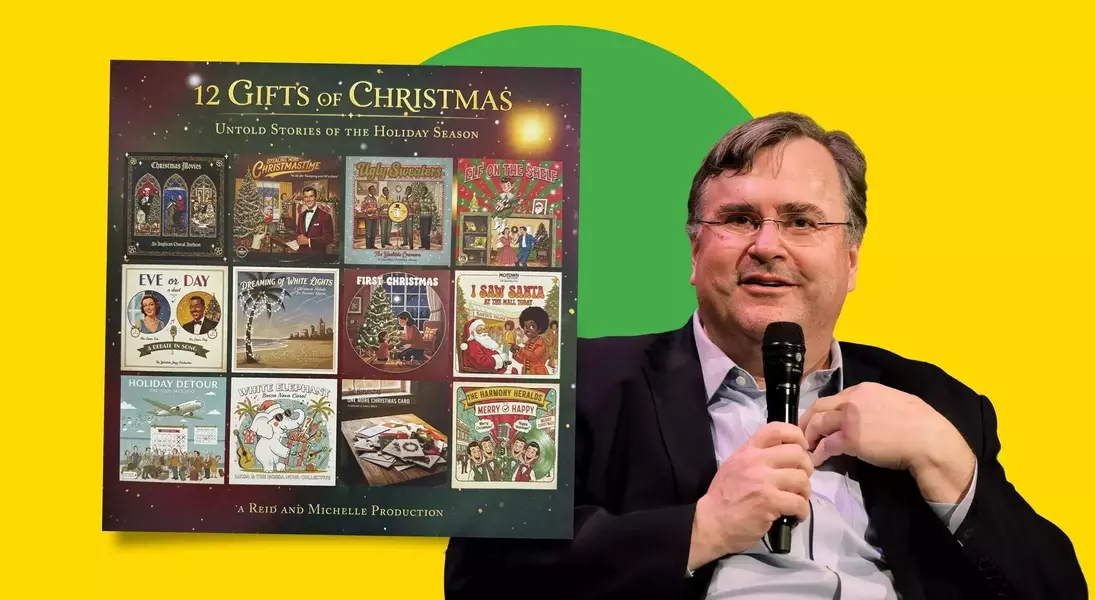
In a curious holiday gesture, LinkedIn co-founder Reid Hoffman and his spouse, Michelle, opted to forego traditional Christmas cards, instead distributing a vinyl record of AI-generated holiday songs. Titled '12 Gifts of Christmas: Untold Stories of the Holiday Season,' this unique offering was sent to a select group within Silicon Valley's elite, sparking discussions about the current state and future potential of artificial intelligence in creative fields, particularly music.
The album's content has garnered significant attention, not for its brilliance, but rather for its perceived shortcomings. Tracks include a rockabilly-style song about Elf on the Shelf, a doo-wop number celebrating ugly sweaters, and a barbershop quartet piece debating the merits of "Merry Christmas" versus "Happy Holidays." Critics have largely described the music as uninspired and a somewhat bland imitation of classic holiday tunes, suggesting it exemplifies the current limitations of AI in generating truly original and engaging artistic works. The overall production, from the visual aesthetics of the album cover to the lyrical content, has been widely interpreted as a reflection of AI's nascent stage in creative endeavors.
Hoffman, a known proponent of technological advancement and author of 'Superagency: What Could Possibly Go Right With Our AI Future,' openly embraced the AI-generated nature of the album. His public statements, such as "Don’t buy gifts. Generate them," underscore his conviction in AI's transformative power, even extending to personal gifts. He further emphasized his belief in AI's capacity to expand creative boundaries, noting, "I don’t know that anyone has created AI Christmas music yet, and I can do that." This initiative highlights his vision for AI as a tool for innovation across various domains, challenging conventional methods of artistic creation.
Beyond the artistic quality, the choice to release the album as a vinyl pressing added another layer to the discussion. In an era dominated by digital music, the decision to use an analog format for an AI-generated product prompted questions about the intended audience and their listening habits. It suggests an assumption that recipients would possess turntables, adding a nostalgic, perhaps even ironic, element to an otherwise futuristic project. This blend of old and new technologies further fueled the conversation around the album, touching on themes of technological adoption and cultural trends.
Ultimately, the AI-powered Christmas album serves as a tangible example of artificial intelligence's current capabilities and constraints in the artistic realm. While Hoffman's endeavor aimed to showcase the imaginative possibilities unlocked by AI, the resulting musical output has primarily illustrated the challenges inherent in replicating human creativity and emotional depth through algorithms. This experiment contributes to the ongoing dialogue about the role of AI in art, prompting reflection on what truly constitutes artistic value and the unique contributions of human ingenuity.
