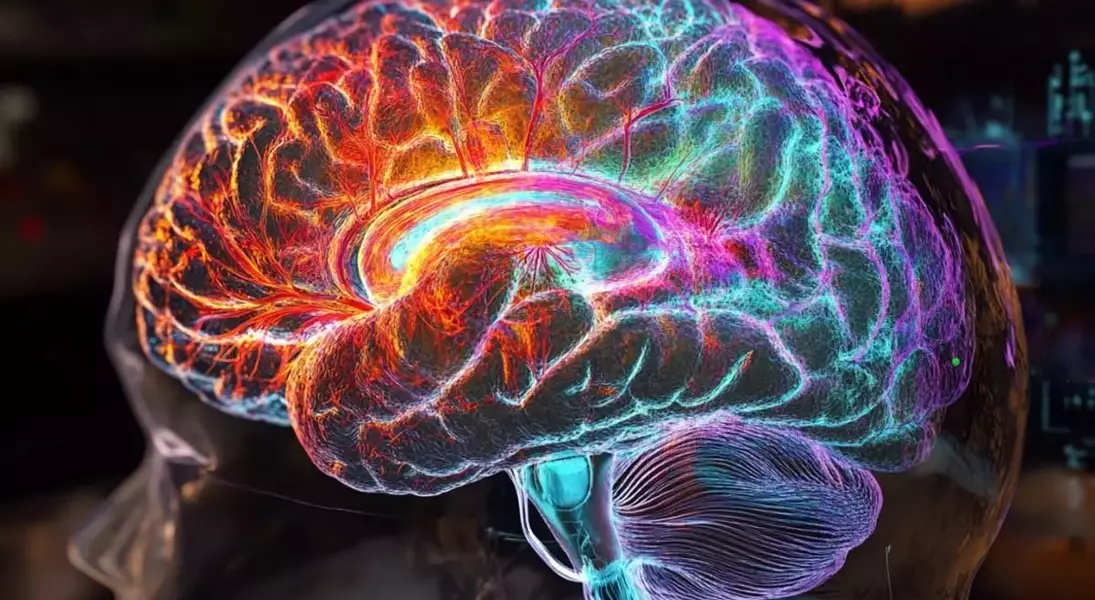
A groundbreaking discovery has emerged regarding the connection between blood flow and stiffness in the hippocampus, a critical region of the brain responsible for memory and learning. This revelation is particularly significant because the hippocampus is one of the first areas affected by Alzheimer's disease. By utilizing magnetic resonance elastography (MRE), a sophisticated imaging technique, researchers have identified that only the hippocampus demonstrates a correlation between enhanced blood flow and increased tissue rigidity. This finding could potentially revolutionize early detection methods for Alzheimer's by pinpointing neurological changes prior to the onset of memory loss.
At the University of Washington and the Icahn School of Medicine at Mount Sinai, scientists conducted a study involving 17 young adults aged between 22 and 35. Using MRE technology, which integrates MRI with sound waves to generate detailed images of varying brain stiffness levels, they discovered an intriguing relationship between blood flow and stiffness specifically within the hippocampus. According to ME Associate Professor Mehmet Kurt, this marks the first time such a connection has been established. Caitlin Neher, a Ph.D. student leading the research, explained that the hippocampus's high metabolic demand might explain why it uniquely exhibits this phenomenon among brain regions.
The implications of this research extend beyond basic science, offering potential diagnostic applications. It suggests that reduced blood flow may impact hippocampal health, opening new avenues for identifying Alzheimer's before symptoms manifest. Some studies indicate that individuals with Alzheimer's exhibit softening in the hippocampus, possibly due to diminished blood flow during the disease's early stages. This insight into the interplay between blood flow and brain stiffness could pave the way for innovative diagnostic criteria when applied to patient populations in collaboration with medical professionals.
Although further investigation is necessary to fully understand these dynamics, the current findings represent a crucial step forward in neurology. By leveraging advanced imaging techniques like MRE, researchers can delve deeper into the complexities of brain health, ultimately aiming to detect neurological diseases earlier and improve treatment outcomes. This pioneering work highlights the importance of interdisciplinary approaches in advancing our understanding of the human brain and its vulnerabilities.
