
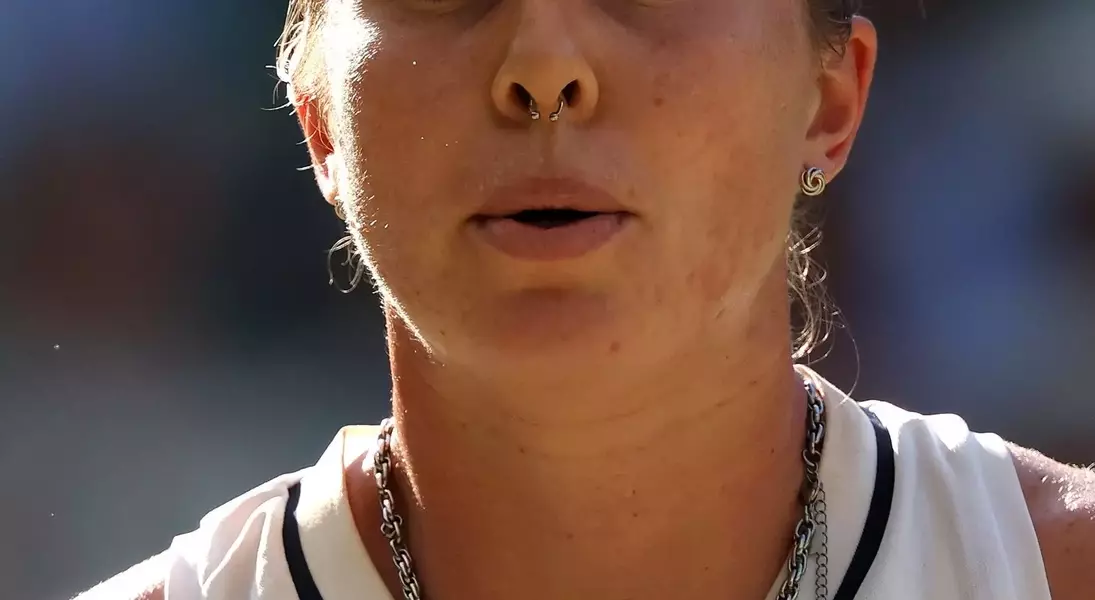
Linda Noskova's recent Wimbledon victory brought more than just a new champion to the forefront; it also shone a spotlight on her distinctive septum piercing, a small yet significant emblem of individuality in a sport often bound by tradition. This accessory, typically associated with cultural heritage and personal statements rather than grand slam finals, has ignited discussions about self-expression within the stringent world of professional tennis.
Noskova's Bold Statement on the Sacred Courts of Wimbledon
In a memorable turn of events, the young tennis sensation Linda Noskova, at merely 21 years of age, achieved a remarkable victory at the prestigious Wimbledon Ladies' Singles Championship. Her triumph on the hallowed Centre Court was notable not only for her exceptional skill, showcased in her three-set win, but also for a striking element of her personal style: a glistening silver septum piercing that captivated onlookers and media alike. This subtle piece of jewelry, a horseshoe barbell, shimmered as she moved, offering a rare glimpse of individual flair amidst Wimbledon's renowned all-white dress code, which has its roots in Victorian-era sensibilities. Noskova's achievement as the youngest Wimbledon champion in 15 years and the first with a septum piercing highlights a fascinating blend of tradition and modernity. While the tournament's rules meticulously dictate attire, they surprisingly offer a canvas for personal adornment such as piercings, tattoos, and unique hairstyles. This loophole has allowed athletes like Noskova to subtly express their identities. Past instances include Serena Williams's nose stud at Indian Wells and Sania Mirza's frequent on-court piercings. Even tattoos have found their place, with Aryna Sabalenka's tiger tattoo and Carlos Alcaraz's tradition of commemorating victories with new ink. For Noskova, her septum piercing serves as both a personal good luck charm and a bold declaration of her authentic self, adding a contemporary edge to her post-victory appearances, including an elegant evening gown at the champions' dinner. This trend suggests a quiet shift, where athletes are finding creative ways to project their personalities while respecting the sport's deep-rooted customs.
Noskova's choice to wear a septum piercing, a symbol steeped in diverse cultural traditions and a marker of coming-of-age in many societies, speaks volumes about contemporary athletes' desire for authenticity. Her quiet rebellion opens a dialogue about the evolving landscape of sports, where strict regulations increasingly coexist with personal expression. It suggests that while tradition is valued, there is also a growing space for individuality, making the game more relatable and inspiring for a new generation of fans and players.
