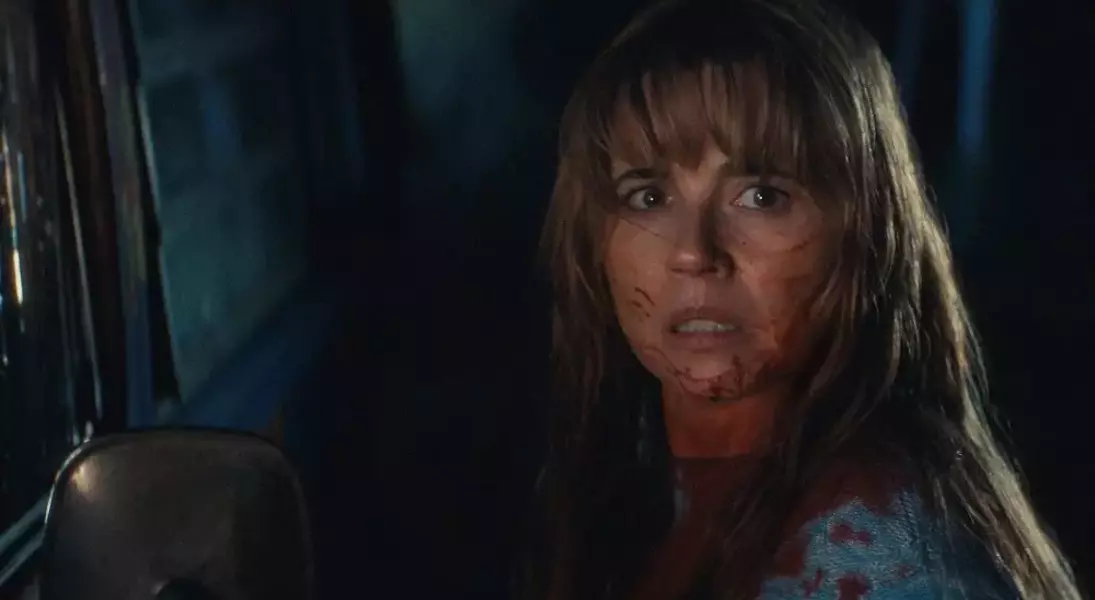
Linda Cardellini, the lead actress in the forthcoming “Crystal Lake” television series, has shared exciting details about the “Friday the 13th” prequel. Set to explore the life of franchise villain Pamela Voorhees before the initial film, the Peacock series is scheduled for release on October 15th. Cardellini will embody Voorhees, while William Catlett takes on the role of Levon Brooks, whose character specifics are still under wraps.
Cardellini reflected on her past horror movie experiences, recalling the fervent audience reactions to films like “Freddy vs. Jason.” She anticipates a similar, albeit more nuanced, response to “Crystal Lake,” given its extended episodic format. Unlike a standard 90-minute horror feature, the series provides ample room for story development, suggesting that while viewers might still react with screams, the narrative depth offers a richer experience. She explicitly noted the show's intense nature, stating, “It does get gory, yes, so much so that I wish sometimes they weren’t as practical as they were. There’s a couple of gory moments on set that were very practical that were pretty gross. Blood everywhere at one point.” This portrayal marks a significant shift for Cardellini, who traditionally played characters fleeing danger, now embracing the role of the aggressor.
Pamela Voorhees, first introduced in the 1980 “Friday the 13th” movie, sought vengeance for her son Jason’s drowning at Camp Crystal Lake in 1957. Cardellini's participation in the HBO Max Emmy Nominee Celebration, where she was nominated for her work in “DTF St. Louis,” also coincided with her comments on this new venture. Her insights promise a deeply immersive and intensely graphic exploration into the backstory of one of horror's most infamous characters.
The reimagining of classic horror narratives through prequels like “Crystal Lake” offers a unique opportunity to delve into the psychological underpinnings of iconic villains. By providing a more expansive format, creators can craft intricate backstories that not only satisfy long-time fans but also attract new audiences eager for a fresh perspective on familiar tales. This approach fosters a deeper understanding of character motivations, transforming one-dimensional antagonists into complex figures shaped by their past. Such artistic endeavors highlight the enduring appeal of the horror genre and its capacity for continuous evolution and interpretation, inspiring a renewed appreciation for storytelling that challenges conventions and explores the darker facets of human nature.
